Category: 专家论坛

  • 摩纳哥地中海之瑰宝

    摩纳哥地中海之瑰宝

    地中海南岸的摩纳哥只不过是世界上第二小的国家,但蓝色海岸边的游艇,和山上奢华的酒店,却让人无法忽略它的存在。海歌文

    位于地中海南岸的摩纳哥公国气候宜人,全年300多天的阳光普照同碧海蓝天相辉映,给了摩纳哥一个只有几百米长,却浪漫非凡的海岸。从山顶的摩纳哥亲王王宫外俯瞰整个港口,湛蓝的海水平静又不乏活力。

    从古代腓尼基人在这里定居开始,到中世纪成为热那亚共和国保护下的市镇,再到1297年格里马尔蒂家族夺取摩纳哥城堡并开始了对其长达700年的统治,摩纳哥在经历了无数历史变故后,依然保持了时光留下的最好的财富,是镶嵌在法国南部地中海海岸线上的一颗瑰宝。虽然,三百个摩纳哥还不如一个上海的中心城区大,袖珍、却能给游人带来面面俱到的奢华体验。

    摩纳哥在历史上是一个君主专制国家。它在1911年颁布了第一部宪法,终止了专制统治,但保留了皇室传统,现行君主立宪制。千百年的皇家气魄给了摩纳哥不一样的派头。中心城区蒙特卡罗热闹非凡,一座座南欧式洋房和公寓楼背山面海,海洋浴场令人心旷神怡。

    由于摩纳哥精致奢华的建筑风格、引人入胜的自然景观,许多著名的电影都借用了这里的场地进行拍摄。例如,詹姆斯邦德系列电影就曾把蒙特卡罗大赌场的名声更加远扬,使中国观众也开始了解它。事实上,摩纳哥与电影业的不解情缘在上世纪五十年代就开始了。由后来的奥斯卡影后,暨摩纳哥王妃格蕾丝·凯莉主演的电影《捉贼记》也在蒙特卡罗拍摄。

    浪漫海域与游艇

    摩纳哥的浪漫由两种颜色组成,蓝,代表了大海;白,则代表了游艇。摩纳哥的蓝白文化已然发挥到了极致:无论是当地居民还是外来游客,都习惯乘着游艇出海度假,或者把游艇当会议室,谈谈生意。这里的超级游艇租赁行业也异常繁荣,专业的船务人员几乎可以满足你的所有要求。在摩纳哥古典帆船周期间,驾游艇前往激战甚酣的赛场观战,绝非所有人都可以享受的特别待遇。

    蓝白文化不只体现在海浪上的休闲,还包括整个游艇产业的发达。摩纳哥游艇展(MYS)是欧洲著名的游艇业盛会,亦是我们杂志不可错过的展会之一。每年九月,这里汇聚了行业内的所有专业人员:游艇制造商和设计师、设备供应商、经纪人和服务商。MYS同时也是世界上唯一专门为25米以上游艇准备的展会,每年都有几乎500家包括国际游艇行业领导者的参展企业加入盛会中,同时还会带来从82到262英尺不等的100艘游艇的流动展览。

    时光孕育的贵族

    来摩纳哥当然少不了去一次王宫。王宫就是这些财富中最能体现摩纳哥气质的建筑,最初的宫殿于1191年作为堡垒建成,直到今天都是摩纳哥皇室——格里马尔迪家族王储的住所。最初是热那亚风格的防御城堡,1215年修建成为王宫。跨越几个世纪的装潢把历史演绎得美轮美奂:十六世纪意大利风格的长廊和壁画;金碧辉煌的路易十五厅,地毯和家具都是路易十五的风格;仪仗厅至今还在使用,是亲王卫队整顿的地方;金蓝相间的蓝色厅里,威尼斯水晶吊灯和丝质地毯配合着意大利19世纪镶金家具;装有文艺复兴时期大壁炉的王位厅,在王位上还有丝绒幔帐和查理三世的印章。此外,王宫里木质艺术雕刻、丝毯等在欧洲历史故事中经常出现的东西也让人眼睛一亮。

    除了王宫,建于1875年的摩纳哥大教堂也是一幅历史油画,拉蒂尔比的白色石头展现了古罗马和拜占庭的建筑风格。1879年揭幕的蒙特卡罗歌剧院,自1892年久为名门贵族们上演各种剧目,在2005年11月19日重新开业的那天,还举行了摩纳哥亲王阿尔贝二世的加冕仪式。蒙特卡罗交响乐团的历史也有一百五十多周年,每年国际顶尖的独唱音乐家都会来参加音乐会。

    由于历史上的摩纳哥政治动荡,常常处于四面楚歌的境地,为了抵御外敌,直到18世纪末,城堡都是以防御功能为主,不像英法等国的欧洲城堡建得极尽奢华,也因此有了自己的特点。在夕阳时分来到城堡外,暮光中,逾七百年来摩纳哥皇室的沧桑沉浮仿佛就在眼前。

    在夏季,城堡的花园中还会举办露天音乐会。这个传统是在雷尼尔三世亲王执政期间形成的。第一场演出在1959年八月,引来了世界各国音乐评论家的一致好评。从此,表演者蒙特卡罗国家乐团,也就是今天的蒙特卡罗爱乐乐团,享誉世界。在清静的夏夜星空下,旧时专属于王宫贵族的古典音乐飘入寻常百姓的耳朵里,带给人感动和共鸣。

    博彩与老爷车

    夜上浓妆的奢华同阳光海岸和历史沉淀相对应,摩纳哥的夜晚灯红酒绿。休闲酒吧和俱乐部汇集了来自意大利、法国、西班牙和葡萄牙等各地的美酒。在沙滩旁的爵士乐酒吧中,还能坐在帆布躺椅上欣赏音乐。来自不同国家和地区的人,在个性鲜明的装潢、优雅的气氛和美妙的音乐中,享乐到夜尽天明。

    赌场亦是最让人蠢蠢欲动的场所。无论喜欢博彩与否,来到摩纳哥的游人都会一赴盛名在身的蒙特卡罗大赌场,它宫殿式的建筑风格,郁郁葱葱的大花园,内部的红地毯、水晶灯,西装革履的侍者等等,吸引着全球的富豪在此一掷千金。门口的广场上经常停放着一排顶级豪车,彰显着其顾客群的消费实力。

    赌场由查尔三世亲王1856年为解决皇室财政危机下令建造,其设计师阵容强大,包括巴黎歌剧院的设计师查尔斯·加尼叶,他的加盟使赌场拥有了一间剧院,一场场蒙特卡罗芭蕾舞团的演出成了赌徒们的余兴节目。赌场中的大阳台让旅客们得以展望意大利的波迪吉拉。游客及当地居民则喜欢将赌场广场作为聚集地,位于赌场后方可容纳700人的歌剧院花园,还可以作为高级别活动的专署私人场地。

    芳薇耶区的老爷车博物馆是摩纳哥一大独特景点。雷尼尔三世亲王在世时酷爱收集老爷车。1993年,宫殿的车库已经容纳不下他数量可观的收藏了,于是,亲王决定建一个汽车博物馆,与人们分享他的展览。展品从复古的英式老爷车到曾征战F1赛场的赛车,不下百辆,在五千平米的展馆中诉说着汽车发展的故事。汽车爱好者决不能错过这个博物馆。

    速度与激情

    摩纳哥是赛车爱好者的天堂。每年,在摩纳哥举行的大奖赛是F1赛事中的最引人瞩目的。赛道贯穿蒙特卡罗和康达明地区,延山路上下蜿蜒,对车技要求颇高,衬以风景如画的街道,吸引着无数游人和赛车爱好者驻足。其中一段赛程更是沿着蒙特卡罗港湾进行,多数观众聚在港口,在海风的吹拂下欣赏赛事。富人们则纷纷登上自己停在港口的游艇,享受私人看台。赛事进行期间,各大酒店的阳台也成了观众席。其中,艾玛诺欧宫殿阁楼被比赛组织者摩纳哥汽车俱乐部冠以“大奖赛最佳景观”之称。观赛方式多种多样,无论是哪种,在充满历史气息的地中海风情街道中体验赛车的紧张刺激、观众的呐喊助威,一定会令人全身热血澎湃。

    摩纳哥是一个实实在在的奢侈品国际大都市,市中心著名的“金环”商业区名店林立,众多奢侈品牌在这里建立自己的品牌王国,不仅有时尚界的一线品牌和珠宝店的大橱窗,有名气的古董商店也得到了艺术爱好者的追捧。

    体验文化盛事

    摩纳哥还是各种文化盛事的举办地。一年一度一月到二月举行的蒙特卡罗马戏节给城市带来欢乐的气氛。来自世界各地的小丑、驯兽师、杂技团穿上五花八门的服装,呈现出令人目不暇接的视觉盛宴。组委会每年都评选出包括“金小丑”奖在内的多个在马戏界举足轻重的奖项。

    而马戏节的赞助者,摩纳哥史蒂芬妮公主本身也带有浓浓的传奇色彩。她是雷尼尔三世与王妃格蕾丝·凯莉的小女儿,做过歌手、泳衣设计师、模特,兴趣爱好广泛,在校时曾参加体操比赛,从九岁第一次观看了74年举办的马戏节后,就对杂技有着浓厚的兴趣,长大后也自然而然大力支持这项盛事。

    今年七月到九月中旬,摩纳哥马尔迪会议中心将举办以“紫禁城”为主题的展览,展出以康熙、雍正、乾隆为主的各代清朝皇帝的皇室生活,同时用书法、绘画、瓷器等文物让来自世界各地的游客了解中国缤纷的传统艺术形式。届时,场内古老东方的奢华与场外沿袭至今的摩纳哥传统交相辉映,不知会碰撞出什么样的火花。而这次展览也将为热爱传统文化的国人提供一个参观摩纳哥的契机。

    各色美食之旅

    摩纳哥作为一个多种文化交融的国度,当然少不了各国美食。其中最为著名的中餐厅就是“宋气”中餐厅。这个名字代表中国科技文化的鼎盛时期——宋朝的气息。它由出身香港的丘德威先生建立。在这之前,丘先生已经创建了多家米其林餐厅,大名鼎鼎的客家山餐厅(Hakkasan)就是其中之一。宋气中餐厅用赏心悦目的翠绿色座椅衬以金碧辉煌的栏杆,每一样菜品都是精心研制,从港式点心到北京烤鸭,应有尽有。

    位于大都会酒店内的乔·卢布松餐厅是不容错过的。无论是色味双全的菜品,还是艺术品般的室内外设计,都不辜负它米其林二星的头衔。开放式厨房让客人们能够观赏菜品的制作,甚至和厨师互动,给人独特、愉快的用餐体验。从餐厅的阳台上顾客能够眺望蒙特卡罗的街道。

    值得一提的还有位于蒙特卡罗海湾独家大酒店内的蓝湾餐厅。它在旅游网站TripAdvisor上的顾客评分在蒙特卡罗区域的餐厅中位列第一,可见它的受欢迎程度。餐厅选取最新鲜的地中海食材,提供地中海与法国风味的料理。与乔·卢布松餐厅相比,它的装修风格更加简约、摩登。夜间,蓝紫色的灯光给餐厅染上魔幻气息。它还是情侣们享受浪漫晚餐的胜地——在全景露台上用餐,顾客就好像置身蓝色的大海之上。

    除了以上这些高级食府,摩纳哥的当地特色也令人垂涎:以瑞士甜菜、意大利乳清干酪为佐料的酥脆千层饼步步骏(Barbagiuan),在面包房就可以买到的橙味小面包叶形烧饼(Fougasse),将风干的鳕鱼在西红柿酱汁中慢炖做成的斯多卡菲(Stocafi)等等。

    这样美好的摩纳哥,自然吸引着大批有条件的移民。F1赛车手托马斯·施科特、著名编剧丹尼尔·汤普森等现今都是摩纳哥的居民。19世纪美国作家舍伍德说,在摩纳哥,“美丽”这个词令人厌倦,因为它被使用太多次了。小小的摩纳哥只有纽约中央公园一半大小,却给人无尽的美丽。忘记平日的烦恼和忧愁,到摩纳哥贪欢一晌,不失为一个度假的好选择。

    “假使世上有比摩纳哥的堡垒宫殿更浪漫的东西,我还没有见过;假使世上有必蒙特卡罗林立之别墅中的景观平台更美好的东西,我不想见到它们。没有什么能够超越这半热带植被,向地中海延伸的海峡,环绕的海洋,橄榄小树林以及迷人的气候!美丽这个词已令人厌倦了。”

  • 美白与防晒

    美白与防晒

    改善皮肤并不是一劳永逸的治疗,而是我们终其一生都要关注的重要问题,会令人更加朝气蓬勃更加自信,并且改善你的社交地位

    健康的皮肤和体面的外表通常是至关重要的第一印象,皮肤的色素沉淀问题一直是当代男性和女性的困扰。我们必须清楚肌肤美白、提亮以及色素沉淀的问题。美白是为了皮肤祛黄、祛红,并且更加接近瓷白色;提亮是使肌肤比之前提高1到2个色号的亮度;而色素沉淀则是一种肤色不均的状况。我想用“肌因”一词来略称这些影响肌肤白皙的多项表征:肌肤暗黄、暗沉、斑点、粗糙、缺乏光泽、缺乏弹性。

    由于我们的日常生活使我们经常暴露于紫外线中,甚至在电脑旁受到长期的辐射,这些侵害加剧黑色素积聚,直至斑点逐渐浮现,使得肌肤黯然失色。普通的美白产品可能会使肌肤表面看似短暂地白皙,但其实不易消除的黑色素可能潜藏在肌肤深层。如果没有合适的保护,皮肤将会越来越暗沉,也日益糟糕和老化下去。

    通常,你的皮肤越白,你的皮肤越容易晒伤。这并不意味着深色皮肤就不怕晒,只是从肉眼看来的程度不同。防晒其实是个每日都要做的功课:

    防护:好防晒霜很重要。化妆前或保湿后,一定要涂上防晒产品。

    补水:强烈推荐使用好的保湿补水类产品,这很重要。

    保持:建议与医疗性的水疗中心一起进行定期、长期维护计划。

    人们在生活中经历激素变化,饮食变化或天气变化,适当的皮肤管理计划是非常重要的,这会让你很好的保持皮肤的年轻与健康状态。“你吃什么,你就是什么”。皮肤也是反映出身体健康的镜子,受到你的生活方式的影响:

    • 你是否按照医生或Spa专家的建议做一些肝脏排毒?
    • 你是否偶尔会进行“断食”,而不是经常肉食过量?你的器官也需要一个小假期。
    • 你是否入睡过晚,你的睡眠足够吗?
    • 你是否吸烟或是过量饮酒?面部灰绿就是反映了你的亚健康状况。

    大多数西方人不会过分关心他们的肤色是否足够白,相反,许多人喜欢看起来稍微晒黑的健康皮肤。而在东方,较浅的肤色似乎代表着更高的社会地位和美丽。因此,大众的“理想肤色”渐渐趋于保持一种白皙透亮的肤色的状态,甚至可以说,寻找“美白”的行为已经变得愈加极端,因此,了解什么产品或方法是安全和正确的,则愈发重要,大致可以统括为:

    • 内用美白丸──科学研究和开发,权威认证,证明其不含有汞和其他有毒成分的食品级产品。
    • 维生素C和谷胱甘肽等注射剂使用非常广泛,主要是增加皮肤亮度。
    • 为皮肤均匀肤色,采用引导色素剥离的化学物质:皮肤用果酸,酶或去角质产品都是值得推荐的。 在进行治疗之前,要进行适当的皮肤扫描和测试,才能达到最佳的效果。
    • 根据皮肤的实际问题,有针对性地进行各种医疗性质的激光治疗,以减少和消除皮肤瑕疵:局部使用功能性护肤品也具有减轻作用,激光类的应用则快速祛除色素,此外,氧合治疗也可以帮助皮肤提亮。

    如何选择一个合适你的防晒产品呢?你需要非常明白自己需要什么,并且考虑到下列因素:

    • 如果你化妆的话,需要用一个比较强大的却不能太油的防晒产品来保持你的妆容。
    • 油性皮肤需要一个较轻薄的防晒产品。除此之外,正确的清洁方法也非常重要。
    • 在低温环境下,你需要一个偏厚的防晒产品,而在高温下或夏天,则需要一个偏轻薄的防晒产品。
    • 你常常去游泳,潜水么?还是经常久坐在办公室?抑或是家庭主妇?
    • 你的预算是多少?您是否将产品作为你的皮肤的投资?或只是需要进行一次护理。
    • 你是否想要多重效果,比如抗皱,保湿?或仅仅是为了保护皮肤?

    要注意的是,孩子们的皮肤比大人更加娇嫩敏感,因此化学物质的侵害会对他们造成更多的伤害。现在已经有了可同时供成人和儿童使用的防晒霜,非常好用。如果不希望皮肤变老变松,也不想要老年斑随着年龄而增多,那么我建议养成擦防晒霜的习惯,就像我们每天吃饭一样。

    在Spa里,让客人在做好脸后上一层品质非常好的防晒霜,既能起到保护作用,又会让客人们的肤色看着更匀称,对疗程的满意度提高,也可能会促进疗程与产品的零售。

  • Music Therapy

    Music Therapy

    Let our heartbeats, brainwaves and gastrointestinal motility dance with music.  By Li Rulan

    Many medical experts have long tried to use music as a therapy method and they have seen surprising effects using this innovative way of healing

    The Beth Israel Medical Center in New York has done a medical experiment. Andrea Zalkin hummed a lullaby for her 13-week baby of premature birth and found that her baby’s heartbeats gradually turned gentle and regular and oxyhemoglobin saturation increased during the process. In the experiment, musicians adapted the parents’ favorite tunes into lullabies and sang for the prematurely-born babies. Amazingly, the music was found to be helpful for the premature infants in achieving normal development process.

    The Human Body has Vibrating Systems Similar to Musical Rhythms

    Music therapy is also effective to adults. Scientists have discovered that the human body has vibrating systems similar to musical rhythms including heartbeats and pulse, brain waves and gastrointestinal motility. When the vibrational frequency of the music and human inner organs achieve consistency, a pleasant sensation will be aroused. In fact, very often people resort to music therapy unconsciously. For example, they will select the type of music fit for their mood to get some comfort. This also proves music’s power to adjust the conditions of body and heart.

    The melody and rhythm of music can stimulate patients’ brain cells, autonomic nerves and body response, as well as helping with recovery and re-establishment of mentality, mood and social behaviors.

    Cure Depression and Alleviate Chemotherapy Pain

    A study conducted in Finland has found that music therapy proves to be more effective than traditional method in curing patients with depressions. Seventy-nine patients have joined the experiment. All of them received traditional therapy while 33 of them also received music therapy at the same time. Three months later, the 33 patients who received music therapy have much improvement in their conditions. Professor Christian Gold from University of Jyväskylä explains that when patients fail to find proper language to express their inner feelings, music is a good channel for them to express it non-verbally.

    Music is also proven to be able to alleviate the pains of cancer patients. The American Cancer Society published articles to show that music therapy is often used in cancer cure to alleviate patients’ pain, anxiety and nausea after chemotherapy. Although there is no evidence showing that music therapy can directly cure cancer, it can indeed provide some assistance in improving the life quality of cancer patients.

    The proven curative effect of music therapy include healing children with developmental delay, autism, Down syndrome and somatopsychic disturbance; as well as adults with long-term insomnia, high pressure, nerve injury or Alzheimer’s disease.

    Fuel the Body During Exercise

    Music therapy can also be applied to sports to realize a higher efficient usage of physical power. With the help of music, the body is able to more easily to achieve balance and harmony without too much move adjustments. Scientific American once published an article to discuss the amazing relation between music and the human body. The article explains that when people are doing exercise, music with proper frequency can relieve fatigue. Like a metronome, music helps people stay with stable pace and run longer while running by reducing physical output.

    Classical Music is More Effective than Rock

    Studies show that infants, animals and plants all prefer classical music to other types. Psychologist Dr. Adrian North from University of Leicester and his colleague Liam MacKenzie found that when they played soothing classical music to cows, their milk yield was much improved. However, noisy music gave no help.

    Spanish scientists further discovered that the foetus also shows likes and dislikes to music types even though they are still in the womb. A foetus who is 12 weeks away from expected date especially loves gentle, melodious and highly harmonious classic music of Mozart and Verdi, yet rejects heavy metal music a lot.

    Mozart’s music not only endures but also features various amazing effects. According to professional analysis, the Mozart Effect lies in the fact that its melody conforms to the operation mode of the human brain. The Mozart Effect was firstly proposed on the authoritative scientific journal NATURE in 1993. Two professors from University of California carried out experiments to prove that 10 minutes immersion into Mozart Sonata can improve intelligence.

    Five Notes and Five Elements

    The Five Notes Healing theory was already put forward over two thousand years ago in China’s most ancient medical classic Huangdi Neijing (The Inner Canon of Huangdi). In traditional Chinese characters, “music”(乐) is very similar to “medicine/herb”(药), with the former lacking only a character radical (“艹”meaning herb) to the latter, which subtly imply the relation between the two. It is true that music therapy and music wellness practice are often applied to China’s ancient medical science.

    Traditional Chinese Medicine is convinced of the relations among five notes, five organs and five elements theory, believing that five notes gong shang jue zhi yu, known as do re mi so la today, can nurse and bring benefits to the five inner organs of human body – heart, liver, spleen, lung and kidney. Although there is no specific counterpart between each five, there is no doubt that music can generally benefit human health.

  • Hydrotherapy

    Hydrotherapy

    Deemed more effective than gym exercises, hydrotherapy stands out as a distinctive method in both its substantial effects and the quality experience it provides

    Hydrotherapy, or aquatic exercising, is very popular in European countries and the United States. Famous athletes, including NBA giant Yao Ming, Olympic marathon runner Budd Coates, FA Premier League soccer player Antonio Valencia, have benefitted from aquatic rehabilitation, prolonging their athletic careers and expediting their healing. They unanimously applaud hydrotherapy. In the UK and the US, professional athletes include aquatic rehabilitation in their weekly raining schedules.

    Up to now, aquatic rehabilitation technologies remain foreign to the Chinese SPA industry. We introduce to you the basics here.

    Just like martial arts, aquatic rehabilitation is divided into different schools, including Ai Chi, which emphasizes relaxation and balance in the water, Watsu, a type of soothing aquatic ballet with the assistance of therapists, Halliwick, group training with game themes and Bad Ragaz Ring Method, which focuses on buoyant and resistant forces. The above are some of the more known and systematic water therapies, aiming at different aspects depending on the recipients.

    Halliwick

    The Halliwick concept is a set of technologies and ideas that teach everyone, especially those with athletic or learning disabilities to do water sports, and eventually enable them to exercise independently and swim in the water. The modern Halliwick concept is made up by two main systems, the “Ten-Point-Program” and “Water Specific Therapy (WST)”, also referred to as the basic and advanced courses of Halliwick.

    The former are primarily used for teaching swimming, the latter for further exploration, focusing on treating body structure deficiencies and functional obstacles. There is no strict border between the two, which complement each other in their application. As an important concept in aquatic sports rehabilitation, Halliwick has profound influence over it.

    Today, the Halliwick concept has formed a distinctive set of analysis, judgment, treatment, recording and review process, widely applied to children’s rehabilitation, neurological rehabilitation and orthopedic rehabilitation. Clinical research has shown that the interesting water sports adopted by the Halliwick concept have positive influence on multiple aspects of the patient’s recovery, including body functions, mental state, personality, entertainment and socialization.

    Bad Ragaz Ring Method

    Bad Ragaz Ring Method (BRRM) is a type of hydrotherapy used for aquatic rehabilitation and improvement of sensory, neural and PNF systems. Originally developed by physical therapists in Switzerland, it uses the water’s physical properties to intensify and utilize water buoyancy and resistance, on grounds of human body movements. The “ring” in BRRM refers to a unique auxiliary instrument, used for supporting recipients’ floating and exercising in the water.

    German doctor Knupfer first developed the BRRM spa in the 1930s. In the 1950s and 1960s, American neurologists Herman Kabat and his assistant joined in the study of PNF technologies. The method takes advantage of the multiple properties of water, especially buoyancy, turbulence and resistance, in order to fix functional problems in joints and muscles, combining anatomy, biology and kinesiology.

    Normally, BRRM provides extra buoyancy for the neck, the pelvis, the arms and the legs, supplying a more stable support for patients to maintain a supine position in the water. Therapists stand in the pools, slightly bending their pelvises and knees, to instruct patients to practice certain moves. The key to such a method is increasing movement of the joints and sensitivity of nerves and muscle tissues, as well as enhancing muscular functions.

    Clinical Ai Chi

    Ai Chi is a type of spa technology that combines multiple elements: entertainment, relaxation, fitness and wellness. Compared to other spa technologies, Ai Chi is more malleable. Essentially, Ai Chi utilizes aquatic breathing skills and resistance training to achieve rehabilitation, incorporating elements of relaxation, meditation and Tai Chi.

    In general, Ai Chi relies on aquatic relaxation and stretching to achieve rehabilitative effects. It first emerged as an exercise at a hydrodynamic research institute in Yokohama, Japan in 1993, and later became a serious and scientific independent therapy. Usually, practicing Ai Chi requires standing in shoulder-level water and one-on-one instruction from therapists to patients. The initial Ai Chi focuses on the use of deep breathing, and such focus remains in its later development. In the process of performing Ai Chi, one utilizes breathing skills when performing gentle movements, which are slow and continuous. Ai Chi provokes positive mentality often, exactly because of such calmness.

    Watsu

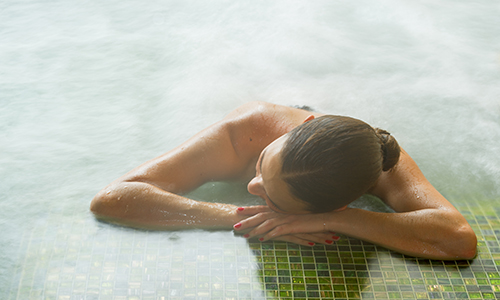
    Watsu is a form of passive aquatic therapy used for deep relaxation and exercising, combining elements of muscle stretching, joint mobilization, massage, Shiatsu, and dance, performed in chest-deep warm water (around 35°C or 95°F). Watsu is characterized by one-on-one sessions in which the recipient remains supported by a practitioner or therapist while being back floated, rhythmically cradled, moved, stretched, and massaged.

    History and Origins

    In the early 1980s Harold Dull adapted Zen Shiatsu for use in warm water pools at Harbin Hot Springs in northern California, with emphasis on connecting with the breathing patterns of the recipient and establishing a meditative state during sessions. Dull observed that people receiving Watsu treatments entered a deep relaxation state, with strong physical and emotional effects. In the early years, massage therapists were the main practitioners of Watsu, offering sessions as a new category of hydrotherapy called aquatic bodywork. By the late 1980s and early 1990s, physical therapists and other healthcare providers began applying Watsu to treat various orthopedic and neurologic conditions. While Watsu’s roots in Shiatsu and the close physical contact led to some early resistance among those trained in conventional healthcare, Watsu is now practiced in spas, clinics, and hospitals, and utilized as an aquatic rehabilitation technique.

    Aquatic exercises differ from those on land. Recipients are more confident doing them. The multiple benefits of aquatic rehabilitation mentioned above are ascribed to the following reasons:

    Buoyancy

    It is common knowledge that water has buoyancy. Different depths of water create different levels of buoyancy; people of different weights experience different senses of buoyancy. When in water, part of the body weight is supported by buoyancy, enabling the muscles to relax. This characteristic is useful for reducing fatigue and pain.

    Aquatic buoyancy is especially useful and important for the injured. Scientists have confirmed the indubitable effects of buoyancy to maintain one’s energy, relieve muscle and joint pain, and increase mobilization of injured limbs through testing on the electromyographic response of human nerves immersed in water.

    Aquatic training improves the performance of professional athletes. For instance, marathon runners endure greater stress on their knees as the miles they run accumulate. If they just keep running, their knees would get injured from excessive pressure, but if they stop running, their performance would not be raised. Aquatic rehabilitation, which takes advantage of water’s buoyancy, strengthens the stamina and power of muscles and relieves the pressure of joints, saving the energy while training the muscles to keep their strength, so that the athlete’s training plans can be performed. Although aquatic training for marathon runners is different from that on land, it still improves cardiovascular efficiency, as well as muscular strength.

    Pressure

    When immersed in water, the human body experiences a kind of pressure from water, water pressure, which prompts liquids in the limbs to flow towards the heart, quickening nutrition supply and excretion, increasing cardio output, and fighting circumambient water resistance.

    The human body reacts to an aquatic environment whether it is still or moving. The physiological reactions in a still state is caused by water pressure. Receptors in human body cause blood redistribution. Venous pressure in right atrial is raised, resulting in the Frank Starling Reflex and an increase in stroke volume. In a still state, the heart rate remains constant or decreases despite an increase in stroke volume or cardiac output; the degree of change in the heart rate correlates with the water depth, the body position and the means of exercising. The change of heart rate in water differs from that on land to a certain degree. Generally speaking, the heart rate in water is 17 beats slower than it is on land.

    Resistance

    As an ancient Chinese saying goes, “water can float a boat, but it can also sink it.” Water provides assistance as well as resistance, training one’s body with unexpected force. Water has interesting properties related to resistance. It causes the muscles to perform isokinetic contraction, where the speed of one’s movement remains constant regardless or his strength, since the more powerful the move, the stronger the resistance. Theoretically, practicing to use different levels of power (such as 100%, 75%, 50%) effectively improves muscle stamina or strength. Compared with strength training in gyms, which requires constant readjustment of the weight of the instrument, aquatic training is indeed more efficient. In addition, when in water, resistant forces enclose one from all directions. Resistant forces incorporated with movement in sports (for example, jumping and dashing in basketball) enable one to effectively transfer the training effects into performance on the field.

    Human movement slows down in water. With all three dimensions under resistance, the human body responds more readily to its proprioception, causing recipients to slow down in their moves and enter the early stage of rehabilitation, where a higher level of dynamic stability is achieved, with less pain in muscle and joints. Some aquatic exercises use swimming shoes or web to increase resistance against feet and legs, effectively improving muscular kinesthesia.

    The range and speed of aquatic movement is decided by the purpose of the program. In general, the greater the range and speed of the movement, the greater resistance it causes, and the resistance exerts pressure to the cardiovascular system. Therefore, beginners should take it easy with the range and speed of their movement and wait until they master their coordination and skills to increase the intensity.

    Water Temperature and Effective Elements in Water

    Another characteristic of aquatic movement is the water temperature. Many rehabilitative hydrotherapy pools are between 32°C 35°C, because this temperature is suitable for all kinds of stretching and enhances blood circulation, inducing muscles to further relax. Exercising in the pools can also relax muscles with significant effects in amelioration of swelling.

    Speaking of the beneficial elements in water, most would think of hot springs, where assorted minerals heal the human body. They are not to be further discussed here. In many foreign countries, sea water is the top choice for hydrotherapy: the content of sea water is very close to that of human blood and lymph fluid; there are iodine, potassium, calcium, magnesium, sulfur and other elements or mineral catalysts, which improve metabolism and coordinate activities of endocrine organs; sea water contains a large amount of biological stimulants, which aids activities of endocrine glands; elements in sea water enter the skin as crystalized substances, making the skin elastic and smooth; when touching sea water, the human body creates negative ions on the surface, which sedates the mind and soothes pain. A sea water bath after onerous physical labor or intense intellectual activities can erase fatigue, reduce work pressure, increase stamina, and enhance immunity of the organism. Last but not least, salts in sea water increases water buoyancy, creating the conditions for some aquatic exercises.

    Modern technology permits artificial creation of some beneficial elements in sea water with saltwater pools, which are a good substitution for spa and rehabilitation centers away from the sea.

    Tips:

    Aquatic treatments and exercises improve muscle strength, relieve pain, maintain the balance, accelerate the rehabilitation process, promotes proprioception, benefits physical and mental health, realizes deep relaxation, refreshes the organism, enhances blood circulation, increases joint mobilization and boosts self-confidence.

    However, in the application of hydrotherapy, it is important that:

    • Recipients perform sufficient warm-up before exercising and relax afterwards
    • The processes of rehabilitation treatments need to be reasonably arranged by professionals
    • The method should not be applied for open sports injuries
    • The method should not be applied to patients with contagious diseases

             Treatments should be monitored by professionals and stopped to be readjusted if recipients sense discomfort.

  • 水中疗法

    水中疗法

    堪称比健身房更高效的水中疗法,无论在功效还是体验感上,都独树一帜。

    SpaChina高菲 | 禾零会 Healing Hotels of the World (HHOW)文

    水中运动治疗/训练于欧美国家十分流行,知名运动员如NBA巨人姚明、奥运马拉松跑手Budd Coates、英超球员Antonio Valencia,也曾受惠于水中运动复康,作用是延长自己的运动生命,并加快受伤部位复原。他们都对水中运动康复赞不绝口。在英国与美国,职业运动员会将水中训练与康复纳入每星期的训练时间表上。

    目前水疗康复技术对中国SPA行业的同仁们来说仍然是十分陌生的,本文将向大家阐述水中康复疗法的基本技术疗法。

    正如武功一般,水中运动也有分不同门派,例如注重放松与平衡的水中太极(Ai-Chi)、需要借助治疗师帮助达至放松效果的水中舞(Watsu)、以游戏为主题的集体训练哈路域(Halliwick),强调浮力和阻力的拉格斯环(Bad Ragaz Ring Method),以上皆是比较有名及系统的水中疗法,视乎不同目的与对象,各有所长。

    哈路域

    哈路域理念(Halliwick Concept)是指一种用来教授所有人,尤其是那些有运动功能和/或学习能力障碍的残疾人,学会水中活动,最终能够在水中独立运动及游泳的技术体系及治疗理念。现代哈路域理念主要由两大系统组成,即“十点程序(The Ten-Point-Programme)”和“水中特殊治疗(Water Specific Therapy, WST)”,也可称之为哈路域基础课程和高级课程。

    前者主要用于教授游泳技能,后者由前者拓展而来,侧重于治疗身体结构缺陷和功能障碍。两者间无严格界限,在应用时互为补充。作为重要的水中运动疗法理念,对水中康复影响深远。

    至今,Halliwick理念已形成一系列独特的分析、评定、治疗、记录及回顾流程,被广泛应用于儿童康复、神经康复及骨科康复等领域。相关临床研究显示,Halliwick理念所提倡的趣味性水中活动对患者躯体功能、精神状态、人格形成、娱乐休闲及社会交往等多方面的学习及康复训练有正向的促进作用。

    拉格斯环

    拉格斯环是一种用于水中康复和促进感觉、神经、肌肉(PNF)体系的水疗技术 。最初由瑞士拉格斯地区的物理治疗师研究开发,是一种使用水的物理特性,加强和调动水中浮力与阻力,并结合人体运动的治疗方法。拉格斯环中的“环”是指一种相对独特的辅助器械——被用于支持水疗的对象在水上漂浮与活动。

    拉格斯环结合水疗的起源,是先由德国医生Knupfer在20世纪30年代开发,又由美国神经生理学家Herman·Kabat和他的助手在20世纪的50年代和60年代融入其开发的PNF技术。该方法使用水的各种属性进行治疗介入,尤其是浮力、湍流和阻力,以恢复关节和肌肉中的功能性障碍,也结合了解剖学、生物学和运动科学。

    一般情况下,拉格斯环提供了颈部,骨盆,手臂和腿部的额外浮力,以提供更稳定的支撑,便于患者在水中维持仰卧姿势。而治疗师站立在水池中,髋关节和膝关节略屈曲,并对患者进行具体的动作练习指导。这种技法的重点在于增加关节活动度,增加神经及肌组织的敏感性,并改善肌肉功能。

    水中太极

    水中太极是一种依靠在水中的放松与舒展来加强康复效果的疗法。它于1993年作为一个练习初现于日本横滨的水中动力研究所,后来逐渐演变为一种严肃而科学的独立疗法。通常情况下,操作需要站立与肩同深的水中,并由水中康复师对患者进行单独指导。最初,水中太极十分专注于深呼吸的运用,这种对于呼吸技术的关注也在其后续发展中得以保留。在操作过程中,呼吸技术通常搭配着轻柔的动作,运动缓慢而延续。恰恰因为这种平和,也更容易营造良好的心理感受。

    水中太极也是一种水疗技术,它融合了运动娱乐,休闲,健身和身体康复等多种元素。相对于其他的水疗手段来说,水中太极拥有更好的灵活性。从本质上讲,使用水中的呼吸技巧和阻力训练来进行水中康复,同时还在水疗中加入了放松、冥想与太极拳的元素。

    水中舞Watsu

    Watsu是一种帮助身心深度放松的水中运动和被动疗法,结合肌肉拉伸、关节活动、按摩、指压和舞蹈,在及胸的温水中(大约35摄氏度/95华氏度)一对一进行。体验者由一位专业医师或理疗师支撑,仰躺飘浮在水上,进行有节奏地移动、拉伸和按摩。

    80年代初,美国人Harold Dull对传统的指压按摩进行创新,将其带到温水中进行,北加州Harbin温泉小镇的温水池成为了最初的实验地,这就是Watsu的雏形。整个治疗过程结合体验者的呼吸节奏进行。Dull观察到,接受Watsu疗程的客人能进入半冥想睡眠和彻底的放松状态,半冥想带来的阿尔法脑电波能让身心皆受到有益影响。

    最初几年里,Watsu疗法只被看做是水疗的一个新类别,主要由按摩理疗师来进行。到80年代末90年代初,理疗师和养生行业人士将Watsu扩展到其它领域,用于各类外科术后和神经疾病的康复治疗。如今,各大水疗中心、医疗诊所、医院等都引入Watsu作为一种有效的康复治疗方法。

    水中的运动不同于陆上,受者可以不必顾忌激烈运动中失足跌倒的危险,练习的自信心也会自然提高。上述这些水中运动复康中所提及的各项益处,源于下述之多项因素:

    浮力

    大家都知道水有浮力。水深不同,身体所受的浮力不同;不同身材(体积)的人,所获得的浮力也不同。人体浸入水中,由于浮力抵消了部分重力的作用,可以使人体的肌肉在轻松的环境下得以放松。这一特征对缓解疲劳,消除疼痛来讲具有积极的意义。

    水中的浮力对身体有伤的人更是十分有效和重要,科学家们对人体浸入水中的神经肌电反应做过测定,浮力所具有的保持体力,缓解肌肉关节疼痛,增加伤肢活动范围等此类功能是不容置疑的。

    对于职业选手来讲,水中的训练还能提升成绩。例如:长跑选手在训练过程中,膝盖所受的压力会随着奔跑公里数的累积而增加,如果一味只是跑步,膝盖必将不负重荷而受伤,但如果不跑,则成绩无法提升。于是会利用浮力的作用来进行水中运动复康,既可以锻炼肌肉的耐力与力量,亦可以借助浮力减轻关节的压力负担,节省能量消耗,并且可以进行肌肉锻炼,维持肌肉强度,让训练计划得以继续进行。虽然跑者的水中训练与陆上有所不同,但透过物理治疗师/健体教练设计的课程,仍然可以强化心肺功能与肌肉力量。

    压力

    当人体浸入水中,水对人体产生的压力称为水压。它能促使人体的体液由四肢流向心脏。加速营养供应与代谢物的清除,增加心输出量,减少周围阻力。

    人体浸于水中,无论安静状态还是运动状态均会产生相应的生理反应。安静状态下发生的生理反应均是由水压所造成的,人体的压力感受器引起血流在体内重新分配。右心房静脉压升高,引起Frank Starling反射,每搏输出量增加。安静状态下,尽管每搏输出量或心输出量在增加,但心率却保持不变或有所下降;心率变化的大小与水深、体位及活动方式有关。水中的心率变化与陆地上的变化存在着一定的差异,一般来讲,水中的心率每分钟要比陆地上低17次左右。

    阻力

    古语有云:“水能载舟,亦能覆舟”。水可以提供助力,它亦可以提供阻力,以意想不到的阻力去锻炼人的身体。水于阻力上的特性是十分有趣的,它可以让肌肉作出“等速收缩”(Isokinetic contraction)。等速收缩代表无论你的力道如何,动作的速度也会是均等,你使出的力量越大,遇到的阻力便会越大。理论上,透过使出不同力度(如100%、

    75%、50%),可以有效增强肌肉的耐力或力量。与健身室重量训练相比,要不停调整器械重量,水中运动训练的确比较有效率。除此之外,只要你身处水中,阻力便会全方位包围你,配合运动动作(例如篮球的起跳或冲剌),更能够将训练效果转为运动场上的实际表现。

    水中运动时人体的动作速度减慢,人体三维皆处阻力环境之中,促进了人体本体感受的反馈,使受者在动作速度减慢,肌肉与关节疼痛程度下降的情况下,进入到恢复的早期阶段,而达到更高层次的动态稳定水平。一些水中运动还会使用泳鞋或蹼来增加足部和腿部水的阻力,有效地提高肌肉的运动觉。

    水中运动的幅度和速度的大小,取决于项目的目的。一般来说,运动的幅度和速度越大,水所产生的阻力也越大,对心血管系统所施加的负荷刺激也相应加大。因此,对初始锻炼者来说,运动的幅度和速度不宜过大,待动作协调技巧成熟之后,运动的强度与量再逐步加大。

    水温和水中的有效成分

    水中运动的另外一个特色是水的温度。很多复康水疗池的温度是介乎摄氏32-35度之间,因为此水温适合进行各项伸展运动,可以促进血液循环,令肌肉进一步放松。如果进行肌肉锻炼,可以令肌肉更加放松,并且有非常明显的去肿功效。

    说起水中的有效成分,大家会想到温泉,各类矿物质成分对人体有各类疗愈作用,在此不必多说。在国外很多国家,海水是水中疗法的首选:海水的成分与人体的血清和淋巴液十分相近;海水中有碘、钾、钙、镁、硫等元素及矿物催化剂,能够改善新陈代谢,协调内分泌器官的活动;海水中还含有大量生物刺激剂,可以促进内分泌腺的活动;海水中含的物质以结晶体状态渗入皮肤,可使皮肤变得有弹性和光滑;人体与海水接触时,身体表面会产生负离子,这些负离子能够镇静、止痛,繁重的体力劳动和紧张的脑力劳动后,洗一个海水浴,能消除疲劳,减轻工作压力,增强耐力,提高机体免疫力;再有海水中的盐分能增加水中的浮力,为一些水中运动提供方便。

    现代科技已经可以用盐水池来仿造出海水中的很多有效成分,对于不在海边的水疗和康复场所来说,这也不失为一个好的选择。

    注意事项:

    各类水中疗程或运动可以增强肌肉力量,缓解伤痛,维护平衡,加快康复进程,提高本体感受能力,有益身心,达到深度的放松效果,放松肌体,促进血液循环,增加关节运动幅度,增强自信心。

    但以下几点在水中进行康复治疗时,需引起注意:

    • 做好运动前准备活动及练习后的放松活动
    • 疗程或恢复过程需根据专业人员的合理安排
    • 开放性运动损伤不宜采用此法
    • 传染性疾病患者亦不宜采用此法

             需在专业人员的监护下进行,受者如果感到不适应,应终止运动,并对疗程或康复计划做相应调整