
Mr. Tony Zhu, CEO of Fiona Group Holdings Limited
MC Fifi: Please tell us about your company.
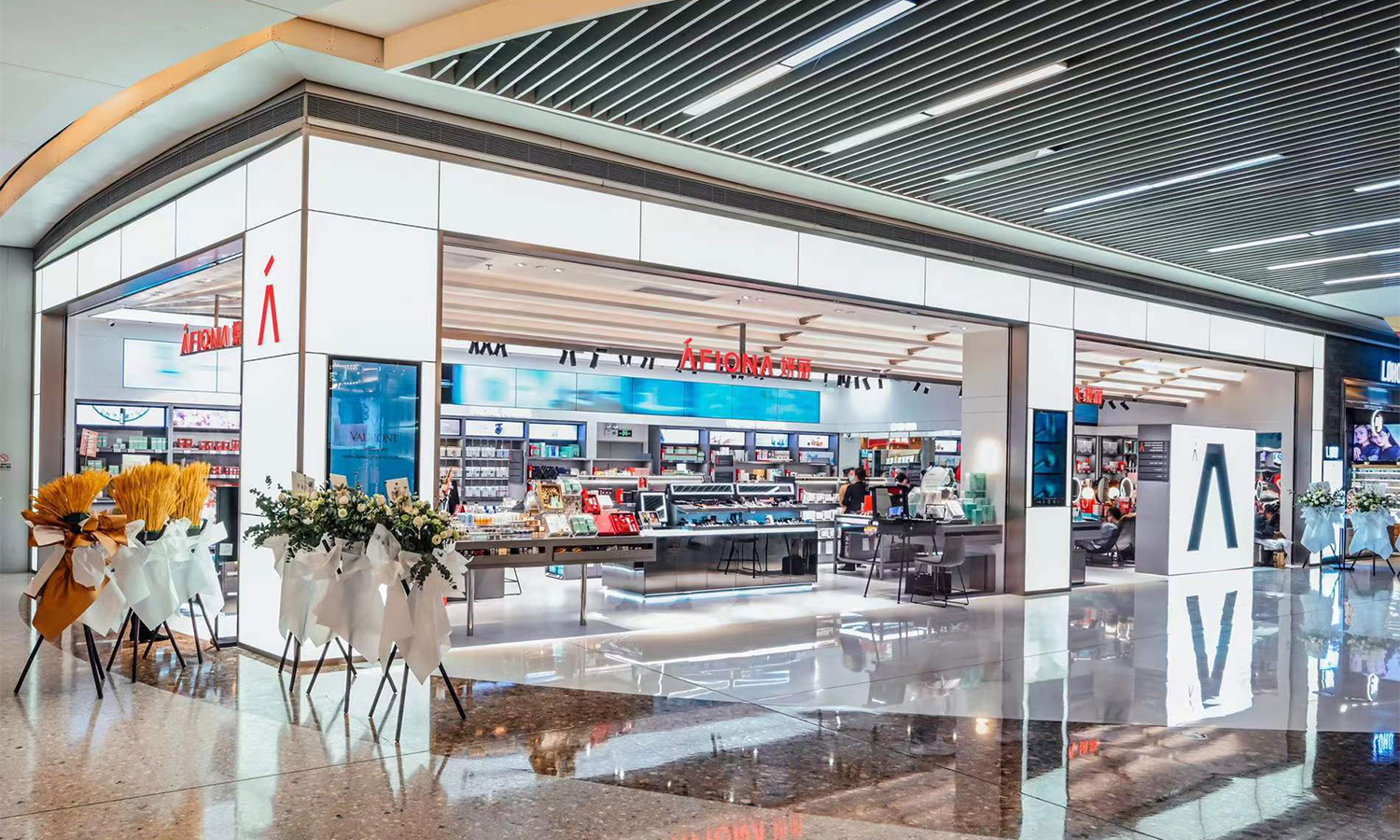
Fiona Group Holdings Limited is specialized in operating cosmetics chain stores. Many of the products we sell are from spa brands. Our company is quite influential in the market and we now have 150 directly operated stores in provincial capitals across China. We don’t do franchising. We will open 50 more stores in the next year, so it is about 200 stores in total.
MC Fifi: What are your criteria for selecting brands and products? What kind of partners would you choose and why?
Today, the cosmetics retailing industry in China keeps moving forward in a positive direction. It’s very good to see that a lot of young founders of new cosmetics brands are emerging. To create and operate a product brand really requires you to have a certain “sense”. The reason why it was so hard to have a very impressive cosmetic brand in China in the past was related to the traits, experiences, living styles of the older generation of entrepreneurs. These factors decide that their brands won’t be stylish or attractive enough. The needs of modern young people have fundamentally changed, so we need to have products created by younger people that features higher quality and are more responsive to the needs of today’s consumers.
Regarding our product selection, in the past, we basically only sold imported products. It was not because we looked down on national brands, but because at that time, there wasn’t any brand in Chinas that was qualified in terms of quality, brand image and distinctiveness. Every company has its own positioning, and our target is the middle to high-end consumer group, so we need high quality brands and products.
We have been in business for 26 years and have cooperated with many high-end spa brands. For example, we have been serving Albion, one of our earliest partners, for over 20 years. Except for Tokyo, Japan, we are the number one sales of Albion in other markets around the world. We have also been working with Swissline and Valmont for more than 10 years. Our company has actually developed together with these spa brands.
When we are selecting products, we don’t exclude the domestic brands. But we truly expect our domestic brand founders to bring products that are really high in quality, cost effective and with impressive service philosophy. We are also a national channel brand, so we really want to find a national brand as a mutual fit. Now that national brands in every area are on the rise, I’ve been trying to find a proper national brand to partner with, yet to be honest it’s hard. Some of them seem to be very impressive, and they do a lot of amazing brand marketing, but the quality is still not satisfying.
MC Fifi: As a cosmetics chain store operator, it seems that your focus is offline. Will you also be involved in the online business?
Yes. We set an all-channel development strategy four or five years ago. We call it a strategy of “land, sea and air”. “Land” means that we open offline stores. More than 70% of our current sales are from our directly operated offline stores. “Sea” refers to our WeChat mini-program online mall. We launched it before the outbreak of COVID-19 and that’s why our sales still kept growing during the pandemic. Many people couldn’t visit the offline stores during the outbreak, neither the department brand counters nor Sephora, so they had to go to buy the products online. Our mini-program online mall can meet their needs for shopping at home. “Air” refers to our flagship stores on Tmall, JD, Xiaohongshu and Tiktok. These are the channels that we feel we have to occupy. They may not be our main source of sales or places to serve our customers, but as a brand channel, we must have our flagship stores on all these mainstream platforms.
Of course, if you want to build and develop a brand, you cannot just do online business. If you do, it cannot be called a brand in a true sense. There must be a combination of online and offline business. We can meet the needs of a brand to help them better interact with consumers offline, to provide a direct experience, and to let consumers really understand the concept the brand wants to deliver. We are currently working with two design companies to design a unique experience space, one in Wuhan and one in Shenzhen. In such a space, we are allowing brands to showcase their concept and better communicate it to consumers, which is something that is harder to do online. This is an advantage of offline business.
Leave a Reply