“It can be anticipated that, with time, wellness real estate will become the norm and progressively transform residential neighborhoods as well as entire towns and cities.” Industry Report by GOCO Hospitality
As people are becoming increasingly aware of the impact of lifestyle and environmental factors on their wellbeing, they seek health- and wellness-enhancing solutions that can be implemented into their daily lives. But the fact is that the large majority of physical locations where we live, work and play do not always support the implementation of such solutions, and often limit the achievement of health and wellness goals.
Hence, real estate has a key role to play in providing the foundation that enables individuals and communities to live healthier and longer lives. Given this reality, the real estate industry has slowly but progressively transformed itself, especially since the beginning of the 21st century, in order to align with the expectations of today’s residents and to combat the many health problems that are adversely affecting populations globally.
Wellness real estate was born as a result of this evolution, and today represents one of the key industries that together form the global wellness economy. The distinct environment that wellness real estate creates is significantly different from what is achieved with traditional real estate, a difference that stems from the particularities of the wellness real estate development process.
This paper aims to provide an overview of wellness real estate, including the industry size, components such as wellness lifestyle real estate and wellness communities, trends and benefits, to define the particularities of the development process, and explain why a specific approach is required. The concepts discussed throughout this paper are also illustrated with a case study of the Glen Ivy Hot Springs Resort wellness real estate development in California, United States.
Overview of The Wellness Real Estate Market
Industry Definition and Key Characteristics
According to the Global Wellness Institute (“GWI”), wellness real estate is defined as “the construction of residential and commercial/institutional (i.e. office, hospitality, mixed-use/multi-family, medical, leisure, etc.) properties that incorporate intentional wellness elements in their design, materials, and buildings as well as their amenities, services and/or programming.” Although the wellness real estate movement is recent, it has been developed and inspired from numerous other movements that have shaped the building and living space since the 1900s.
Among these movements were the planned communities in the early 1900s (e.g. golf and retirement communities), the food movements of the 1970s (e.g. urban farms, farm-to-table, farmers’ markets), the design movements of the 1980s (e.g. Vastu, Feng Shui, multi-generational design, biophilic design) and the green and sustainable building movement of the 1990s (e.g. LEED, regenerative buildings, eco-villages). All of these movements have contributed to the creation and growth of the wellness real estate industry in the 21st century.
Industry Size and Growth Outlook
As of 2017, the global wellness real estate industry was worth US$134.3 billion (total construction costs), and has grown at a CAGR of 6.4% between 2015 and 2017. Given the rising awareness of the direct influence that living and working environments have on our wellbeing, the industry has been witnessing significant growth, with an increasing pipeline of projects and sales, despite the fact that the purchase of wellness real estate comes with sales premiums over traditional real estate.
Comparing regions, North America represents the biggest wellness real estate market, valued at US$54.8 billion in 2017, ahead of Asia Pacific (US$46.8 billion) and Europe (US$31.7 billion). The United States represents the largest wellness real estate market globally, valued at US$52.5 billion – more than twice the value of the second biggest market, China (US$19.9 billion).
There are currently more than 740 wellness real estate projects globally that are either already built or in development, and the pipeline is continuously growing. The wellness real estate industry is projected to grow by 6.0% annually, reaching US$180.0 billion by 2022.
Industry Components
The wellness real estate industry consists of various components, each with their own key definitions and characteristics. For the purpose of this paper, we will be focusing on wellness lifestyle real estate and wellness communities, and how they are anchored through wellness hospitality developments.
Wellness Lifestyle Real Estate
The GWI defines wellness lifestyle real estate as “homes that are proactively designed and built to support the holistic health of their residents.” In other words, wellness lifestyle real estate corresponds to the residential component of wellness real estate. For buyers, given that the purchase of a home generally represents one of their largest lifetime investments, integrating a personal health and wellbeing component into this investment is becoming increasingly appealing. For developers, the biggest interest in wellness lifestyle real estate stems from its potential to create large and integrated mixed-use wellness community developments.
Wellness Communities
A wellness community is “a group of people living in close proximity who share common goals, interests, and experiences in proactively pursuing wellness across its many dimensions” (GWI, 2018). While wellness communities can be created through wellness lifestyle real estate, they can also exist through social or cultural networks, independently of physical spaces such as real estate. Physical wellness communities are master-planned in ways that foster environments and connections that enable people’s health and wellbeing to thrive. Such physical wellness communities target different types of buyers or residents depending on the asset class. For example, while senior living wellness communities generally target mid- to upper-class retirees, residential wellness communities target younger and active couples and families. Regardless of their type, physical wellness communities are most successful when developed around a wellness anchor, which can consist of a wellness resort, a destination spa, or a natural asset such as hot springs, among others.
Blue Zones, a concept defined by award-winning author and journalist Dan Buettner as regions in the world where people live longer and healthier lives than the rest of the world, represent a successful example of wellness communities. Based on nine core lifestyle habits (Move Naturally, Know Your Purpose, Down Shift, 80% Rule, Plant Slant, Wine at 5, Family First, Belong and Right Tribe), Blue Zones are unique in their characteristics and represent a good benchmark for the ideal impact of wellness communities on people’s health and wellbeing.
Benefits of Wellness Lifestyle Real Estate
For Buyers
The immediate and more apparent benefit of wellness lifestyle real estate is on the end user. The philosophy and guidelines underlying this asset class are, before all, to provide healthy environments for people to live, work and play, which can be achieved through a combination of location, design, architecture, landscaping, choice of materials and technology, among other factors.
Thus, assuming an appropriately developed wellness lifestyle real estate project, the achieved impact is an increase in the health and wellbeing of the end user. Additionally, for lifestyle investors who are interested in properties that will not only enhance their lifestyle but also appreciate in asset value, wellness lifestyle real estate results in faster value growth on average, and thus is considered as a more attractive investment compared to traditional real estate.
For Developers
The main advantage of wellness lifestyle real estate for developers is the increased returns that such developments produce. Although development costs are typically higher than traditional real estate developments, the enhanced lifestyle that is brought to buyers of wellness lifestyle real estate results in significant sales price premiums due to faster anticipated asset value appreciation.
Wellness lifestyle real estate developments typically achieve average sales price premiums of 10.0% to 25.0% over comparable traditional real estate developments in respective markets; yet, these premiums can range widely between 10.0% and 55.0%. Higher premiums are generally achieved when wellness lifestyle real estate is developed around a wellness anchor, such as a wellness resort.
For Operators
In the case of wellness lifestyle real estate that is developed around a wellness resort, the operator of the resort draws significant benefits from the development as a whole. Firstly, the wellness resort typically becomes a clubhouse for the surrounding residents, thus enabling the operator to generate increased demand for the resort’s operating departments. Indeed, residents typically utilize the resort’s wellness center, food and beverage outlets, and participate in wellness programs or workshops. As a result, the wellness resort’s overall capture of external guests increases, which subsequently contributes to higher overall resort revenues and profit margins, and thus higher base and incentive fees for the operator.
Secondly, in the case of branded residences that are developed alongside a wellness resort as part of the development, the operator generally grants the developer a license to use its brand for the marketing and sale of these residences. In exchange, the operator requires compensation in the form of a real estate branding fee (also known as a marketing license fee). Real estate branding fees range between 2.0% and 5.0%, on average, of the gross sales volume achieved through the sale of any of the branded real estate units.
Finally, branded real estate also provides an opportunity to operate a sale and leaseback model. Such a model enables the operator to increase its unit inventory and thus drive more accommodation departmental revenue, while also benefiting from management fees paid by the unit owners. Further details pertaining to the structure and mechanics of the sale and leaseback model are explained in the following section of this paper.
The Wellness Real Estate
Development Process
This section focuses on the development process of wellness lifestyle real estate, specifically as it relates to developments that include the integration of a wellness resort (as an anchor) and a wellness lifestyle real estate component, with the purpose of creating a wellness community. Under such a concept, wellness lifestyle real estate is essentially developed according to a process and key phases that are similar to traditional residential real estate development. But the wellness lifestyle real estate development process contains certain key distinctions in each of the phases, especially as it relates to concept development, master planning and design. The following section explores the components that are unique to wellness lifestyle real estate in each of the development phases.
Site Selection and Analysis
The determinants that make a site fit for a wellness real estate development include the following:
Location: Situated far enough from any source of noise pollution (e.g. busy roads, airports, factories), and yet accessible and well-connected to facilitate the journey to and from the development.
Topography: Ideally minimal elevation difference throughout the site, in order to create a development that supports seamless circulation and walkable neighborhoods. However, some elevation difference can also create more active and healthy circulation. Natural features such as water sources, trees and rock formations are desired to the extent that they provide an existing landscape base that can drive the layout of the master plan without too many limitations.
Scenery: From the perspective of end users, while surrounding natural scenery is desired, open or stunning vistas towards the outside of the site are not necessarily required. Indeed, sites that do not have open external views may still support internally-focused wellness real estate concepts, where the inner community and landscaping drive the wellness experience. However, from the developer’s perspective, unique and open views are typically more attractive as they lead to higher sales price premiums.
Market Research and Feasibility
The market research and feasibility phase of wellness real estate developments addresses the following key areas:
Market Condition, Outlook and Trends: The global, regional and local wellness real estate market is analyzed in order to understand the ongoing trends, anticipated shifts in supply and demand, and overall dynamics of this specific asset class. Similarly, the local traditional residential real estate market is evaluated with the purpose of uncovering opportunities that may exist for wellness lifestyle real estate developments.
Competitive Analysis: The identification, selection and analysis of existing or pipeline projects that are anticipated to compete directly or indirectly with the intended development focuses on the following factors:
- Units: Types, mix, sizing, configuration and design.
- Sales strategy: Including the buyer profile, which typically falls into three (3) main categories:
* End users: Purchase the property as a first, secondary or holiday home for personal use and with less interest in renting their property;
* Investment buyers: Purchase the property for annual returns or capital gains, and seek high guaranteed yields;
* Lifestyle investors: As previously defined, purchase the property to enhance their lifestyle while also seeking asset value appreciation.
- Ownership regulations: Authorized type of tenure, such as leasehold, freehold and power of attorney; the ownership regulations have a direct impact on the sales strategy.
- Absorption rate: The achieved unit sales rate of an existing competitive development or the anticipated sales rate of pipeline developments, calculated as the number of units sold on a monthly or yearly basis.
- Rental program: In the case where the wellness real estate units are branded by a wellness resort operator, a sale and leaseback scheme may exist. Under such a scheme, the developer sells the real estate units and the owners of the units accept to lease their respective units back to the developer in exchange for an owner’s return, thus including the units in the wellness resort’s accommodation inventory. Rental programs are structured according to the following criteria:
* Optional or mandatory;
* Owner usage days, which ranges, on average, between 20 and 60 days of usage per year;
* Owner’s return, which is either calculated as a percentage of net room revenue or as a percentage of net profit, and is paid on a monthly basis, after deduction of service charges, such as sales and marketing, telecommunications, utilities, management fee, and common area maintenance expenses, which are paid by the owner. However, it is key for both the operator and developer to carefully consider the impact of the owner’s return on the wellness resort’s profit and loss statement. While the developer’s investment return benefits from real estate sales proceeds, the owner’s return may result in a significant monthly expense, thus adversely impacting the wellness resort’s bottom line.
Wellness Concept Development Strategy
Based on the selection of the site and the outcome of the market research and competitive analysis, a differentiated development strategy is established, along with key criteria that drive the sales, marketing and business model of the development. The development strategy of wellness lifestyle real estate includes the following:
Positioning and Target Market: The positioning of a wellness lifestyle real estate development can range between a number of categories, such as senior living, multi-generational and multi-family housing, master-planned wellness communities, mixed-use projects and resort- or spa-based real estate, among others. Different positionings will attract distinct target markets; yet, wellness lifestyle real estate predominantly targets local buyers as opposed to international buyers.
Development Components: The established positioning and target market determine the type of wellness amenities to include as part of a development. Additionally, different nationalities also have different expectations of wellness amenities, depending on their preferences. Overall, end users of wellness lifestyle real estate generally expect the following amenities: a clubhouse, which may include a spa, fitness center, healthy dining options, a kid’s club and other common spaces that support social interactions, as well as outdoor wellness facilities such as yoga platforms, trails and functional fitness equipment, parks and organic farms, among others.
For wellness communities that are anchored around a wellness resort, the latter generally becomes the clubhouse for wellness lifestyle real estate residents. Most importantly, wellness communities are defined by a strong social component that is brought to life through common spaces where workshops and other community events are hosted, and through other outdoor spaces such as gardens and plazas that foster interactions among community members.
Design and Development Brief
The design and development brief is a document that combines a summary of the key components of the development, as per the concept strategy, along with a detailed area program that includes the sizes allocated to each of the spaces that together constitute the entire development. The purpose of this document is to provide the master planners, architects and designers with the guidelines needed for the detailed master plan to be aligned with the concept strategy.
Given the particularities of wellness lifestyle real estate in terms of concept, components and space allocation, the design brief is a crucial document that serves to translate a project vision into a successfully executed development, where all details have a significant impact on the user experience of the end product.
Master Plan
The master plan of a wellness real estate development requires a focus on the following elements:
Location of the Components: While isolation and privacy are key to creating a soothing and quiet environment for wellness lifestyle real estate residents, it is essential for the layout of the master plan to foster a sense of community by designing interactions between guests and residents. For example, in the case of developments anchored around a wellness resort, the wellness center and certain food and beverage outlets should be strategically located in between the wellness resort and the residences in order to be easily accessible to both.
Circulation of People: Connectivity and comfortable walking distances between the different areas of the development are essential, and can be linked back to moving naturally, as per the Blue Zones trait. An extensive circulation system that incorporates walking, running and biking trails makes it more convenient for people to move actively.
Landscaping: As one of the key pillars of a successful wellness master plan, landscaping is used to successfully support the therapeutic effect of greenery and the natural movement of people. However, landscaping also enables the creation of an environment that maximizes exposure to light while optimizing shading, encourages airflows, isolates noise, naturally regulates temperatures, and creates cocooning spaces, all of which are essential to the wellbeing of guests and residents. Whereas the topography and composition of a site may impose certain landscaping limitations, they also create unique layout opportunities. Overall, the key to a successful wellness landscape is to minimize disturbances to the land.
Design Guidelines for the Master Plan
Once the master plan is finalized, the next step in the process entails the establishment of the design parameters for the entire development. The purpose of these parameters is to create coherence among all of the different components of the development, from a design, architecture, landscape and concept standpoint.
The absence of such parameters creates clutter and can result in the isolation of clusters within the development, thus acting against the successful creation of an integrated wellness environment and community. Such an effect generally translates into poor asset performance. Examples of such design parameters include the type and color of materials, the width of the roads and sidewalks, the height of buildings, and architectural elements, among others.
Detailed Design of Individual Facilities
This step in the development process focuses on the architecture and interior design of each of the individual facilities, and is key to merging the entire development together over a wellness foundation. The details required in this phase present an opportunity to incorporate a number of wellness and sustainability focused elements, such as the following:
Orientation and Form: Positioning and designing the form of the buildings in a way that maximizes the use of environmental resources, such as light, air, and views, and that leverages cross-ventilation, thus creating comfort and optimizing energy consumption.
Materials: Prioritizing natural and durable materials that are functional, require minimal maintenance, create a sense of warmth and that are soft to the touch. Ideally these materials are locally sourced, in order to limit the carbon footprint. Such materials include, but are not limited to, natural stones, wood and textured tiles, and should naturally blend with the shapes and tones of the local landscape.
Biophilic Design: Incorporating nature into the buildings, in order to increase the sense of connectedness to the natural environment. Biophilic design can be achieved with internal or external vegetation walls, designs that mimic natural forms and patterns, and the presence of water features, among others.
In the case of branded wellness lifestyle real estate, it is crucial that, prior to this phase, a decision is made regarding the lease back to the wellness resort of some or all of the units sold to independent owners. Such a decision impacts the use of the units and thus their architectural design. Indeed, while the units sold need to be coherent with the wellness resort’s brand standards from a functional, layout, interior design, and safety perspective, they also need to accommodate for the use of private owners, which can translate into adding kitchens, maid rooms and owner’s storage space, for example.
Construction
The construction phase of a wellness-centric development is similar to that of a traditional real estate development. However, certain new technologies can enable a more sustainable construction process, such as prefabricated technology. The prefabricated construction model is based on the manufacture and assembly of building components in off-site factories (although temporary on-site prefabricated facilities also exist). Once the entire buildings, or building components, are assembled in the factory, they can then be easily transported and set up on site. The benefits of the prefabricated model include the significant reduction in construction time and costs, the minimization of pollution and waste, the decrease of construction safety hazards, and quality control.
For wellness real estate developments that include a wellness resort and wellness lifestyle real estate, the construction phase of the development process concerns first and foremost the wellness resort component. In order for the wellness lifestyle real estate component to generate the desired sales price premiums, as previously explained, it is essential that the wellness resort be first operational and established as an anchor. Thus, the construction of wellness lifestyle real estate typically comes as a second phase, after the wellness resort’s opening.
Marketing and Sales
Similarly to traditional residential real estate, the marketing and sales process of wellness lifestyle real estate typically begins prior to or in line with the beginning of the construction phase. A specialized in-house marketing and sales team is established and works with third-party professional wellness-oriented realtors who are influential in the domestic market. At this stage in the process, the following key components need to be already established: sales price, ownership structure, payment terms, wellness community resident benefits (e.g. access to amenities, discounts, etc.), rental program (if applicable), and targeted absorption rate. Partnerships with other market enablers, such as health and wellness related consortiums, publications and events, also help to increase awareness of the development with the targeted buyers, and thus drive sales.
Case Study:
The Temescal Valley Project
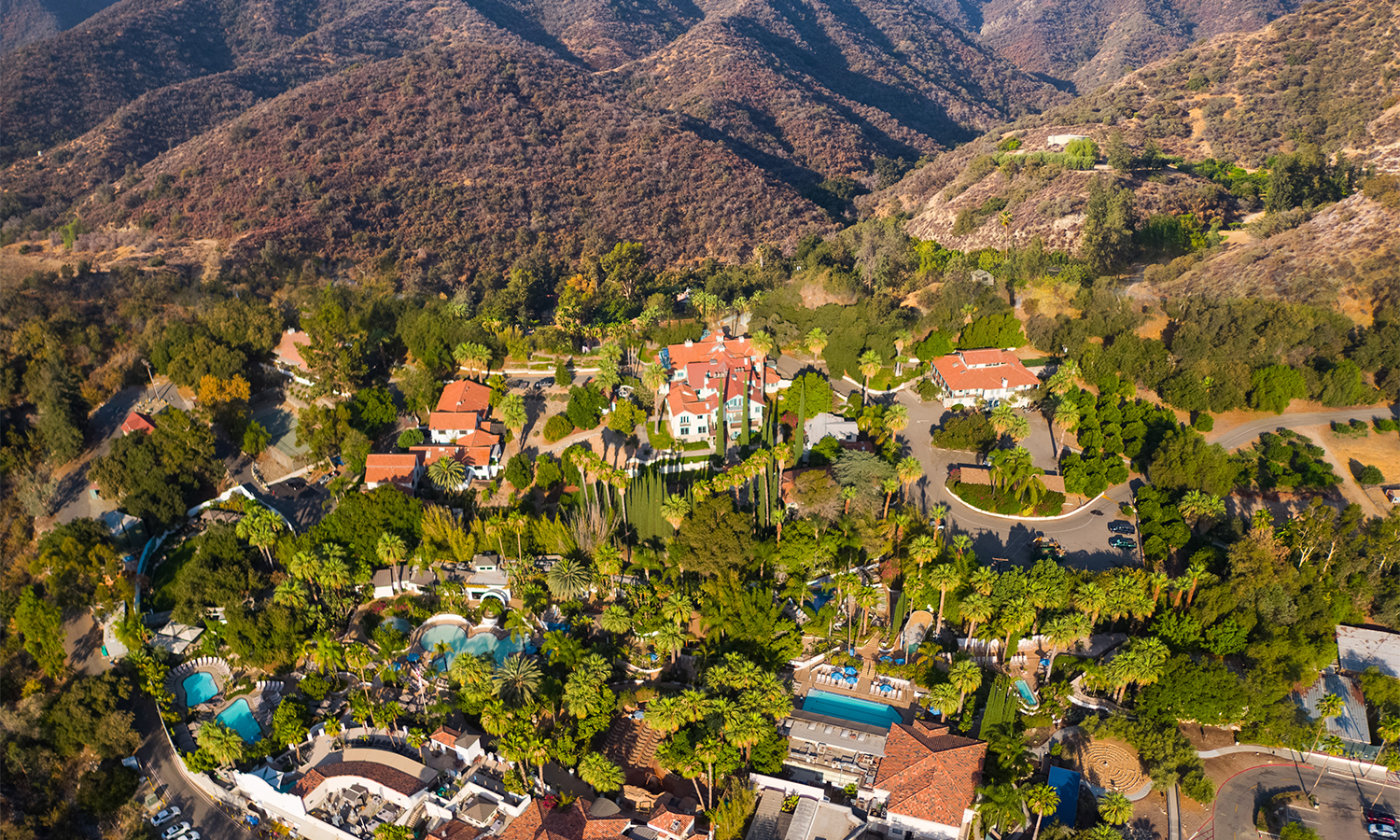
Owned and operated by GOCO Hospitality, Glen Ivy Hot Springs Resort is a historic natural mineral hot springs destination resort that was established in 1860. It is located within Riverside County’s Temescal Valley in California, United States, approximately a 70-minute drive from Los Angeles and a 90-minute drive from San Diego. GOCO Hospitality is currently in the planning stage of developing a master-planned integrated wellness community (the “Development”) surrounding the Glen Ivy Hot Springs Resort that will include the following components:
Expansion of the existing Glen Ivy Hot Springs Resort facilities to enhance the day spa experience;
- Lifestyle Boutique hotel of approximately 140 keys for overnight stays (the “Lifestyle Boutique Hotel”);
- Wellness retreat of approximately 45 keys for targeted wellness programs (the “Wellness Retreat”);
- Community retail village (the “Village”);
- Private and branded residences;
- Outdoor recreation and conservation areas.
The first phase of the Development will begin with an expansion of the existing Glen Ivy Hot Springs Resort facilities and be followed by the development of the Lifestyle Boutique Hotel. The purpose of the first phase is to create a true destination spa experience by enhancing the service offering and by providing guests with an opportunity to extend their stay with overnight accommodation.
Anchored by the expanded Glen Ivy Hot Springs destination, the second phase of the Development will include the Wellness Retreat, a variety of private and branded residences, the Village and outdoor public recreational areas. The purpose of the second phase is to provide a luxury getaway for guests seeking targeted wellness programs at the Wellness Retreat, and to create a dynamic wellness community by developing a range of accommodation types targeting different users, such as full-time residents and part-time residents through a sale and leaseback model. The residences will also be developed in phases, along with the public spaces. Phasing the Development in such a way will enable to progressively build key anchors that will contribute to increased real estate sales premiums.
The Development will present certain key elements that define wellness real estate developments, such as:
Landscaping, Conservation and Outdoor Recreation: 32.2 acres, or 39.5% of the entire Development area, is dedicated to outdoor components. The purpose of these areas is to preserve the site’s rich natural heritage while minimizing environmental degradation, encourage active circulation, and provide activity, relaxation and contemplation spaces that reconnect the residents and guests back to nature. The Development’s outdoor components include a trail through old oak trees, organic orchards and gardens, passive open spaces, hiking, biking and walking trails, outdoor fitness equipment, relaxation areas, children’s play areas, and a natural open space conservation area, among others.
Community Creation and Engagement: One of the key pillars of the Development is to create a community of residents and guests who share the same interests in wellness, active lifestyle and outdoor living. The combination and proximity of the Lifestyle Boutique Hotel, the Glen Ivy Hot Springs Resort and the Village support this pillar by establishing a focal point for the community to interact through a range of wellness- and lifestyle-related retail shops, art galleries, interactive spaces and event spaces.
Furthermore, the “park once” concept dedicates only one parking area within the commercial part of the Development, as a way to encourage pedestrian circulation and limit parking use. Finally, memberships for the Wellness Retreat and Glen Ivy Hot Springs Resort will be made available to residents, thus further engaging them and strengthening the community.
Wellness Design Standards: The Development follows specific design guidelines that help to create spaces that emphasize wellbeing, quietude, connectedness and natural rhythms. These guidelines are consistent throughout the entire Development, while still giving each of its components a distinctive identity. The underlying architectural style is defined as “Contemporary Californian Resort”; it is modern, simple, with straight or clean edges that emphasize a connection between indoor and outdoor environments, and it integrates with the surrounding landscape. Key elements of the design guidelines include large roof overhangs that create covered arcade corridors, large glass facades, use of natural materials, courtyards, gardens and open terraces, as well as trellises to create spaces that combine light and shadow. All of these physical elements bring to life a soothing and uncluttered atmosphere that encourages healthy lifestyles.
The Glen Ivy Hot Springs Resort wellness community project features some of the key characteristics that define the wellness real estate development process, as described in this paper. The current day hot springs destination facilities, as well as the future commercial components, will provide residents with significant added value from a wellness lifestyle perspective, and thus support the achievement of premiums on the sale of the residential units. Upon completion of the Development, the Glen Ivy Hot Springs Resort is set to become a benchmark for integrated wellness communities globally.
Conclusion and Outlook
Driven by an increased consciousness of the impact of physical spaces on our health and wellbeing, the wellness real estate industry is growing and progressively redefining the standards of the places where we live, work and play. The power of wellness real estate stems not only from supporting healthy and active lifestyles, but also from its ability to foster communities of people that share similar values and personal goals. Successfully achieving the objectives defined by wellness real estate and expected by the end users requires complying with certain key particularities during the development process, and thus involving specialized consultants and project managers.
Given the growing popularity of wellness real estate globally, it can be anticipated that, with time, such development types will become the norm and progressively transform residential neighborhoods as well as entire towns and cities. Such a transformation would not only increasingly benefit populations and the environment, it would also result in a growth of profitability and returns for all of the development players involved. Thus, although wellness real estate currently represents only a small portion of the total real estate industry, the benefits it brings to its developers, investors and end users are expected to generate a rising interest from stakeholders globally.