Category: Interview

  • The Handmade Uniqueness at Ta Xiang

    The Handmade Uniqueness at Ta Xiang

    An Interview with Ms. Lan MA, the Founder of Ta Xiang

    No matter how rapidly this world changes, natural beauty and authentic art remain everlasting. Beyond all the industrial development and technology breakthroughs, the precious pieces created by artisan hands forever shine with exotic beauty and continually tell stories of another era.

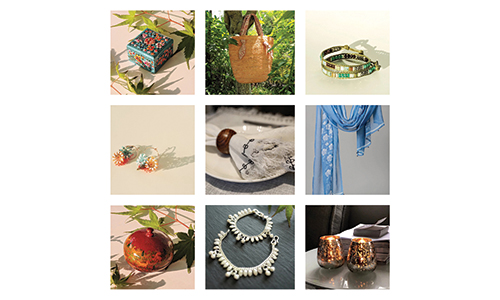
    From miniature painting techniques dated back to the 6th and 7th centuries to Cota silk weaving skills with 300 years of history, from gem bracelets, silk floss scarves to hand woven baskets and natural shell handbags… “Ta Xiang”, a lifestyle brand selling pure handmade products, is now bringing to China’s consumers a huge variety of unique pieces created by skillful artisans in India, Indonesia, Thailand and Turkey. On one hand, traditional art has been revived, and on the other, the local poor female artisans gain economic independence and social identity.

    The founder of Ta Xiang, Ms. Lan has had a very distinctive career path. After she got her Ph.D degree in Biochemistry from Boston, she worked in P&G, McKinsey and Dupont, mainly involved in brand marketing. Two years ago, however, she gave up her career and began a completely new chapter in her life. Together with several other women who share the same love of handmade arts, and also have rich traveling experience and cultural resources, Lan created Ta Xiang. SpaChina interviewed her. Let’s hear her talk about life, dreams, art, wellbeing and social responsibility. 

    Tell us about Ta Xiang. What are your main products and who are your customers?

    Ta Xiang is a lifestyle brand. It brings imported, handmade, high quality and unique lifestyle products for personal and home use to China. Each piece is exquisitely designed and painstakingly made by overseas artisans using special techniques, taking days or even months. The name Ta Xiang means ‘Her Village’ and ‘Her Community’. The brand was started by women, the products are made by women artisans and they are for women and their families.

    We are a few Chinese and foreign women who have lived, worked and travelled all over the world. From faraway countries, on roads less travelled, in remote countryside areas and villages, and in hard-to-find alleys, we found delightful handcrafted objects. They carry cultures, history and stories. They connect with our hearts, touch our souls and enable our individual expressions, different from any other person. Through Ta Xiang, we wish to connect women, from city to rural areas, from the privileged to the less privileged, from creator to consumer, from dedication to appreciation, all through a common bridge of appreciation of beauty, authenticity and the magic of the human hand. 

    Ta Xiang is now working with NGOs (Non-Government Organizations), Non-Profit Organizations and independent local designers to bring unique and beautiful handcrafted lifestyle products into China. Our customers are mainly educated and interested in arts and culture. Many of them are handicraft lovers. They purchase our products for personal use or as gifts because they find Ta Xiang products unique, of good quality and special. We currently mainly promote and sell products on We-shop (wei dian) and at selected designer/handicraft markets. We also collaborate with a few other brands. 

    One of the major goals of Ta Xiang is to help poor female artisans realize economic independence. Could you tell us more about this?

    That’s true. Although Ta Xiang is a brand for profit, at the same time, it has non-profit characteristics and socia l responsibilities. We work with overseas NGOs to help provide livelihood for those women artisans who have a low economic background, yet they are very skilled and dedicated in their crafts. We also hope to help promote the handicraft techniques, many of which are close to disappearing these days.    

    In our spa world, we always emphasize the balance and unity of body and heart. In your opinion, what is the spiritual and social meaning of your present life and work?

    Along my career path, I have always sought such an ideal job as this one: it matches my values and interests, and helps me improve myself. Working with Ta Xiang gives me a chance to fully display my potential capacity and enables me to achieve a balance among work, family life, children, friends and myself. This new job gives me much passion and satisfaction. Now I can focus on the things I love, do things in the manner I myself approve of and arrange my life according to my own will.

    In the past, I was a perfectionist and too demanding of myself as well as of the people around me, which in fact gave me much pressure. Now I follow the Twenty-eight Law. I enjoy the process of getting better and better gradually. Now I understand more of how to enjoy the journey.

    These are the things I am learning now: not wasting time thinking about or being entangled with meaningless things, not deliberately holding to the memory of the past, not worrying too much about the future; being more tolerant and calm, self-knowing and self-disciplined. If you want to achieve a balanced life, you need to know yourself, believe in yourself and spend more time with those whom you love and care for.

    These are my discoveries and that is my understanding of the way to seek a balanced status of body and soul. Now with Ta Xiang, we have the chance to share beautiful products as well as the stories, cultures and histories behind the products with our customers. Likewise, our customers not only buy material things, but also join us in the appreciation of culture and art. Although we started not long ago, we have already attracted a group of loyal customers who appreciate our products and concepts.

    Meanwhile, as I said, we also help women artisans who live in poor areas to achieve economic independence. We are very pleased with this.

    To most people today, mass-produced products still dominate their daily lives. How do you see the development potential of pure handmade products?

    I have always loved beautiful handmade things. During my corporate career of 20 years, I traveled all over the world and wherever I was, I searched for beautiful handicrafts. I found the most beautiful things in countries with rich hand-making traditions such as India, Indonesia, Thailand and Turkey. Even several centuries after the Industrial Revolution with so much assembly line-produced identical finished goods, people still like handicrafts. The variety and vibrancy of handicrafts, the story and legacy they carry of human life still attract people. People immediately feel a special affinity with handicrafts as they help them to assert their unique identities and place in this world. In a stitch, through a thread, craftsmen display their unique skills. Then, the silent material world is transformed into life and meaning. Ta Xiang firmly believes that handicrafts are an art filled with warmth and soul from the very beginning. I believe that in today’s fast-moving and large-scale production era, there is great value and need to let individual, unique and handmade things come into our lives. These things are not only for utility, they also enrich our daily lives and allow us to express ourselves as individuals.

    What challenges have you met while operating such a handmade brand and how do you resolve them?

    A purely handmade brand has its distinctiveness and thus brings many challenges. As our products mainly come from remote foreign lands where the economy is less developed yet traditional handicraft techniques are best reserved, it is sometimes hard to guarantee a stable and large-scale supple of goods. The production cycle is subject to the artisans’ time available, the supply of raw materials and climate change. Therefore, in the last year, we have worked hard on this problem. Now we have established stable cooperation with many artisans, non-profit organizations and individual designers to guarantee the supply of products.

    Another challenge comes from the market. Unlike volume production by machines, it is inevitable to see handmade traces in our products. We have tried many methods including testing the quality of the materials, but we still cannot ensure that any two product items will be completely the same. For example, our cloth products are mostly dyed with organic natural dye, such as indigo blue. So when you wash it with water for the first time, the color may fall off a little. But all these are the characteristics of handmade products. They exactly show the authenticity and charm of them. Some customers haven’t fully recognized such beauty and cannot tolerate tiny flaws or nuance. But we find that more and more Chinese people are turning from big brand machine produced products to individual brands focused on handmade products. I believe the trend will keep developing and more people will fall in love with and choose handmade products which deliver warmth, culture and stories. I am very happy that we now have won many fans. Some customers have made purchases from our We-shop a dozen times already. And our return-purchase rate reaches 20%-25%.

    What opinions or suggestions do you have on improving the physical and mental health of modern women?

    Modern women often face much pressure from multiple aspects such as family, children and career. I think, to improve their mental and physical health, the first thing is to achieve a balance between work and personal life. We can do exercise and treatments to effectively keep our physical health and adjust our mentality to maintain mental health. Personally, I visit spas regularly. Every time after a spa treatment, all my tiredness melts away. Moreover, I have a more sober mind and a better mood. Concerning mental health, my suggestion is to leave more time to yourself so that you can know and love yourself better. Your best friend through life is no one else but yourself. Also, set a clear boundary between work and personal life. If it is beyond your ability, boldly say “no”. Our time and energy are limited, so we need to give them to the people and things we really care about. Surely, we meet annoyance and confusion now and then, but we need to try our best to avoid their influence and learn to be concerned with issues rather than individuals.

    Spa also focuses on the wellbeing of women. Are you selling products at spas? If yes, how is the sales performance so far?

    Yes. Ta Xiang and spas both target women customers. Likewise, as a lifestyle brand, our handmade products manifest a pursuit and passion toward quality life, just as do the spas. So we firmly believe that in the future, Ta Xiang will appear at more spas in China. At present, we have already entered Four Seasons Hotel Hangzhou at West Lake and are very pleased with the feedback from the spa and customers.
  • 异域匠心系她乡

    异域匠心系她乡

    访她乡悦品创始人马兰女士

    无论世界如何变更,自然、美好与真实始终是人们心深之所向;所以,即便是在工业文明如此发展的今天,那一件件色彩斑斓、风情独韵的手工艺品依然牵引着人们的心。

    从起源于公元6-7世纪的微型绘画到延续300年的科塔丝织,珠石手链、丝绵围巾到手编花篮、天然贝壳手包,“她乡悦品” 前往印度、印尼、泰国、土耳其,寻见到技艺精湛的手工匠人,将她们的精心制作搜罗网集,呈现在中国消费者的眼前。一方面,传统的手工艺技术得以传承,同时,相对贫困的女性匠人们也通过此获得了经济独立和社会认同。笔触之端,针线之间,承载着故事与情怀。

    创始人马兰女士过了20年职场女强人的生活,北大本科毕业后赴美,取得生物化学博士学位,先后在宝洁、麦肯锡、杜邦等公司任职,主要从事品牌营销战略工作。如今,她告别职场,开始了一段新的旅程,与其他几位同样拥有丰富旅行经历和文化资源积淀,并着迷于手工艺品的女性们共同创立了“她乡悦品”(Ta Xiang)。SpaChina有幸采访了马兰女士,她将与我们分享关于人生、梦想、艺术、身心与社会回馈。

    能为我们介绍一下“她乡悦品”这个品牌吗? 您们的产品主要有哪些?喜欢这些产品的是哪些人?您们主要通过哪些渠道进行产品销售以及市场推广?

    “她乡悦品”是一个生活方式品牌,致力于将全进口、纯手工、高品质又极具特色的个人家居生活用品带入中国。每一件商品都由海外工匠运用特殊工艺,耗费时日进行精心设计和制作。她乡,取自“她的村庄”、

    “她的群落”;“她乡悦品”由女性创立,产品出自女性工匠之手,同时也是为女性和她们的家庭而生。

    我们是几位来自中国和海外的知识女性,工作、生活和旅行足迹几乎遍布世界所有主要城市。我们在遥远的异国他乡,从那些偏远僻静的土地上、隐蔽少人的街巷中,发掘出由匠人们手工制作的精美物件。它们包含文化、历史和故事,触动我们的心灵,让我们以独特的方式表达与众不同的自我。通过“她乡悦品”,我们希望建立一座桥梁,让众多寻求真善美和鉴赏手工之趣的女性彼此沟通,从城市到乡间、从社会上层到社会低层,从创作者到消费者,从投入者到欣赏者。

    目前,她乡悦品与多个非营利性组织以及当地的独立设计师均有合作,共同将独特漂亮的手工艺品带入中国。

    我们的客人大多是爱好手工艺品的高知和人文群体。她们欣赏我们产品的质量、独特和别致,常购买自用或者送礼。“她乡悦品”的产品目前主要通过微信微店和参与线下手工设计品牌集市的方式进行销售和市场推广,还会跟一些线下的品牌合作。我们已与众多客户保持良好互动并形成口碑效应。

    “她乡悦品”成立的初衷之一是支持贫困的女性手工艺者更好地获得经济独立,品牌成立至今,在这方面的效果如何?

    是的,“她乡悦品”虽然是个商业品牌,但与此同时,它具有非盈利性质,是个社会企业。我们和海外的非盈利机构合作以帮助女性获得经济独立。她们大多来自低收入群体,通过我们的推广和销售,那些虽然贫穷但技艺娴熟并热衷手工艺的人们获得了帮助。我们也希望可以为帮助延续一些流传已久的珍贵手工艺作出贡献,其中有不少在当今面临消失的危险。我们在这些方面都已见不错的成效。

    在SPA行业,我们常常说到身心合一、身心平衡,您觉得您的生活和现在的事业,有什么精神意义和社会意义,您想要表达和传达的是什么样的思想和理念?

    品牌创立的过程中,我对自己有了很多新的认识。在整个职业生涯中,我一直在寻找这样一份理想工作:它契合我的价值观、与我兴趣相符,并能实现自我增值。这是一个持续而漫长的探索旅程。“她乡悦品”的工作,为我提供了展示自我专业力的机会,也让我在工作、家庭、孩子、朋友和个人时间中找到了平衡。它带给我很多激情和满足,如今我可以专注自己热爱的事情,以自己认可的方式来做这些事情,而且可以按照自己的意愿来安排时间和生活。

    过去的我是个完美主义者,凡事都要做到十全十美。对自己和身边的人都要求过高,造成不小的心态压力。现在我更倾向于二八法则,更重要的是享受从无到有,逐渐变好的过程,这是一种考验,也是一段旅程,现在的我更懂得珍惜和享受这个旅程。

    不该想的东西,不要去想;不该纠结的事情,不要纠结;过去的事不要刻意怀念;将来的事不要发愁。更宽容、更轻巧,也更加自知、自律,记得给自己的心态也做个“断舍离”。平衡之道,在于了解自己,相信自己,将你的时间、精力和最珍视的态度留给你在意的人事。我知道自己一天天在向它靠拢。

    以上是我个人在探索身心平衡的过程中的一些体会。除此之外,通过她乡,我们有机会可以把独特的美带给客人,把产品背后的故事,文化,和历史讲述给他们。客人的体验不仅仅是物质的消费,同时也有文化和情怀的共鸣。她乡虽然起步不久,但已经有一些非常忠实的客户,她们欣赏我们的产品和产品背后的理念。

    与此同时,如之前提到的,我们把边远地区工匠的产品带进中国,带到城镇,也为那些生活贫困的女性匠人们创造了经济独立的机会,这也是让我们非常欣慰的。

    对于大多数人来说,大机器制作的品牌产品依然是日常用品的主导,您怎么看待纯手工制品的发展潜力?

    我一直很喜欢精美的手工物件,在20年的职涯中,我游历世界各地,总是尽心搜罗当地漂亮的手工艺品。我发现在印度、印尼、泰国、土耳其这些传统手工业发达的国家,有很多十分漂亮的手工作品。

    工业革命带来了大规模的机械化流水生产,但在那之后的几个世纪中,人们仍旧钟情手工制品。在一针一线,一刨一锯间,古老的手工诗意蔓延开来。匠人们将无声的物质世界,转化为生命,形成生活的意义,物质的精致温暖,被人们重新认识。她乡悦品坚信,手工艺从诞生之日起,就是有温度的艺术。

    我认为在如今高速运转的大规模生产时代,将独特有个性的手工艺品带入生活,有着很大的意义和需求。这些物件不仅有实用功能,还蕴丰富了我们的日常生活和个人表达。

    在运营一个手工制品的品牌过程中,有什么特殊的挑战吗?您们是如何解决的?

    确实,一个纯手工制品的品牌有其特殊性,因此带来不少挑战。我们的手工品大多来自海外的偏远地区,出自经济发展缓慢、人力物力消费较低但传统手工技艺保留得较好的地方。这给品牌货源的稳定性和规模化带来一定难处。产品的制作周期会受到工匠的时间、原材料的供应、季节气候变化等因素的影响。所以过去的一年内,我们在货源上花了很多功夫。现在我们已和不少工匠、非营利组织以及独立设计师建立了稳定的关系,货源有了相当的保障。

    另一个挑战来自市场。手工制品无法像机器批量生产,难免会留下一些手工制作的痕迹。虽然我们尝试了很多方法,包括检测货源的质量等,但仍然不能保证两件产品完全相同。布料大多只用有机自然染料印染, 比如靛蓝, 所以如果水洗,初次颜色可能稍微脱落。这些都是纯手工制作的特点,也反映了手工的真实、淳朴和魅力。中国的一部分客户目前还没有充分认识并欣赏手工产品的美妙,一些人无法包容手工制品的细微瑕疵和每件产品的细微差别。但是我们看到,中国的客户正越来越多地从大品牌、大机器制作的产品向手工打造的独立品牌转移,我相信这个趋势会持续向好,会有越来越多的用户喜欢并选择带有温度、带有文化和故事的手工产品。我们很欣慰,在一年多的时间,已经遇见很多欣赏我们品牌的客户,有些客人在我们的品牌微店购买多达12次;全店的回购率达20%-25%。

    下一步,我们希望找到更多喜欢手工制品、欣赏我们情怀和理念的客户。我们的目标不仅是售卖产品,同时更希望借此介绍手工,介绍文化、传统和历史,继而让中国的客户看到更多来自国外的美妙手工产品。

    正如您所提到的,“她乡悦品”由女性创造,为女性而生,您们关注女性的发展与生命成长。对于当代女性身心健康的提升,您有什么见解或建议吗?

    对职场女性而言,有家庭,有孩子,有事业,或是选择创业,会面临来自方方面面的多重压力。提升当代女性的身心健康首先必须平衡好工作与生活的关系。身体的健康可以通过锻炼或保养进行有效保持,而心灵的健康则关乎你的心态。我个人会定期去SPA。每次从SPA出来,感觉像得到了一次新生,疲倦消失了,头脑更清醒了,而且心境也会提高。另外,为了心灵的健康,我建议尽量多给自己留点时间,以便更好了解自己,喜欢上自己,要懂得自己陪伴自己,因为你自己才是这一辈子最好的朋友。要划清工作与生活的界限,对分外之事可以大胆说“不”。精简欲望,把精力花在值得的人和事上,你会发现一切都会顺其自然地获得平衡。生活中常常会遇到一些不如意之处,如果被这些烦恼困扰,自身的平衡也很容易就被打破,因此,记得对自己说,别往心里去,对事不对人。

    同是以“女性”为中心,“她乡悦品”是否与水疗中心合作进行产品的零售?如果有,销售业绩如何?

    “她乡悦品”和水疗中心在很大程度上均以女性为目标客群。同时,作为一个有关生活方式的品牌,我们所售卖的手工艺品与水疗一样都是对生活品质有所追求、有所热爱的一种彰显。我们完全有理由相信未来 “她乡悦品”的产品将用于更多中国的各大水疗中心。我们目前在杭州四季酒店中已有了成功实践的先例。

  • Joy of Sharing

    Joy of Sharing

    An interview with Ms. Grace Wu, Co-founder of Venus Concept China

    Technology is now playing an extremely important role in people’s daily lives more than ever before. Likewise, the beauty industry is also seeing an irresistible trend – the emergence and rapid expansion of hi-tech medical beauty equipment. Nowadays, spas and salons can no longer make guests stay merely with traditional massages and tranquil ambiance. Beauty equipment with quick and obvious results on the skin and body have won a lot of fans. Though there is still room for improvement regarding the equipment’s professionalism, safety and comfort, their market potential cannot be denied.

    In 2014, the top Israeli medical beauty brand Venus Concept entered China and soon became an industry authority with its hi-tech patents and non-invasive treatments. A key person that drove this entry and Venus Concept’s subsequent successful development in China is a beautiful young lady. She is Grace Wu, the co-founder of Venus Concept China.

    Fond of challenges and new ideas, Grace began to be involved in the Asia-Pacific business scene in 1997. She has over 15 years’ marketing experience in China’s fashion and beauty industry, and is very good at integrating international resources. Since 2013, Grace has fully focused on the development of the health industry. However, two years ago, she retired from the front line. Her new goal in this stage of her life is to offer advice and support to young career beginners and those who want to start their own business. She not only shares her precious experiences but also gives encouragement and passes positive energy to them. SpaChina interviewed Grace to gain more insights into China’s medical beauty industry.

    Why did you want to introduce a global medical beauty brand to China? What challenges have you met in operations, marketing and sales and how have you solved the problems?

    The reason is quite simple. I was lucky to meet an ideal partner and was attracted by their proven technology and operation mode. So very quickly, I introduced the brand to China.

    When a new brand enters a comparatively mature market, it means it falls behind other brands for over 10 years and no one knows about it. This is the biggest challenge for most brands which enter a new market. Venus Concept, however, had was already globally recognized by the time I brought it to China, and had become the most popular non-invasive choice in the U.S. According to my experience and observation, Venus Concept is able to deliver safe, comfortable and effective treatments to customers with its cutting-edge technology. Also, Venus Concept uses an installment financial model. The reasonable price of the equipment accessories and simple maintenance make Venus Concept equipment a steady source of profit for clients.

    After the brand was introduced to China, the first task for us was to understand the market and build trust – the stage we call “new birth”. So from one aspect, we participated in exhibitions to hear the voices of our potential clients. Meanwhile, we actively communicated with KOLs. We also re-assessed our proper market positioning.

    Then we came to the second stage, the sales. Our goal in this stage was to build brand awareness. We decided to center on basic skincare with key words like “fashion” and “lifestyle” because we felt this was the easiest way to penetrate the market and be accepted by customers. So we adjusted our marketing strategies and reset our team structures. In B2B business, we designed detailed treatments and did full efficiency analysis. In B2C, we attended many events related to fashion and lifestyle to promote our vision of healthy beauty.  

    Now, Venus Concept has entered the third stage, development. We have set up the professional manager system, introduced innovations on marketing modes every year, and kept importing new technology. Apart from this, we have also set clearer game rules and service standards regarding distribution channels, bulk purchases and direct selling.

    Nevertheless, we still encounter various new challenges in spite of all our efforts. Now five years after foundation, Venus Concept China’s market share ranks top 3 in the Venus Concept Group.  I think the biggest challenge we face today is to fix the correct strategy and execute it effectively. Only that way can we enter another stable phase. Currently, Venus Concept receives professional instructions from our overseas headquarters. 

    Who are your clients? How do you carry out effective training on equipment usage?

    Venus Concept targets the professional line. In China, we divide our clients into two categories, medical clients and non-medical clients. The latter category, which is more than 70% of business, includes salons, spas and 5-star hotels.

    The biggest difficulties in training are ineffective communication, high staff turnover and clients’ over dependence on suppliers. To solve these problems, we have designed a 6-step training program which covers all aspects from regular training to advanced training, from incentive systems to communication platforms. Also, we check whether clients perform correct manipulation with regular visits.

    What is the acceptance level of China’s customers for medical beauty equipment? How big is the demand in the market? What is the development potential of the medical beauty industry in China?

    According to the data issued by the International Society of Aesthetic Plastic Surgery in 2017, excluding China, the global medical beauty industry showed negative growth. However, China’s medical industry experienced an over 20% increase in 2018, with a market scale of RMB 224.5 billion. Yet the take-up per capita is only 2%. So personally, I think there is still great demand potential from the market. Not only will the industry extend to 3rd and 4th tier cities, but also consumer demand and acceptance of medical beauty equipment will also greatly expand.

    China’s medical beauty industry will keep double digit annual increase in the next 3 to 5 years. The major problem now is high homogeneity of the brands. So the market will move toward further segmentation and professionalization, as well as concept output.

    What types of medical beauty equipment are currently most popular in China and what are the reasons?

    Medical beauty equipment is categorized into invasive and non-invasive. In both categories, facial treatment is now the most popular in China, due to its mature development and high popularizing rate. However, in the global market, the consumption tendency has turned to body treatments. Meanwhile, the number of male consumers continues to rise. Equipment that targets fat loss is on the increase. It is predicted that China will soon catch up with these global trends.

    What does China’s beauty industry lack at present? What changes do you think may take place in the industry in the next five years?

    There are three major problems in the industry currently:

    1. Lack of standardization
    2. Lack of professionalism
    3. Over-marketing

    So I think the industry will experience big changes in the following five years:

    1. More accurate market segmentation: doing what you are good at will become a trend. Technology is a key element to realize standardization.
    2. More professional. To carry out more professional training is both an industry trend and a way to improve personal skills.
    3. Sensible consumption. As information transparency increases, consumption will become more reasonable.

    What kinds of products and services do future customers need? How can we meet their requirements?

    As I mentioned, the industry will become more segmented and professionalized. Consumers will have increasingly higher requirements from the service providers. The spa and salon owners then will put their hopes on suppliers. And from the perspective of suppliers, single product categories cannot meet market demand for one-stop solutions. Therefore, it is important to form strategic alliances with other brands to complete the service scope, as well as to carry out efficient training and create innovative brand concepts.

    What are the strengths and weaknesses of the current beauty industry in China?

    China’s modern beauty industry has so far enjoyed 20 years of development. The good aspects include more sensible consumption and increasingly mature markets. The weaknesses are a lack of standards and a lack of respect for basic staff.

    You have given many public lectures in the past two years. Why do you do that? What is your purpose in doing these speeches? What is the main content of the speeches?

    I am very grateful that 25 years’ of working experience has connected me to so many international resources. I believe good partners and a good working team will provide great support to one’s career path. I always hope to share my resources with the new generation and help them grow better. In my work, I pay great attention to the skills improvement of my fellow team members.

    The courage and experience one needs to start a business and connect with international resources will not be offered by any school. Neither will the competitive business world have the patience to wait for you. So in 2017, I moved away from the frontline and began to give lectures on young people’s career planning and business startups. During the past two years, the lectures I have given were mainly organized by non-profit organizations. Many of their staff are volunteers. Through my speeches, I aim to inspire courage and confidence in the listeners, as well as share with them important working skills, self-improvement methods and industry information.

    Who are the targets of the lectures? What is their response? What kind of things are they looking for from your speech? What can they learn?

    The lectures I attend target young people who are just beginning their jobs and those who want to start a business. Sometimes, I also give female-only lectures.

    To the new generation, one of the biggest obstacles comes from their families. They want to do something different, but their parents are reluctant. To those who want to start their own business, the biggest problem is how to keep their original vision and confidence in such a competitive business world. To females, they are often concerned about how to achieve a balance between different roles. Besides that, they also share with me their joys and successes.

    So in fact I play several different roles in the process. Sometimes I am a listener, sometimes I share my experience, or give them encouragement, and other times I give them as much support as I can. Most importantly, we enjoy this way of passing positive energy to each other.

    Personally, how do you keep a sound physical and mental state?

    I am an advocate of healthy beauty. So over the years, I keep doing exercises and eating healthily. I also depend on safe equipment and quality products to help me. Besides that, reading, traveling and giving public-beneficial lectures are always the source of my mental satisfaction.

  • 分享之乐

    分享之乐

    访维锶中国创始人之一吴宜燕女士

    近几年来,科技在人们日常生活中日扮演的角色之重超越了以往任何时候。同样,在美容行业里,一股不可忽略的强势席卷而来,即高科技医美仪器的出现和极速扩张。水疗中心、美容院无法通过传统的按摩和放松的环境来留住客人,能起到立竿见影的美容塑形效果的仪器开始吸引了大批粉丝。医美仪器,虽然在专业、安全、舒适度等方面还有进一步完善的空间,但市场之潜力不可小觑。

    2014年,以色列医疗美容仪器生产商维锶来到中国,其高科技专利打造的非侵入疗程在短短几年时间便成为了国内的行业权威。而促成这一成功引入的关键人物是一位知性美丽的事业女性——Grace吴宜燕女士。

    热爱挑战新事物的Grace,1997年开始接触亚太市场贸易,拥有超过15年在大陆的时尚美容产业营销经验,擅长整合国际资源;自2013年专注大健康产业推广。而自两年前开始,Grace主动退居幕后,开始积极参与公益活动,着重人才培育,青年创业。她的愿望是向新生代职场新人分享资源与经验的同时,传递正能量,帮助其更好地成长与发展。SpaChina采访了Grace,她将与我们分享在中国推广和运营医美品牌的点滴,纵观行业之需求,以及当下从事公益事业的心得。

    您为什么想把国际医美品牌引入中国?您是如何进行品牌的运营和推广的?遇到了哪些主要挑战?您们是如何解决的?

    原因比较简单,我先遇到了合适的伙伴,再加上有认可的科技与模式,一拍即合,引进内地。

    新品牌进入成熟中的市场,最大挑战是比其他品牌晚了十几年,没有本地知名度;但维锶是国际品牌,当时在美国已是最受欢迎的非侵入疗程,以我在行业的经验看来,它对消费者是安全舒适有效的技术;分期财务模式,价格平实的配件和简易的保修对业者来说是稳定的生财工具,反而是个机会。

    第一阶段新生期,要在最短时间内了解市场和建立专业信任度,我们一边参加展会听客户声音,一边和意见领袖沟通,并在此时为当时的技术做市场定位。

    定位确定后进入第二阶段行销期,目标是创造品牌知名度,由于走轻保养路线,与时尚和生活型态做结合是最容易切入并被接受的方式,因此,我们在宣传方式和团队设置上都做了调整。在B2B,我们做了更合适的疗程规划和效益分析;在B2C,我们参与更多时尚生活界的活动,异业结合宣传健康美。

    目前维锶进入第三阶段发展期,除了启用职业经理人管理,营销模式上每年创造一个新概念,引进新技术,我们也在经销商、大量采购和直接销售层面做出更清晰的游戏规则和服务准则。

    但即便是做了准备,每年依然有各种新挑战,进入第五年的维锶中国是集团占比前三名的市场。我认为最大的挑战是作出正确策略并执行,才有条件进入下个稳定期,现阶段的维锶由国外总部进行专业指导。

    您们的主要客户是谁?您们是如何进行有效的仪器使用培训的?

    维锶是专业线的仪器品牌,内地客户分为医疗客户与非医疗客户。非医疗客户有美容院、水疗中心和五星级酒店,占70%以上。

    内地培训面临的最大困难是交流和人员替换,以及业态普遍对供应商的过度依赖。因此维锶有定制化的培训六部曲,纵贯常规到进修培训,横跨激励制度到平台交流, 再加上定期随访,来确保客户的操作技术稳定。

    中国市场对医疗美容产品的接受程度如何?需求有多大?您怎么看医疗美容在中国市场的发展潜力?

    根据ISAPS(国际美容整形外科协会)发布的2017年统计,不含内地数据的全球总量是负增长;反观2018年内地医美行业,却保持20%以上的增速发展,市场规模有2245亿元

    (新氧白皮书),但人均渗透率只有2%。个人认为市场依然有相当大的需求,除了行业触角将深入到三四线城市,消费者的需求和接受度也将全面扩大。

    就业者角度来看,未来3到5年的内地市场依然是双位数成长,但因为目前行业同质性太高,市场将走向细分化和专业化,以及概念输出。

    目前哪些类型的医疗美容仪器在中国最受欢迎?您觉得原因是什么?

    医疗美容仪器分为侵入式与非侵入式,无论哪种方式,内地的面部项目依然火热,原因是开发完整,普及率高。

    全球消费重点已转向身体,男性比例提高,脂肪类仪器比重增加。预计内地将很快跟上全球趋势。

    据您观察,中国的美容行业缺什么?您觉得行业在未来五年会有什么改变?

    行业有三大问题:

    1. 低标准化
    2. 专业不足
    3. 过度营销

    因此行业未来除了对专业的要求不会变,其他要素都会改变。

    1. 细分市场:做擅长的项目将成为风向标,为了避免人工的不统一,更多结合高科技将是标准化的要素之一。
    2. 专业趋势:无论是行业趋势或是个人技能提升,与专业和职业培训的结合不可或缺。
    3. 消费合理:随着知识透明化,消费将趋于理性。

    您觉得未来消费者想要什么样的产品和服务?我们该如何满足他们的需求?

    行业的要求将走向细分化和专业化,消费者只会对业者质量要求越来越高,而业者将把需求和期望投向供应商。从供应商角度来看,单一品项合作已经无法带来一体式服务,投入能发挥的效益也非常有限。因此和互补品牌形成战略联盟一起做市场,并结合学校教育和培训作为后盾,创造概念做完整输出,才有可能满足每个层面的需求。

    当下中国美容行业的利弊分别有哪些?

    内地进入现代美容20年, 优点是部分消费走向理性,部分市场趋于成熟;但行业标准依然缺乏,对基层人员依然尊重不足。

    您在最近两年做了不少场公益演讲,这是什么样的工作?是义务的么?您为什么要这么做?演讲的主要内容是什么?请详细叙述。

    我很幸运,25年工作带来非常多国际资源,现在已不是单打独斗的时代,我深信有好的伙伴和团队,才能事半功倍。一直希望能和更多新生代分享资源并帮助他们成长,在带团队的过程中亦非常注重接班团队的技能培养。

    然而承接国际资源和开创新事业所需要的勇气和经验,学校教育不会提供,商业环境也不容许这奢侈来培养。因此在2017年决定退居幕后,趁还有能力,投入年轻人职业生涯规划和微型企业创业讲座。这二年多是由非营利性质的组织邀请,工作人员也多数是义工,我作为演讲人,只是其中一个环节,在讲座上传递勇气和信心,工作技巧,自我提升和行业讯息。

    演讲的对象是谁?在演讲后,听讲者的反应是什么样的?他们有什么样的需求,渴望从您这里学到什么?

    我参与的讲座,对象是刚进入职场的年轻人和创业者。因为自己身为职业女性,有时特别做女性专场。

    新生代听众前三大问题之一,是来自家庭,想冲刺但父母阻止;创业人最大疑问是激进环境下,如何坚持梦想保持信心;女性听众则总是非常纠结如何在各种角色中平衡。除了这些之外,他们也与我分享快乐与成功。

    我在这其中扮演的角色,有时是听众,有时是经验分享,有时是鼓励,有时是支持;但更多是相互传递的正面能量。

    平日生活里,您是如何保持最佳的身心状态的?

    我支持健康美,多年来保持运动和正确饮食,使用安全的仪器疗程和优质产品。阅读、旅行和公益讲座则是最佳心灵能量补充来源。

  • Blue Lotus Blossoms

    Blue Lotus Blossoms

    An interview with Ms. Lin Ying, Managing Director of Hong Kong Royal Padma Group Co., Ltd

    When the concept of “health” floods people’s lives with innumerable new terms of healthy foods, healthy travel, healthy wearables and more, people sometimes get lost and forget what a truly healthy life should be about. Ms. Lin Ying is seeking the answer.

    Ms. Lin was once a journalist in the mainstream media in the east China port city of Xiamen, before later moving to the business world of Hong Kong, gaining rich experience in international trade and logistics. But her career path totally changed when in 2013 she met for the first time with the precious blue lotus (Padma) and was amazed by its pure beauty and health enhancement value. Later, she found an ancient vast rice terrace system covering an entire mountainside in Chishui city of Guizhou Province. She decided to start her blue lotus project there. Through this bold experiment, Lin Ying brings to people a wide range of healthy options centered on the precious blue lotus. Moreover, she creates many job opportunities for the local people and gives new life to the ancient terraces, which would otherwise have been deserted. SpaChina interviewed Ms. Lin Ying, to hear more about the blue lotus story and her understanding about healthy life.

    What are the reasons that motivated you to start blue lotus (Padma) cultivation and the relevant health product development? Is this your first project in the wellness industry? 

    The story began in the fall of 2013 when I traveled in Taiwan with several friends. Having visited the Taipei Palace Museum, Shilin Official Residence and Yang Ming Shan, we were no longer interested in the busy city center or the night market. We decided to drive to Chao Hsi Hot Spring in Taichung where we saw an advanced pig breeding farm, and a most traditional dairy farm. Finally, our guide, who is a close friend, said: “Now I will take you to the Lotus Villa to enjoy the lotus delicacy.” The blue lotus paddy field was owned by Mr. Chen and it has been henceforth deeply engraved in my heart.

    It was a warm fall day. The sunshine poured down on the fields by the Pacific coast. Mr. Chen picked some full blooming yellow and blue lotus for us. We then sat down around a stone table under a tree and made a pot of fragrant lotus tea. The lotus spread across the water with brilliant colors. After enjoying several cups, Mr. Chen, with a big smile, asked me to stretch out my hands. He took the lotus out of the teapot and pinched the flower’s stem. Suddenly, the pure natural collagen of the flower flowed down the back of my hand. “Wipe it on your face and neck!” he urged excitedly. This was my first time of having a collagen facial out in the open.

    With my skin fully nourished, I then enjoyed a lotus pot meal (one pot for one person) at the Lotus Villa. After the meal, Chen again offered us a pot of fresh tea. The blue flowers were unfolding in the boiling water. Meanwhile his mother served up a plate of egg rolls and we could still see the petals in them. Afterwards, to my even greater surprise, there was lotus ice cream in pure yellow and blue colors made from fresh lotus without any addition of artificial flavors or sweetener. Chen’s mother told us that they made only 200 lotus ice cream portions every day and it always fell short of demand because all the neighbors loved it.

    When we again passed the lotus pond on that sunny afternoon at our departure, I discovered that the huge lotus leaves’ were curling upward a little bit. Chen explained to me the reason. Every fall, when the wild ducks and migratory birds begin their southward migration, they stay on the warm lotus leaves during the night and the leaves curl up to warm them. The next morning, the birds swim or fly away but some of them might come back again in the evening. They choose a new leaf every time. Some of them enjoy the place so much that they even forgot to journey to the south.

    Chen said to us, pointing at the three-story villa where we had the lotus dish: “More and more visitors come here and are reluctant to leave. So we have had to move to our old houses a little far away and ride here every day by motorcycle.”

    In the past, Chen was a teacher in a school and his dad was a clothes maker. But afterwards, they fully devoted themselves to the paddy fields handed down from previous generations and started their happy and poetic life.

    After this first encounter, I returned several more times. A thought always lingered in my mind: What is a true healthy product? What is a true healthy experience? Starting to eat so-called healthy food at the age of 70 or 80 years old? Everyone should be responsible for their own life and we need to find the answers ourselves.

    Why did you choose blue lotus and Bao Yuan Terraces? Does this ancient terrace have any significant meaning to you?

    As this idea of healthy lifestyle emerged in my heart, I began my study of blue lotus. Blue Lotus, also known as Padma, is a multispecies hydroponic plant of nymphaeaceae. According to ancient Chinese medical books, blue lotus works at the heart meridian channel and the liver meridian channel of the human body. It helps to improve sleep quality, calm the nerves, protect the heart and liver, expel toxins and nourish the skin.

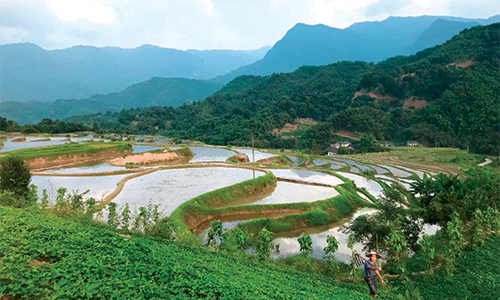
    As a plant that can be eaten, drunk and applied to the skin directly, blue lotus has a strict requirement in terms of the planting environment. Although China boasts vast areas of agricultural land but, after several decades of industrial development, it is not easy to find purely clean land. On another trip, I happen to visit Chishui district of Guizhou Province. There was no industry along the clear Chishui River, which feeds the Bao Yuan Terraces located 400 meters above sea level. The terraces affected me deeply with their unique river valley land formation. It was during the Spring Festival, the mid-winter, but before my eyes, I only saw green mountains and fresh water, as well as warm sunshine. The vast terraces seemed to have been waiting for the blue lotus since they had been built at the end of the Eastern Han Dynasty nearly 2,000 years ago.

    For various reasons, these terraces couldn’t support the local people’s livelihood any longer, so most of the young adults of the area went out to work elsewhere with only the elderly and the children and the handicapped left there. Consequently, it became a poverty-stricken village. Faced with the nearly-deserted fields, I decided to do something so that the blue lotus which I had met at Mr. Chen’s home could bloom in Bao Yuan Terraces which not only boast a long history, but also feature an ideal cultivation environment. Equally important, the terraces are really in need of help. 

    What types of health products have you developed based on blue lotus? Who are your target customers? Compared to other health products of the same type in the market, what are the unique points of blue lotus products?

    When the blue lotus was seeded in Bao Yuan Terraces, experts from the Agricultural Products Research Institute of the Ministry of Agriculture came to see them. Pleased with the large-scale plantation of such a rare species, they also carried out sample inspection on the blue lotus, planting soil and irrigation waters. The results showed that there was no heavy metal in the soil; the water source reached the second level of quality; and the active elements of blue lotus was rich in plant collagen, anthocyanin, quercetin, alkaloid and flavone, all of which are precisely what is needed by the human body. Working together with scientific research teams, enterprises, and industry experts, we have developed the following ranges of products based on blue lotus.

    Healthy food: blue lotus tea, blue lotus food (flower pie, flower egg roll, flower candy, flower ice cream and flower hot pot). Wellness products: blue lotus pure hydrolat, blue lotus medical cold compress, blue lotus anti-blue light cold compress, blue lotus eye cream, blue lotus repair serum, blue lotus sun cream…Leisure products: blue lotus wardrobe sachet, blue lotus car pendant, blue lotus fresh cut flowers.

    These products are unique for their abundant natural and active elements which benefit health greatly, and are very different from products with additives sold in the market. We honor natural wellness and have our loyal customers who have need of quality wellness products and experiences.

    For example, when we developed the blue lotus medical cold compress, we used blue lotus pure hydrolat to replace ionized water. The anthocyanin contained in blue lotus can effectively ease pain, diminish inflammation, remove scars and acne, as well as play amazing functions in terms of skin injury repair, sunburn repair, and health maintenance after hormone injections.

    What are your sales channels? How is the feedback from the market?

    We are continually developing, producing and launching products into the market. We mainly sell our products through intracompany platforms, client networks and partner platforms. We are still at the beginning phase and are updating our product portfolio. Nevertheless, I have confidence that blue lotus products will be recognized by the market.

    Have you joined hands with spas to enhance the beauty and wellness experience of customers with your products?

    I believe that blue lotus products will renew people’s spa experience. For example, blue lotus tea and food offer new options for spa-goers. Blue lotus bathing is another great choice and the plant collagen can be further applied to nourish the body after bathing. For facials, we have Blue Lotus Pure Hydrolat which can be used through cold/hot compress, sprinkling or steaming. After the massage, therapists can wipe the Blue Lotus Serum on guests’ skin for repair and nourishment. We are now seeking opportunities to cooperate with spas.

    How do you develop the leisure sightseeing/wellness tourism programs centering on blue lotus terrace and other local resources?

    The Bao Yuan Terraces are now magnificently clothed in a sea of blooming blue lotus, which attracts increasing numbers of visitors who come to enjoy the sights and the lotus tea. In addition to blue lotus cultivation and product development, we also focus on resort construction around the terraces. The major part is a group of low-rise villas of low density and high privacy which are perfectly blended into the green mountains and clear waters. The aim is to meet the wellness requirements of modern visitors who seek relaxation, stress relief and healthy travel.

    What developmental phase has the wellness sightseeing program reached?

    We have applied to the relevant departments and have gained approval to launch the program. Currently, we are working on the overall construction plan. There are already industry people, visitors, and enterprises who show great interest in the program. They have also concretely told us their expectations and requirements.

    What wellness products and experience do modern customers want?

    I would list three examples.

    1. I once met an overseas returnee architect, born in the 1980s who said: “My ideal life is like this. I will buy a big area of land in a bamboo forest and build a cottage which faces broad rice terraces and a sea of flowers. Every morning, I get up to enjoy the dew and pick the flowers for my salad. Every evening, I rest under a curtain of stars and fall asleep in the frogs’ croak.”
    2. I have a friend from Hong Kong, born in the 1970s, whose job is an English Translator. She came to the terraces twice and then gave up the idea of buying a house in Hong Kong. On the contrary, she would like to live here in the blue lotus villas with her husband and daughter once construction is completed. She said: “How carefree I am when I stay here! Why should I go back to Hong Kong to be tormented by the tiring life? In the future, I will come here to pick plant collagen myself and say goodbye to the industrialized city.” She also loves our blue lotus medical cold compress very much.
    3. In the summer of 2018, a group of travelers came here from Chongqing. They said that originally they had planned to buy holiday houses along the Chishui River, but now they gave up the idea and were waiting for the blue lotus villas construction work to be completed. They said they would each buy one villa and spent their sunset years here. That is also my wish…

    The blue lotus project is also known as an anti-poverty project. What support and help have you offered to the local people?

    When the blue lotus were seeded in the Bao Yuan Terraces, it offered many job opportunities to the local villagers and gave them the wish to work here instead of going away to the big cities. Moreover, it is a good experience to cultivate the land handed down from their own forefathers. The lowest salary working on the terraces is 3,500 yuan a month, while the poverty line set by the government is also 3,500 yuan a year. It means that as long as you have the will to work here, you can surely say goodbye to poverty. There are some women who stay in the village because of their children’s education. Maybe they don’t have experience or strength to do farm work, but they can pick flowers, do cleaning, or help with the good processing.

    From your perspective, what are the most valuable things that your project has brought to the local region, the local people and the extensive customers respectively?

    The blue lotus project is a new industry mode since we combine three industries together. First of all, we have brought new life to the deserted terraces, a cultural heritage from the end of Eastern Han Dynasty, by planting blue lotus here. We don’t apply fertilizer or chemicals, and keep absolutely an natural plantation which helps to restore the dynamic of the land. Secondly, we do local processing and send the raw materials to certified enterprises for production. Thirdly, we construct wellness resorts. The village enjoys convenient transportation. There are four airports within a 40 mins to 2-hour drive. And the highway network has reached every county now. Overall, the project brings new industries, more consumption and wellness development. All these are big advantages.