Category: Interview

  • The Future Architecture

    The Future Architecture

    Interview with Mr. Rolf Demmler, Co-founder of SoftGrid China and Europe

    As a German architect, Mr Rolf Demmler first arrived in China in 2004 almost by accident when he agreed to work with a Chinese guy in Switzerland who was looking to cooperate with a European architect. “A mere three weeks later, I was here in Shanghai,” Demmler smiled. “It was the perfect introduction to China, about how it makes things happen quickly and flexibly.”

    Rolf established SoftGrid Ltd., an architecture, sustainability and urban design firm, in 2008 in Shanghai after gathering professional experience in the EU and China. SoftGrid focuses on projects in hospitality, office and education. It uses Integrated Design strategies to provide unique, future-proof designs and quantifiable added value to clients and communities in line with long term climate goals. He is a regular contributor to professional conferences on sustainable construction and a guest tutor at Tongji University and other universities in China and the EU. In 2020, he co-founded SoftGrid Europe in Germany.

    “What do buildings do, and how do we preserve energy?” Rolf asks. “How do we make healthy environments? How do we make livable environments? In an ever-changing society, what are building life spans? If you build something now, what happens in 20 years? These topics are very much what I built my office around, and it’s also what we bring to China.”

    The big wave currently influencing design in China is environmental protection. As a result, SpaChina interviewed Mr Rolf Demmler on this topic.

    After all these years, what changes do you see as having taken place in China?

    Since arriving in China, one of my own focuses has been the complexity of society in the world’s most populous nation and its evolving idea of how to modernize historical assets. When I came here, there were articles in mainstream German magazines about architecture in China, saying: “It’s so big! You can do anything!” This was never, ever, my interest. My interest was always complex issues such as how to adapt older structures and areas for today’s public use and space needs. That made it more interesting for me to be in China.

    So my list of major changes would start roughly in 2005, when historic preservation and a sense of authenticity entered the discourse about urban development, not least fueled by the opening of Xintiandi in Shanghai, designed by Ben Wood Studio Shanghai, a firm I worked for from 2005 to 2008 before founding SoftGrid.

    Roughly five years later, with the Shanghai EXPO theme “Better City, Better Life” on one hand and a series of food scandals and rising pollution levels on the other, the topics of health and wellbeing came to center stage. And in 2015, with the signing of the Paris Agreement, China formalized a development trajectory for industry, urbanism and architecture, that clearly focuses on sustainability.

    While these were all disruptive changes establishing new topics and trends, the latest change I would see as a paradigm shift within the already established topic of sustainability: it changes how people and especially companies and businesses think about and approach it. With increasing political and regulatory pressure (e.g. stricter planning codes) as well as a changing economic environment (e.g. ESG ratings), sustainability ceases to be an optional marketing aspect, but becomes a hard factor in the assessment of business models and a key to future economic success. The EU is a step ahead in this development, but the resulting sense of urgency is also already perceivable in China. 

    Particularly in hospitality, all of the above changes come together, with the aim to create a unique experience, which in turn is based on giving a sense of place and locality (authenticity), a comfortable, inspiring and relaxing environment (health and wellbeing) and a growing sense of how buildings influence our environment (sustainability).

    Please share with us the two most interesting projects you have designed related to environmental sustainability. What are their highlights?

    We aim to integrate aesthetic, functional, energetic, economic, socio-cultural, technical and contextual aspects, which is labelled an “Integrated Design” process.

    While for projects like BASF R&D Center II and Tianjin Eco-City, we were in the role of sustainability consultants, the following two projects are a showcase of the power and benefits of this “Integrated Design” approach.

    SoftGrid was for both the lead designer and single point of contact for an Integrative Design process. For the Shanghai DRC  Living Lab, this included quality control and construction supervision all the way down to the graphic design elements, while the Guilin Mountainside Resort included what we have since called “General Planning + PLUS”, i.e. the scope of conventional general planning – architecture, MEP, structural engineering – plus sustainability aspects.

    And while both are great examples of sustainable construction, they didn’t start on the premise of saving polar bears or reducing their CO2 footprint. They focused on creating a vivid dialogue with their surrounding context, a comfortable place for retreat (Guilin) and work (Shanghai) and an evocative aesthetic as a result of an immersive, three-dimensional storyline. 

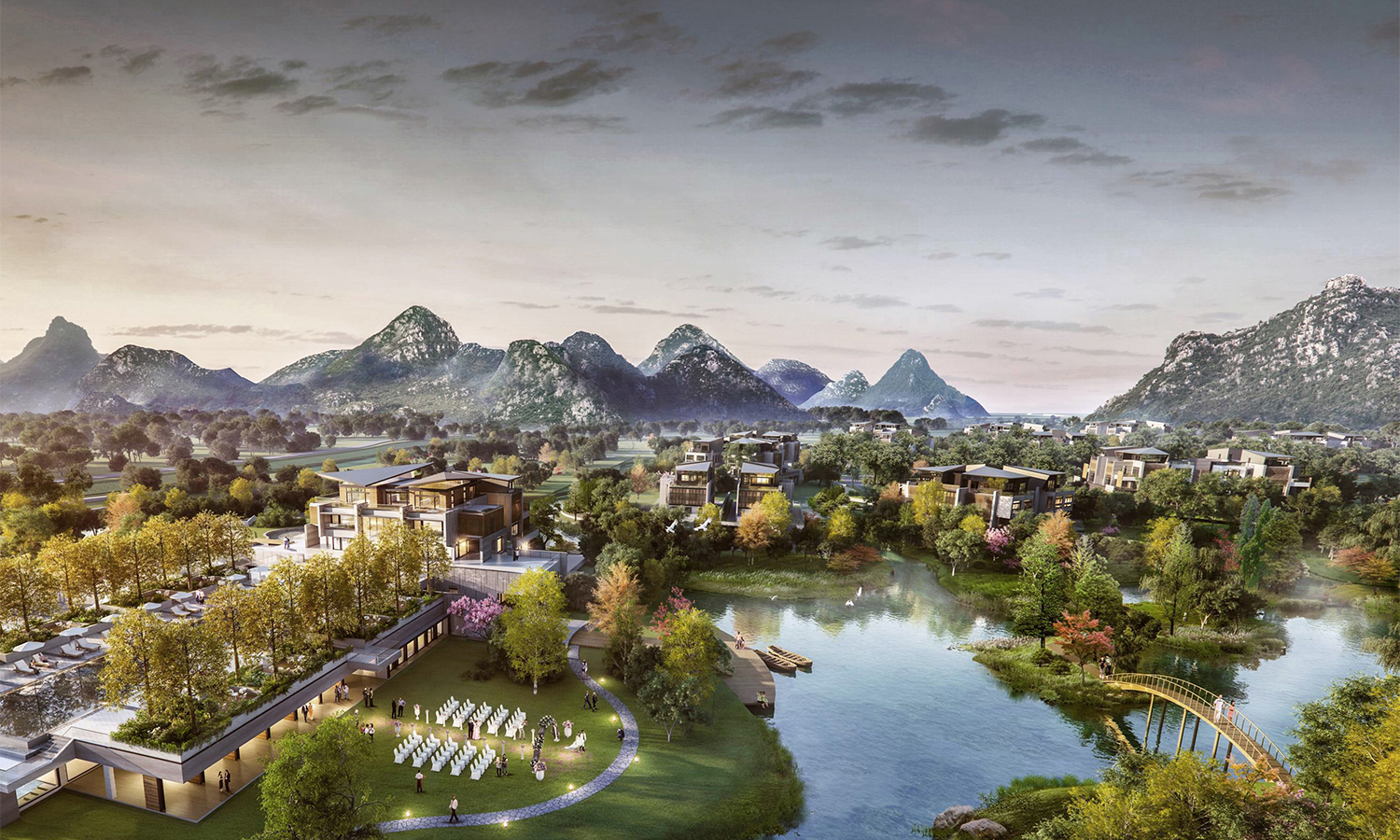
    The Guilin Mountainside Resort was the first project in the southern China climate to be designed to the PHI Passive House standard. It is also a typical example of conflicting targets. The site is located amongst the stunning Caster Mountains and in a hot and humid climate. An energy consultant would advise reducing window area to avoid overheating, and a conventional architect would insist on 360-degree panoramic glazing. But at SoftGrid, we are architects, but not conventional and we recognized that, in the master plan (done by another design firm in Singapore) full-on glazing would be impossible without largely compromising privacy. So the solution was to strike a balance. We made sure to have panoramic glazing where it is needed and then using every trick possible to reduce heat gains. This is where synergies happen: shading to keep the sun out can be provided by the overhang of a panoramic roof terrace, by deliberately placing vegetation to act as privacy screens and so on. Each component both reduces energy and adds value to the design.

    We shortlist options from a storyline perspective first: roller shutters keep the sun out, but they work against the idea of being immersed in your paradise retreat surrounded by the Caster Mountains. But to work out which solutions support this story best, we need metricsand that means we need to, and can, simulate exactly: design decision X saves Y kWh/m2a (Kilowatt Hours per square meter each year) of energy – and Z RMB in operation costs. To put it simply: we always know exactly what we do, when we design.

    For the DRC Living Lab (opened 2015), the surrounding context was Shanghai’s French Concession, another evocative environment. And for DRC, associated with Disney, of course, it had to be “magical”. We started by looking holistically at all aspects and creating a storyline for what the building is. The result is that it saves energy, provides an excellent work environment and integrates into the historic urban Art Deco context. Users love working there, and the owners are proud of showcasing what architectural design and construction quality is able to be achieve in China, and the many visitors are impressed by how the building’s façade, its interior and even the design of its technical systems reflect the purpose of the business that is located within it.

    The entire building’s aesthetics are hints: instead of Art Deco ornaments, the façade displays maps of Disney Resorts (the object of study). A wall of reclaimed bricks from the original façade, treated artistically, sums up key historic scientific inventions without which the research going on in the building could not be done. The technical system basically performs on its own. It knows the temperature and humidity levels not just of every room, but at different heights within each room, it knows if people are present and if the sun is shining, it knows if someone is using a chair or not, and adjusts the surrounding ambience automatically– and if you don’t like it, just use your iPad to override: open the shades, turn the floor cooling up a degree or dim down that one set of LED lights just above your work space. And how do you keep cool outside? With a shading canopy made out of PV panels. Just an example of storylines, which combine aesthetics, technical purpose and functionality and result in sustainable projects.

    There are more and more wellness resorts being developed around the world. From your point of view, what kind of unique aspects are essential to be included in the design process of these projects?

    In Europe, we are currently developing a replicable get-away retreat for single occupancy (couple, family etc.). It’s based on a design for a standard module that can be placed in various different sites. This project is a perfect example of how regional and local aspects overlap with general ones. The basic design of the module needs to work anywhere, including being adaptable to the local climate, with changes to the façade layers, insulation thickness and so on. The module needs to be flexible enough to allow for these adaptations. The location is where it becomes really interesting. Each location needs a different placement of the basic module, depending on where the best views are, access situation and such: in a wetland you want to touch the reeds, in a forest you want to be in the tree crowns, in rice fields elevated above them to maximize the dramatic effect inherent to the various landscapes. That’s why we design the “base” of the module to be always location-specific. In this base, we also integrate “wellness” aspects inherently adapted to local characteristics. Some locations call for sports and physical activity, some for contemplation and retreat, most are a combination of both aspects. The bedroom and cooking / dining area, are situated in the standard module, while the wellness and recreational aspects are the most immersive ones.

    All technical aspects remain in the background. The standard module is designed as a loft-like open-plan configuration of stacked planes for eating, cooking, socializing and sleeping. It is constructed as a wood structure aiming at a low CO2 or CO2-neutral building life-cycle with minimal energy consumption. These aspects, of course, you don’t see and feel as a guest. But wood doesn’t just save CO2, it also is a pleasant material full of character, and while the customer doesn’t care about the hugely reduced operations bill for the AC, the quality of the building envelope – the façade and outer walls – necessary to achieve such minimal energy consumption will automatically provide an extremely comfortable interior climate. This is one typical example of what we mean by saying, we aim at the immediately perceivable added value first and let the benefits for the environment sneak in as follow-on effects. Or to put it the other way: You can’t feel CO2, but you’ll feel great in a CO2 neutral building.

    Our Beihai Marriott project has been very well received for its architectural design, elegant aesthetics and spatial quality, offering sea views to each and every room and an engaging seaside park, with a three-dimensional configuration of flexible activity spaces, chill-out areas, F&B, panorama spa and pools. It is currently under construction.

    But this project also showcases a completely different benefit of Integrated Design, this time not aimed at the quality of the building or the user experience, but the economic parameters on the building owner’s side. Essentially, the integration of all aspects from the start led to a very straight-forward decision-making process on the owner side and a seamless integration with Marriott’s business consulting team. This dramatically reduced the need for painfully resolving target conflicts, redesigns and mistakes due to miscommunication. As a result, while our project started design a year or so after some of the neighboring resort developments, we were the first to receive formal planning permission.

    At the same time, the building is designed using basic passive design principles, which will directly impact operation costs, a huge factor over the economic building life-cycle in hospitality. The façade does not only look good, it is also deliberately designed to provide very high comfort, save energy and costs. With a good passive design, the “work” that the AC needs to do is considerably reduced. This means that you can implement smaller sized machines and that these machines can run at lower capacity during usage. So the cost-saving effect is double: first on a smaller up-front investment and second on lower operation costs.

     “Sustainability”, as we understand it, is not just energy consumption, but also the economic performance, the CO2 footprint, the flexibility to adapt to future needs over the entire building life-cycle. It is the result of multi-dimensional design, and if you do it right, the result is larger than the sum of its parts.

    How do you combine artistry with practicality, along with inclusion of the sustainable details, in order to make a project design unique?

    The key to a successful project is the harmony of emotional properties and technical, functional, aspects, the latter of which should go unnoticed to the customer, while the first create the resort or hotel’s character and, hopefully, a lasting memory for the visitor.

    We start all our design work with a detailed study not just of the geographic site, its climate and surroundings, but also the local culture and economy, people’s everyday life and even local myths and legends. For our very first resort concept in the Hakka region of northern Guangdong back in 2008, we designed the entire look and feel around a golden color scheme, derived from the Hakka double meaning of “gold” referring to the treasured metal as well as the individual family and their ancestors within larger communal society. With the new resort, remotely situated in the mountains, we wanted to both establish a beautiful new project and also offer a new development path for the local community, as guides and aninvaluable source of “local knowledge” – from farming, to cooking, to exploring the nature to stories and legends. We preserved a lot of the existing community’s buildings as part of the new resort public spaces. The aim was authenticity, an immersion in an experience that goes deep into the history and every-day life of a rich, fascinating cultural environment.

    On a lot larger scale, we developed a new city district for LiuZhou turning a challenge into an opportunity. Nearly one third of the development area was situated in a 20-year flood plain. Our design answered this not by very costly and spatially unpleasant retaining walls, but instead by working WITH the water. Water landscape and management systems became the driving force of the design, creating a garden city with an organic water landscape network as linear parks, activity areas and civic social spaces. These rivers also connect the new urban center with the surrounding rural farming areas, and offer views to surrounding mountains and a perfect playground for the transition of the local automotive industry towards noise and emission free transport systems. The story here is not the water, but the urban-rural dialogue, which becomes the city’s expression of identity in all different aspects: transport, landscape, waterways, economy, civic space and architectural typology.

    Each of our projects has a starting story like this. It can be playful and inventive and it is free of restrictions. It’s simply evaluated by being a good story or not. But once you have that starting point, you need to give shape to it, design the physical form, which is the architectural process.

    The COVID pandemic has had a certain impact on China this year. From your perspective, what direction will China’s architectural design industry develop in the next five years?

    It seems to me, that the COVID situation is still way too dynamic, especially in China, to draw any direct conclusions from it for the field of architecture.

    But generally, I would see the industry moving towards greener, more sustainable and more complex approaches. Many local firms also have this on their list and many have established “green departments”. But the problem is, that these create additional overhead, require additional internal coordination and create, to adverse effect, more internal competition. This is why we have always chosen a network approach to complexity and sustainability, so we can offer this flexibility and individuality with zero added overhead costs.

    What I see as even more important than cost – and that is a direct result of complexity of Integrated Design – is to address not just the question of how architecture is designed but how it is communicated. In this regard, our approach to combine quantifiability, rational metrics and evocative storytelling is invaluable in helping project teams to report to decision-makers and helping decision-makers decide confidently by understanding, shaping and owning the “big picture” of their project.

    To that extend, we have just started an office retro-fit in Shanghai this week for a German company’s headquarter built in the early 2000s. We approach this project in an integrated design VARIANT COMPARISON. Meaning, we develop comparable design options. These are not divided along meaningless aspects (is it green or yellow?), soft factors (do I like it or not?), but by three different strategies and related KPIs: minimal upfront investment, maximum alignment with Corporate Identity, and CO2-neutral footprint. While aspects overlap, they create three entirely different storylines, and our report will further support each story with its own metrics, numbers, fact sheets and, of course different architectural design solutions and their resulting aesthetics.

    I believe this holistic approach to projects with be the key to successful building investments in the future. And feedback from hospitality and office project stakeholders in particular seems to support this view by perceiving a huge added value for resorts, business and other hospitality and office facilities alike.

  • 未来建筑

    未来建筑

    访SoftGrid中国和欧洲公司联合创始人Rolf Demmler先生

    Rolf Demmler先生是一位来自德国的建筑师,2004年时,30岁的他因一次非常偶然的机会来到了上海。Rolf笑着说到:“这次经历让我看到了中国人高效灵活的处事方式。”在欧洲和中国积累了丰富的专业经验后,Rolf于2008年在上海成立了建筑、可持续发展和城市设计公司——SoftGrid,主要承接酒店、办公和教育等项目所有设计阶段的工作。独特优势是在符合2050/2060年碳中和的长期气候目标的基础上,采用一体化设计战略,为客户和社区提供富有创意、不会过时的设计方案,以及直接、可量化的附加价值。2020年,他在德国联合创立了SoftGrid欧洲公司。

    “建筑是用来做什么的,我们如何通过建筑节约能源?我们如何打造健康的环境?创造宜居的环境?在一个不断变化的社会中,建筑的寿命是多少年?你现在建造的建筑,20年后会发生什么?有人知道吗?你该做出怎么样的调整?在很大程度上,这些问题是我们公司在过去10年一直在思考和实践的,也是我们带给中国的东西。”SpaChina访谈了Rolf Demmler先生。

    您觉得中国这些年发生了什么变化,跟我们讲讲您对中国的印象吧。

    来到中国后,我的关注点之一是,作为世界上人口最多的国家之一,它所具有的社会复杂性以及它是如何将历史资源现代化的。当时,德国主流杂志上有一些关于中国建筑的文章,经常说:“它是如此之大!你可以做任何事情!”但这从来都不是我的兴趣所在。我始终关心的是更为复杂的建筑问题,例如如何改造旧的结构和区域,以满足当今的公共使用和空间需求。这让我在中国的工作变得非常有趣。

    我在设计中的重大改变大概是从2005年开始的,当时,历史保护和地域体验成为了城市发展的主题词,尤其是在由BenWood Studio设计的上海新天地开业之后。我在创立SoftGrid之前,曾在2005年至2008年间为这家公司工作。

    大约五年后,一方面,以“城市,让生活更美好”为主题的上海世博会成功举办,另一方面,我们看到了一系列的食品丑闻和不断恶化的环境污染问题,于是,健康和福祉话题成为主流。2015年,随着《巴黎协定》的签署,中国正式确定了以可持续发展为重点的工业、城市化和建筑发展计划。

    以上这些都是建筑领域所经历的开拓性转变,引领着新的趋势。我认为最近发生在“可持续发展”这一主题下的改变则可视为思维模式的转变:它改变了人们,特别是公司和企业对可持续发展的思考方式和实践途径。随着政策和监管压力的增加(如更严格的设计规范)以及经济环境的变化(如ESG评级),可持续发展不再是一个可有可无的营销手段,而成为了评估和调整商业模式的硬性指标,以及未来经济成功的关键。虽然欧洲在可持续发展中领先一步,但由此引发的紧迫感在中国也已经可以感觉到了。

    特别是在酒店业,所有上述这些主题和趋势被汇集在了一起,旨在创造独特的体验——给人一种地域感(真实性),一种舒适、激发灵感和放松的环境(健康和福祉),以及对建筑如何影响环境的更深入认识(可持续性)。

    请分享一下您设计过的与环保和可持续性相关的有意思的项目。

    我们需要将美学、功能、能源、经济、社会文化、技术和环境等方面进行整合,即今天人们说的“一体化设计”。对于巴斯夫和生态城的项目来说,我们扮演的是可持续性设计顾问的角色,而以下两个项目则展示了“一体化设计”的强大优势和益处。

    在对上海DRC生活实验室项目的设计中,“一体化设计”法体现在了从质量控制、施工监督,到形象设计元素等各个方面。对于坐落于桂林的山景度假村,我们则运用了“总体规划+”这一策略,即在传统的总体规划——建筑、机电系统(MEP)、结构工程之外加入可持续发展策略。

    桂林山景度假村是中国南方第一个按照PHI被动房设计标准的项目。该项目位于迷人的喀斯特风景区内,气候湿热。如果要咨询能源顾问,他肯定会建议尽可能地减少窗户面积,以避免太阳辐射造成的过热现象,而传统的建筑师则会坚持采用360度全景玻璃。幸运的是,在SoftGrid,我们不是传统建筑师。我们发现基于项目的总体规划,大规模全景窗无疑会牺牲掉客人的隐私。所以,我们的做法是,在真正需要的地方安装大型全景玻璃窗,并尽可能使用各种技巧来减少热增量。于是我们在全景露台以大型植被来遮阳,同时作为隐私屏障。

    上述提到的这一设计方法是基于对设计参数的准确量化。说一句“我们需要一些遮阳物来减少热量积聚”是远远不够的,因为会有一千个方法来避免阳光照射。因此,你要选择最适合该建筑用途的方案。那么,在所有与这一场景符合的选项中,哪一个是最好的?这就是为什么我们需要衡量标准,以明确每个选项的影响到底会有多大。注意,我们同时还需要进行准确的模拟:设计决策X节省了Y千瓦时/平方米(每年每平方米的千瓦时)的能源,以及运行过程中的Z人民币。这样一来,我们就能够把许多不同的、具有协同作用的设计元素进行组合,符合并支持项目的故事场景和设计意图,以及具体的建筑功能。简单地说:我们在设计时总是清楚地知道,我们在做什么。

    DRC生活实验室(2015年开业)和桂林的山景度假村截然不同。因为是与迪士尼相关,所以它必须是“神奇的”。这栋建筑的目标是节约能源,提供良好的工作环境,融入历史悠久的城市装饰艺术背景等。但同时,它也在展示着自己的背景。

    在这幢建筑里工作的人不是角色动画师和视频艺术家,而是专研高效基础设施的工程师。这里是中国第一个将深度能源改造与智能建筑技术和EPC(合同能源管理)相结合的项目,但它的灵魂必须是——用户喜欢在这里工作,业主因展示了中国一流的建筑设计和施工质量而自豪,参观者惊叹于自己可以通过建筑外墙、内部甚至技术系统的设计而对建筑里的企业有所了解。

    外墙不是采用装饰艺术,而是迪士尼度假村的地图。一面由原立面回收砖块构建的墙,经过艺术化处理,展示了关键的历史性科学发明。室内天花板的设计使温暖的光线感受和完美的声学效果成为可能,创造出独特而舒适的环境;每一条技术供应线(水、加热、冷却、通风)都可以作为整个建筑中一个独立的审美故事。毋庸置疑,技术系统基本上都是独立运行的——不仅知道每个房间的温度和湿度,而且知道这个房间内不同高度的温度和湿度,以及是否有人在,是否有阳光,是否有人在使用椅子,并自动调整环境氛围——如果你不喜欢它的自动调节模式,可用你的iPad进行操作:打开窗帘,把地板的温度调高,或者把工作空间上方的那一组LED灯调暗。

    在这里,智能IBMS(综合建筑管理系统)不仅非常节能,而且很舒适,除此之外,还可以上到新近开放的屋顶露台俯瞰法式景观,或与客户在这里见面、举办社交活动。我们通过一个光伏板制成的遮阳篷确保了露台的凉爽。这个建筑的设计也是一个演绎结合了美学、技术目的和功能,并将可持续理念融入其中的好案例。

    现在全球开始有越来越多的养生度假村项目,这些项目在设计的过程中需要包含什么特别之处?

    在欧洲,我们目前正在开发一个可复制的入住空间。这是一个标准化的模块,可放置在不同的地点。在湿地,人们想摸到芦苇;在森林,人们就想住在树冠上;在稻田场景,就想直接凌驾于稻田上;在悬崖场景,就想被固定在悬崖边上,以此让目的地的沉浸式体验最大化。真正有趣的地方在于,每一个不同的目的地对于入住模块的安置地点都有着自己的要求,基本上是取决于哪里的风景最美,最容易抵达等。

    我们在设计基础模块时总是会针对具体地点的特征而考量。根据我们想要提供的空间场景体验——全景、隐蔽花园、高处的望台等,我们进而对空间布局和材料进行开发。在此基础上,我们尽可能多的将“养生”元素贯穿其中,与当地环境相适应。有些地方适合进行体育和身体活动,有些地方则适合沉思与休养,大多数地方则是两者的结合,而具体提供什么样的设施,会使结果大不一样。虽然标准模块中有卧室和就餐区,但人们最期待的还是它所能提供的养生和娱乐选项,而这方面的设计就会根据每个地方的特点而单独规划与创建。

    所有技术层面的规划都在后方完成。标准入住模块是一个类似于阁楼的开放性空间设计,有用餐、烹饪、社交和睡觉的区域。被打造成木质结构,旨在实现全生命周期的低或碳中和,并将能源消耗降至最低。当然,这些方面,你作为客人是看不到也感觉不到的。但是,木材不仅能降低二氧化碳,也是一种令人愉悦的个性化材料。虽然客人并不关心大幅减少的空调运行费用,但为了实现这一最低能耗而打造的建筑立面和外墙将自动提供一个非常舒适的室内气候。也就是说,我们的目标是首先实现可立即感知的附加值,对环境产生的益处则悄无声息地融入进来。或者可以这么说,虽然你感觉不到二氧化碳,但当你身处在一个碳中和的建筑中就会感觉很好。

    我们的北海万豪项目因其建筑设计、优雅的美学特征和空间质量而广受好评,每个房间都能看到海景,还有一个海滨公园。该项目配置有灵活的活动空间、休闲区、餐饮区、全景观水疗中心和泳池。目前正在建设中。

    这个项目展示了综合设计的另一个方面的好处,不是关于建筑质量或用户体验,而是建筑业主方的经济参数。从一开始就对所有方面进行综合评估和考量使得业主方的决策过程非常流畅,并与万豪的商业咨询团队进行了无缝整合。这极大地减少了解决目标冲突或重新设计的必要,以及因沟通不畅而产生错误的可能性。因此,虽然这个项目比一些邻近的度假区开发项目晚一年左右才开始设计,但我们是第一个获得正式规划许可的。

    同时,该建筑的设计采用了被动式设计原则,这将直接影响到运营成本——酒店业建筑经济寿命周期中的一个巨大因素。我们为该项目设计的外墙不仅好看,还能提供非常高的舒适度,节约能源和成本。有了好的被动式设计,空调需要做的“工作”就会大大减少。这意味着你可以配置更小尺寸的机器,而且这些机器在使用过程中可以以较低的功率运行,从而实现了双倍的成本节约:首先是较小的前期投资,然后是较低的运营成本。

    所以我们可以非常清楚的看到,“可持续性”不仅仅在于减少能源消耗,还包括经济性能、二氧化碳足迹、在整个建筑生命周期内适应未来需求的灵活性设计等各方面。真正的可持续实践是多维度设计的结果。如果你做得正确,那么它所带来的效益将大于各个部分的总和——虽然是一个很老套的说法,但非常精准。

    怎样把绿色理念、艺术性和实用性结合起来,让一个项目的设计与众不同?

    一个项目成功的关键是打造其情感属性与技术、功能方面的和谐统一,后者应该不被客人察觉,而前者则创造了度假村或酒店的特色,为客人留下持久记忆。

    我们在开始设计工作时,不仅会对项目所在地的地理、气候和周遭环境进行详细的研究,还会对当地的文化和经济、人们的日常生活,甚至神话传说进行考察。我们的第一个度假村项目是在2008年位于广东北部客家地区的一个度假村,我们以金色的配色方案设计了度假村的外观和整体风格,灵感来源于客家语中“黄金”的双重含义,既是珍贵的金属,也指代个人家庭和社区社会中的共同祖先。该项目位于偏远的山区,我们不仅想建造一个美丽的度假村,还想为当地社区提供发展机会:不仅是作为保洁人员,而是作为向导和“当地知识”的传授者——从耕作、烹饪、探索自然到历史故事和传说。同时,我们保留了很多现有社区的建筑,作为度假区公共空间的一部分。该项目的目的是提供一种原汁原味的沉浸式体验,带领客人深入到客家地区丰富迷人的文化、历史和日常生活中。

    我们为柳州开发的新城区则是一个更大规模的项目,展现了我们是如何将挑战变为机遇的。该项目近三分之一的开发区域位于20年前形成的冲击平原。我们并没有使用昂贵、且在空间上令人不悦的挡土墙来解决问题,而是巧妙地利用了水元素。水景观和水系统成为了整个设计的驱动力,我们打造了一个拥有有机水景观网的花园城,里面有公园、活动区和公共社交空间。这些河流也将花园城和周围的农耕区连接在一起,让人们欣赏到周遭的美丽山景,同时促进着当地汽车工业向无噪音和零排放的运输系统转型。但这里的故事主线,不是水,而是城乡对话,作为城市在各个方面的身份表达:交通、景观、水路、经济、市民空间和建筑类型。

    我们所设计的每一个项目都有一个这样的故事。它可以是趣味性的,可以是创造性的,没有任何限制,只要它是一个好故事就行。一旦你确定了要讲的故事,就需要给它定型,设计出呈现故事的具体形式,这就是建筑过程的开始。

    今年疫情对中国全国都有一定的影响,您觉得未来5年的中国建筑设计行业会向什么方向发展?

    在我看来,新冠疫情的形势还十分不明朗,尤其是在中国,所以无法从中得出任何关于建筑领域发展的直接结论。

    但总体来说,我看到这个行业正朝着更绿色环保、更可持续和更复杂的方向发展。许多本土公司也将此列入规划方案,并成立了“绿色部门”。但问题是,这些都会产生额外的费用,需要额外的内部沟通和协调,并造成更多的内部竞争。这就是为什么我们一直选择“网络途径”来解决建筑复杂性和可持续性方面的问题,使得我们可以在不增加运营成本的情况下提供灵活、个性化的设计。

    我认为比成本更重要的是——也是一体化设计的复杂性所产生的直接结果——不仅要解决建筑该如何设计的问题,还要解决如何沟通的问题。我们把可量化、合理的指标数据和独特有趣的故事结合起来,从而帮助项目团队更清楚地向决策者进行汇报,也帮助决策者更好地理解并想象出关于他们项目的“大画面”,从而自信地做出决策。

    我们这周开始在上海为一家德国公司建于21世纪初的总部进行办公室改造。我们会以“多方案比较”的一体化设计方式来处理这个项目,也就是说,我们会开发出三个可比较的设计方案,不是进行无意义方面(绿色还是黄色)或软因素(我是否喜欢它)的区分,而是按照三种不同的策略和相关的关键绩效指标来比较:最小的前期投资、与企业形象的最大一致性和碳中和。虽然设计方面会有所重合,但我们创造了三个完全不同的故事情节。而在我们的汇报中,不仅是讲故事,同时也会汇报每个方案的指标、数字、概况介绍,当然还有具体的设计方案及其产生的美学体验感。 我相信这种一体化设计方法是未来建筑成功的关键。来自酒店和办公项目利益相关者的反馈似乎也都支持这一观点,他们认为,一体化设计对度假村、商业运营和其他酒店和办公设施都能产生巨大的附加价值。

  • Technology Innovation to Meet Market Needs

    Technology Innovation to Meet Market Needs

    Interview with Dr. Gianfranco Tudico, CEO and Head of R&D, i-Tech Industries
    and Mr. Luca Gualdrini, General Manager of i-Tech Industries

    Originated from Italy, i-Tech Industries distinguishes itself for developing cutting edge technologies

    and effective solutions for meeting the individuals’ needs in terms of health, wellness and beauty. The company’s innovation – icoone® employs the patented technology Roboderm®, coupled with LASER and LED technology, to allow the treatment to reach the deeper layers of the tissue efficiently yet gently, and to deliver exceptional results. To know more about icoone, SpaChina interviewed Dr. Gianfranco Tudico, CEO and Head of R&D, i-Tech Industries and Mr. Luca Gualdrini, General Manager of i-Tech Industries.

    Dr. Gianfranco Tudico is a skin specialist with 36 years of experience in the beauty and medical equipment industry. The rich experience has given him particular expertise in inventions relating to medical devices and equipment for the well-being and beauty of the body, as well as an insight of the market at a very broad spectrum. In 2006, Dr. Gianfranco Tudico invented the Roboderm® patent and created his own company in order to offer new, even more efficient technologies.

    Mr. Luca Gualdrini has more than 20-year experience in marketing and product branding strategies, specialized in new business development and new sales strategy. The opportunity to work with the best-known brands in the beauty and medical industry as a consultant has improved his skills and knowledge in this industry. And the friendship with Dr. Gianfranco Tudico led him to share a new “adventure” with i-Tech Industries.

    Could you share with us the founding story of i-Tech Industries and icoone, and why it is labeled as “Skin Expert”?

    Dr. Gianfranco Tudico: I have always been passionate about R&D for the implementation of non-surgical technologies which aim to provide final customers with real, concrete answers to different problems on the human body, whether for health, well-being or beauty.

    My 36-year experience in this field has oriented me in particular towards the search for the implementation of innovative technologies – or a combination of the most efficient technologies – in order to obtain the best results for the treatment of connective tissue, thus reaching as a primary goal the complete satisfaction of our clients.

    I wanted to pass this experience to the i-Tech Industries Team, made up of multiple skills, which is responsible for training and supporting our distributors and clients all around the world for the promotion of the full range of icoone devices. The objective is to transmit this know-how and to create a “knowledge circle”, so that all the icoone centers can become “Skin Experts”.

    Can you explain to us what the patented technology of icoone – ROBODERM® is?

    Dr. Gianfranco Tudico: Roboderm® is the name we have given to our high-performance technique on issues of skin quality, cellulite treatment, sagging skin, facial rejuvenation, but also for everything related to functional rehabilitation, and treatment of scars and burns.

    This technique embeds, according to the needs and the treatment goals, one or more technologies such as Multimicrostimulators, Led or Laser technologies.

    All this is complemented by the Robodermie® methodology, which is based on specific and customized treatment protocols which have been developed and implemented by our International Training Department.

    Please give an introduction of the icoone equipment portfolio. Which ones have been introduced to China? What are the main treatments and benefits? What customer group do they target and what is the feedback from the users? What are the most popular icoone treatments nowadays in China?

    Dr. Gianfranco Tudico: The icoone range is made up of 6 devices, 4 for beauty target and 2 for medical aesthetic and physiotherapy target, and at the moment in China we have introduced the full beauty range, which include both Laser and no Laser models. Day SPAs represent the majority of our centers, but also SPA chains and exclusive resorts are constantly growing among our clients, as some of the world’s most exclusive and luxurious resorts and clinics have already chosen to offer icoone treatments to their clients.

    In fact, icoone allows treatment of different kind of skin blemishes, providing unbeatable results from the first session and offering at the same time a unique and completely relaxing experience. Anti-cellulite, body shaping, firming, skin rejuvenation anti-aging and lifting are just some of the most requested treatments, also in China where body treatments represent an increasing trend. Thanks to customized packages we grant effective facial and body treatments, 100% natural and non-invasive, which increase clients loyalty and satisfaction.

    What are the advantages of icoone with Laser and LED in terms of effect and experience?

    Dr. Gianfranco Tudico: LASER and LED, associated with the microstimulations, allow us to achieve focused treatments in specific fat areas resistant to both diet and exercises, obtaining faster and long-lasting results. More in particular:

    650 nm LED: rejuvenates the skin by acting on the fibroblasts present in the connective tissue and stimulating the production of collagen. This wavelength reaches the fat cells, causing the transients pores on the cell membranes to open, thereby releasing the cells’ fat content.

    915 nm LASER: performs a remodeling action by reaching the deepest layers of the tissue, penetrating fat cells and activating lipolysis.

    Moreover, i-Tech International Training Department has developed specific protocols in order to maximize the effect of LASER and LED light sources, also thanks to the usage of tailor-made bodysuits.

    What are the breakthroughs and advantages of icoone compared to similar products on the market today?

    Dr. Gianfranco Tudico: The world is changing and technologies are evolving, and this forces companies to constantly reinvent themselves and to be able to offer new, more advanced and more efficient products.

    Today thanks to i-Tech Industries our technology is recognized worldwide, we have obtained many certifications (among with FDA approval and CE Medical are the most important) and we have carried out numerous Scientific Studies. icoone works with a new microstimulation technology that I invented which offers considerable advantages for the treatment of connective tissue, whether for medical applications and of course for the beauty of the body.

    • icoone can be applied to all skin types – even the most sensitive, delicate, damaged or loose – without any trauma or downtime for the client;
    • icoone can be applied even every day, without time limits, in order to reach faster results;
    • icoone allows to work both sides of the body with two handpieces at the same time, with twice the speed and effectiveness;
    • icoone has 11 different handpieces of different size in order to apply customized treatments and to perfectly work on all areas of the body;
    • icoone combines microstimulations with the power of LASER and LED technologies, to boost the body shaping and skin rejuvenation actions and to reach faster and longer lasting results.

    Therefore, I firmly believe that we have a strong competitive market position because the advantages are obvious.

    Where can consumers in mainland China experience icoone and what should they be aware of during, before and after the experience?

    Luca Gualdrini: At the moment we have many high-positioned and luxury icoone centers in China, mainly located in southern China and the Shanghai region, and thanks to our distributor Hoyar we are planning many new openings for this year. Regarding the treatments, thanks to our unique technology icoone offers a 100% natural and relaxing experience with unbeatable results: our clients will no longer be able to do without it!

    Could you share with us icoone’s market strategy in China?

    Luca Gualdrini: Since December 2020, we have joined hands with Hoyar to bring icoone from Italy to China. Hoyar has been in the Chinese beauty industry for 16 years, featuring strong strength and a highly professional team. The partnership has enabled icoone to gain increasing favor from the Chinese market and to bring a brand new beauty transformation experience for Chinese consumers, as well as winning a wave of praises from the major social media.

  • 技术创新满足市场需求

    技术创新满足市场需求

    访i-Tech Industries公司CEO兼研发总监Gianfranco Tudico博士,
    及公司总经理Luca Gualdrini先生

    来自意大利的i-Tech Industries以“皮肤专家”的使命帮助消费者变得更加美丽与健康。旗下的icoone仪器,采用专利技术,结合LED与激光科技,通过非侵入的方式,作用于皮肤深层组织,大大提升疗程效果与舒适度。为了进一步了解icoone仪器,及其在中国市场的状况与策略,我们采访了i-Tech Industries公司的CEO和icoone研发者Gianfranco Tudico博士,以及公司总经理Luca Gualdrini先生。

    Gianfranco Tudico博士在医美行业拥有36年的经验,深谙市场需求。作为一位皮肤专家,他热衷于对医美创新技术的探索,于2006年研发出了Roboderm®专利技术,并创建了i-Tech Industries公司。Luca Gualdrini先生则在市场推广与产品品牌战略领域拥有超过20年的经验,擅长商业拓展和开发创新销售战略,在医美行业的长时间顾问工作加深了他对这个行业的认知,并培养了相应技能。

    请介绍一下i-Tech Industries和icoone的创始故事,为什么能被称为“Skin Expert皮肤专家”?

    Tudico博士:我一直非常热衷于对非侵入性健康美容科技的研发,希望能够为终端消费者提供有效的疗程方案,得以解决身体上的各类问题,达到提升健康、美容塑形的效果,整体提升幸福感。

    我在这个领域已经有36年的从业经验,产品研发尤其倾向于利用创新技术,或组合高效技术,以获得对皮肤结缔组织的最佳治疗效果,让客户完全满意,这是我们的首要目标。

    我将自己的经验分享给i-Tech Industries团队,这是一支由来自不同技术领域专家组成的团队,负责对我们在世界各地的经销商和客户提供培训与支持,推广icoone的全系列仪器。目标是让icoone所搭载的技术力量传递到各个地方,让选择icoone仪器为终端消费者提供服务的合作伙伴们都能成为 “皮肤专家”。

    请解释一下icoone的专利技术Roboderm®。

    Tudico博士:Roboderm®是一项可用于进行肌肤状态提升、脂肪团消除、紧致皮肤、面部抗衰,以及功能康复、疤痕和烧伤治疗的高效技术。

    根据不同的需求和疗程目标,Roboderm®将多重微刺激(Multimicrostimulators)、

    LED、激光等技术进行单个或组合运用,同时结合Robodermie®治疗法,即由我们的国际培训部门进行研发和应用推广的icoone定制化治疗方案。

    icoone的仪器哪些已经进入到中国,时下在中国最受欢迎的icoone疗程有哪些?

    Tudico博士:icoone共有6台型号的仪器,4台是生美线,2台是医美和物理疗法线,目前4台生美线都已进入中国,包括带激光和不带激光的型号。城市SPA是我们的主要客户,不过我们也越来越多进入到酒店和度假村SPA中,许多全球顶级度假村和诊所都选择了我们。

    icoone可解决各类皮肤问题,一次疗程即见效果,疗程体验高度舒适放松。最受欢迎的疗程包括消除脂肪团、身体塑形、紧致提升、皮肤抗衰等。目前在中国市场,身体疗程在消费者中的受欢迎程度持续上升。icoone通过定制化设计,为客人提供高效的面部和身体疗程,100%天然非侵入,获得了消费者忠诚度和很高的满意度。

    带激光和LED的icoone仪器在功效和体验感上有什么优势?

    Tudico博士:激光和LED通过与微刺激技术联合,可作用于无法通过饮食控制和运动来减少脂肪的特定区域,达到更快、更持久的减脂效果。

    650nm LED仪器:通过作用于结缔组织中的成纤维细胞并刺激胶原蛋白的产生,使肌肤重焕活力。波长可达脂肪细胞,使细胞膜上的小孔瞬时打开,从而释放出细胞中的脂肪含量。

    915nm激光仪器:达到组织最深层,渗入脂肪细胞,激活脂肪分解,从而实现身形重塑。

    公司的国际培训部门设计了个性化的疗程方案,使得运用激光和LED的疗程效果最大化,为疗程专门打造的紧身衣也能进一步提升理疗效果。

    icoone和目前市场上的同类产品相比,有哪些突破与优势?

    Tudico博士:世界在不停变化,技术在迅速发展,这意味着公司必须不断地突破自己,为市场提供新的、更先进和更有效的产品。

    今天,icoone已经在全球备受认可,获得了行业内的诸多专业认证(最重要的包括FDA和欧盟医疗器械CE认证),它所采用的新型微刺激专利技术,对于结缔组织的治疗具有巨大优势,既可运用在大众身体美容也可以运用在医疗领域。

    • icoone适用于所有皮肤类型,包括极度敏感、脆弱、破损或松弛的肌肤,不会带来任何损伤,无需恢复期;
    • icoone可每天使用,没有时间限制,从而取得更快速的效果;
    • icoone的两个治疗头可同时作用于身体两侧,使治疗速度和效果翻倍;
    • icoone拥有11个不同尺寸的治疗头,可以提供定制化疗程,适用于全身各个部位;
    • icoone将微刺激与激光和LED技术结合,进行更有效的身体塑形和肌肤焕活疗程,效果更迅速、更持久。

    因此,我坚信我们有很强的市场竞争力,因为优势显而易见。

    中国消费者可以在哪里体验到icoone?体验有什么注意事项?

    Gualdrini先生:目前,我们在中国内地的合作伙伴主要分布在南方城市以及上海和其周边区域,在经销商金豪漾的支持下,我们计划在今年还会再入驻数家新SPA。在疗程方面,icoone采用专利技术提供100%天然和放松的体验,且功效卓越。客人们都表示已经离不开icoone了。

    请与我们分享一下icoone在中国的市场策略。 Gualdrini先生:自2020年12月,我们与金豪漾控股强强联手,将icoone从意大利带来中国。金豪漾立足中国美业16年,凭借其强大实力和极具专业素养的团队,使得icoone收获了越来越多中国的美业伙伴的青睐和合作,为众多消费者带来不同于以往的全新美丽蜕变体验,并在各大社交媒体掀起好评浪潮。

  • Ground-breaking Technology and Effective Treatment

    Ground-breaking Technology and Effective Treatment

    Interview with Mr. MARC IGNASI CORRAL BAQUÉ(PhD),
    the Medical Expert of INDIBA S.A.

    INDIBA® is a global leader in the field of Proionic® System for the physiotherapy, aesthetic and veterinary markets, and is known in the world for its scientific research performed in the last 40 years.

    With a patented technology that works at a frequency of 448 kHz and 20 kHz of modulation frequency, INDIBA®  has helped people to improve their lives and recover faster from injuries. INDIBA®  has developed and revolutionized treatment methods in each and every one of the sectors it operates in and continues doing so. Its superior products and work processes are certified to ISO 13485 and CE 1434 and by the FDA.

    “At INDIBA®, we believe we can contribute to the health and well-being of our patients by addressing new and growing needs of the aging population and in offering treatments that will allow people to continue their lifestyle at an older age,” said Jose Calbet Benach, who founded INDIBA in 1983, and devoted his life to the research and development of Proionic® System. “Revitalizing lives is what we do and what our research and development teams are working on to achieve daily.” 

    Mr. Calbet found that to safely introduce Proionic® System into the body can generate health benefits and improve people’s lives. Nineteen patents, 552 clinical scientific papers and the design of more than 25 different models later, the INDIBA® technology has been recognized and has won many international awards. Mr. Calbet was summoned for an audience in 1988 with the King of Spain who highly recognized his inventions and contributions, an honor that is still unmatched in the industry. He passed away in 2018, but his work and values continue to define INDIBA®.

    Mr. MARC IGNASI CORRAL BAQUÉS (PhD), the Medical Expert of INDIBA S.A. since 2013, oversees the development and manufacture of electromedical technology and equipment for Aesthetic Medicine, Plastic and Reconstructive Dermatology Surgery, Gynecology, Sports Rehabilitation and Veterinary Medicine, based in Barcelona (Spain) and marketed in Europe, Asia, Japan, LATAM and USA. SpaChina interviewed him.

    INDIBA® is the market leader in Proionic® System, accelerating the natural recovery of the body and restoring vitality. Could you introduce your treatments?

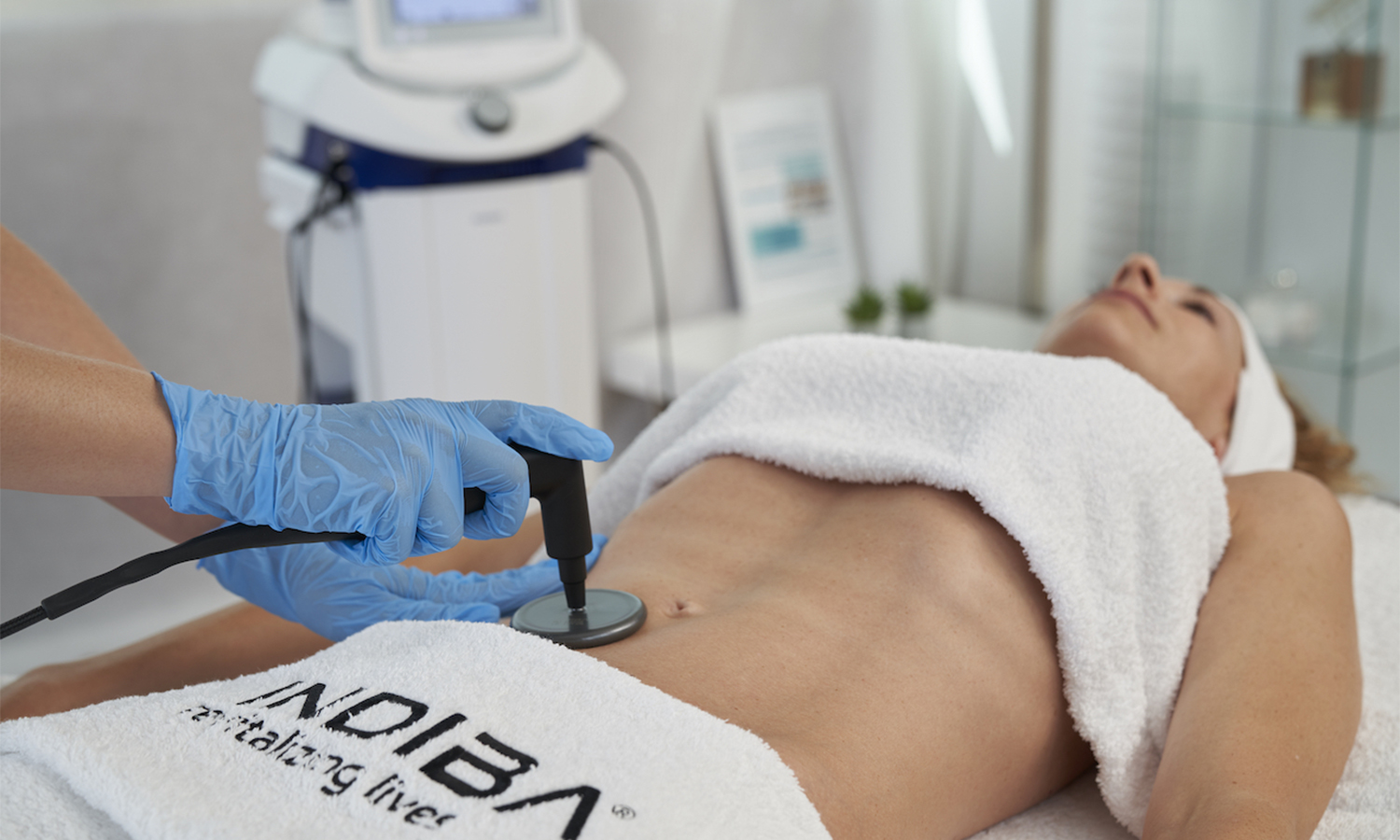
    For Beauty: INDIBA Deep Beauty is a non-invasive technology, which has been around for almost 40 years. The Proionic® System increases cellular metabolism and rebalances cells during treatments. From the first session with INDIBA® skin tissue recovers lost elasticity, there is an increase in production of collagen and elastin, fat decreases, and blood flow improves.

    Treatments are effective, safe and enjoyable and are available in some of the best salons in the world. Our protocols are regularly updated, and we currently offer effective solutions for:

    • Facial Rejuvenation
    • Firming
    • Body Contouring
    • Fat/Cellulite Treatments
    • Body Anti-ageing
    • Hair Treatments
    • Wellness

    For Physiotherapy, rehab, pelvic health, sports medicine and physio aesthetics: INDIBA Activ treatments can be integrated with manual physiotherapy to provide the best outcomes in treatment. Our technology can be used to complement a manual treatment, accelerating the repair process of damaged tissue in both the inflammation and chronic phases.

    Using INDIBA® can also be used to manage pain. Results can be visible from the first session. INDIBA Activ can be used in these key areas:

    • Rehabilitation
    • Sports Physio
    • Pelvic Health
    • Physio Aesthetics

    For Medicine, Dermatology, Plastic Surgery and Aesthetic Gynaecology: INDIBA Deep Care offers healthcare professionals a flexible tool in medicine; for gynaecological, surgical and dermatological uses. The Proionic® System increases blood flow to the treated area, increasing the delivery of nutrients and oxygen; resulting in hydration, fibroblast and collagen stimulation. INDIBA® can be used for:

    • Aesthetic Medicine
    • Combined Medical Aesthetics
    • Pre/Post Surgery
    • Aesthetic Gynaecology
    • Dermatology

    For Veterinary: INDIBA Animal Health is a unique line of products designed specifically for use on animals. The INDIBA® technology can be used to improve the wellbeing and quality of life of animals treated; by supporting recovery, managing their pain and improving performance. The treatment process is also pleasant for animals, as it is non-invasive and painless. INDIBA® can be used for:

    • Rehabilitation and Recovery
    • Pain Management
    • Injury Prevention
    • Performance

    INDIBA® refers to the technology as a Proionic® System because it induces a set of biological responses (thermal and sub thermal) by 448kHz and 20kHz current. Could you give us more explanation on this?

    The standard hyperthermia effect is to increase the local temperature of the treated tissue, and it has been proven scientifically that a 448 kHz current applied at subthermal output powers (that is, at an energy that cannot increase in a significant way local tissue temperature) also has effects, and that those effects are frequency dependent. Among those effects, it promotes stem cells proliferation, chondrocyte differentiation and increase of cartilage matrix synthesis and has an antiadipogenic effect (prevents fat buildup) in preadipocytes. In that sense, the term Proionic® system was developed, and presented by Dr. Sendros in an international medical conference in Singapore. Later Naranjo refers to Proionic® effects to describe the promotion of tissue regeneration and the modulation of the inflammatory response, induced by INDIBA® subsequent to a fractional laser treatment. On top of this, INDIBA’s patented technology that works at a frequency of 448 kHz and 20 kHz of modulation frequency can be used in areas of heat sensitivity and acute inflammation, with low energy output to achieve high performance treatment. In tissue repair level, it is more conducive to promoting collagen synthesis and release and in the tissue healing phase, it plays an important role in the balance of the internal skin environment, and can accelerate the effect and make the treatment more comfortable.

    What do you see as the role of high technology in improving the quality of life?

    Through history, INDIBA®’s state-of-the-art technologies have always been the engine driving more innovation, not only in medical aspects but in the healthcare range. This type of innovation has allowed INDIBA® to discover the electrothermal effects of the 448 kHz and 20 kHz modulation frequency and has been able to develop the Proionic® system concept.

    What’s more, now, not only health professionals but also the general population are asking for more scientific backing to ensure not only effectivity of the treatments but also their safety.

    Can INDIBA® treat pregnant guests?

    No, INDIBA® cannot be applied on a pregnant woman. Most energy-based devices are contraindicated during pregnancy and few techniques are allowed, as could be manual pressure therapy for oedema drainage, in case of heavy legs. However, INDIBA® has a good effect on postpartum repair. Numerous practical successful cases are seen in this regard.

    At the present time, during the COVID-19 pandemic, can people use INDIBA® treatments for Prevention and Recovery?

    Yes, people can use INDIBA®  treatments for prevention as well as for recovery in case of COVID-19. Hyperthermia has been proven to strengthen the natural body immune system, in fact hyperthermia has been proposed as a useful technique in that sense, so applying INDIBA will trigger those processes.

    But probably more important than prevention, is the use of INDIBA® in respiratory sequelae of COVID-19, with between 10% and 65% of survivors who had mild/moderate COVID-19 present symptoms of post-COVID-19 syndrome for 12 weeks or more. Many studies have proven that it not only improves the breathing capacity of asthmatic patients and of elderly healthy women but it also increases blood oxygen transport.

    Who are the users for INDIBA® worldwide? How many countries do you cover?  How do you see the China market in the next five years?

    The history of INDIBA® covers nearly 40 years, and so many countries that to mention them all would be a very long list, but you can find INDIBA® in the main leading countries such as in China, Japan, Singapore, European Union, USA and Middle East, to mention a few.

    China has experienced a huge change in the past few decades and has become one of the leading countries in the world. China has a very fast-growing market, very competitive and with many different levels of product demands. I think INDIBA® is going to be a very strong brand in China, not only for the quality of its devices, but also for its long tradition, close to 40 years’ experience with millions of advocates from its satisfied users & customers with its unique Proionic® effects. All these features of INDIBA® are very attractive to the oldest culture in the world that knows how to appreciate and value, tradition, quality and performance. And that makes it impossible for me to make any prediction, as it would probably be overwhelmed by the events ahead to happen for INDIBA® in the China market.

    INDIBA® 448kHz and 20kHz Modulation Frequency

    Research has proven that the precise and stable frequency of 448kHz promotes biostimulation at the cellular level and rapid restoration of cellular functions, with its regenerative, anti-inflammatory, anti-adipogenic, and proliferative effects on stem cells. At the tissue level, it can achieve anti-inflammatory and analgesic effects, promote fracture and soft tissue healing, improve blood circulation (reduce swelling and bruising), and stimulate tissue regeneration. On top of this, INDIBA’s patented 448kHz and 20kHz modulation frequency is a breakthrough technology that allows for high efficiency in the treatment of heat sensitive areas with low energy output, and at the tissue repair level to promote collagen synthesis and release. And at the tissue healing stage, it plays an important role in the balance of the skin’s internal environment, accelerating the results and making the process more comfortable. This is INDIBA’s latest patented technology that is ahead of the industry.