Brain-Based Learning Skills for the New Era, as Shared by Neuroscientist Andrew Huberman and Focus Expert Cal Newport
In an era of overwhelming information and constant interruptions, our brains fear one thing above all else: incessant task-switching. Neuroscientist Andrew Huberman and focus expert Cal Newport reveal that the key to deep learning, high-quality output, and exceptional performance lies in a skill called “deep work.” This is not just another flashy time-management trick – it is an essential survival skill for achieving meaningful success in today’s world.
Why is deep work so important?
Imagine your brain learning something new or solving a complex problem like a muscle being trained – it requires a state of “challenge and slight struggle.” Huberman explains from a neuroscientific perspective: Only when you feel “stuck” and push through difficulty do the brain networks responsible for learning and adaptation truly activate, leading to real growth. Yet today, we are too accustomed to scrolling through short videos, consuming fragmented information, and jumping between tasks. These effortless activities fail to give the brain the necessary “workout,” leaving us without true mastery.
Newport adds that solving complex challenges – whether drafting an important report, acquiring a new skill, or planning a project – often demands hours of uninterrupted thinking. It’s like solving a complicated math problem: the thought process is a continuous chain. If you pause to glance at a phone notification, even for just a few seconds, that chain snaps. It can take 10 to 20 minutes to reconnect, drastically reducing efficiency.
What’s the real thief of attention?
Many blame smartphones for distraction. Newport himself uses a phone but points out that the real culprit isn’t the device – it’s the meticulously designed traps inside: social media, short videos, and relentless notifications. These act like bait, constantly luring you away from important tasks.
Huberman explains the science behind this: Every time you switch tasks – say, from writing a report to replying to a message – your brain undergoes a complex “gear-shifting” operation. It must deactivate the pathways handling the first task and reactivate new ones for the next. This process consumes energy and time. Studies show the average office worker checks messages every few minutes! Such frequent switching leaves the brain in a chaotic state of “constant starts and stops,” making deep thought nearly impossible.
How to train your brain for deep focus?
Create a “focus zone.” Newport has a dedicated study for deep work – no internet, no phone. Just entering this space triggers his mind into “focus mode.” Huberman notes that our brains associate environments with behaviors. Designate a fixed spot, even just a corner of your desk, exclusively for deep thinking. Keep it simple, quiet, and clutter-free. Use pen and paper for planning or brainstorming to minimize digital distractions. Keep your phone far away – better yet, turn it off or enable airplane mode.
The key learning weapon: “Active recall.” Don’t just passively review notes or books. Newport’s research shows the most effective learning method is this: After reading a section, close the book/notes and ask, “What did I just learn? Can I explain it in my own words?” Then write or verbalize it. Huberman emphasizes that what you truly retain is what you’ve actively recalled multiple times. Try teaching what you’ve learned to someone else – even an imaginary audience – for remarkable results.
Don’t chase “flow” – embrace “deliberate practice.” Many assume the ideal learning state is the effortless “flow” experience. But Newport clarifies that flow typically occurs when performing already-mastered skills, like playing a familiar piece. Real learning involves struggle, frustration, and constant trial-and-error. Elite musicians, for instance, deliberately practice at a “just slightly challenging” tempo to break plateaus. Huberman adds that the brain chemicals released during this “productive struggle” drive genuine progress.
Single-tasking: Protect your “thought chain.” Huberman introduces “neural semantic coherence”: When deeply focused on a complex problem, your brain marshals all relevant resources into an efficient “thought chain.” This chain is fragile – interruptions (like checking your phone) snap it, requiring significant time to rebuild. Newport advises setting “unbroken time blocks” (e.g., 90 minutes) to commit fully to one task. The same applies to deep discussions – maintain undivided attention.
Reduce distractions to conserve mental energy. Newport himself allocates just four daily hours to deep work (e.g., writing, research), reserving the rest for chores or rest. Huberman concludes that many feel busy yet unproductive not due to lack of effort, but because their brainpower is drained by endless “start-stop-restart” cycles. Unlike computers, our brains handle multitasking poorly. Constant switching is like driving while repeatedly shifting gears – slow and wasteful. Peak mental performance thrives in dedicated “single-threaded” sessions.
Every Touch of Fingertips to Skin Transmits Genetic-Level Morse Code to the Brain
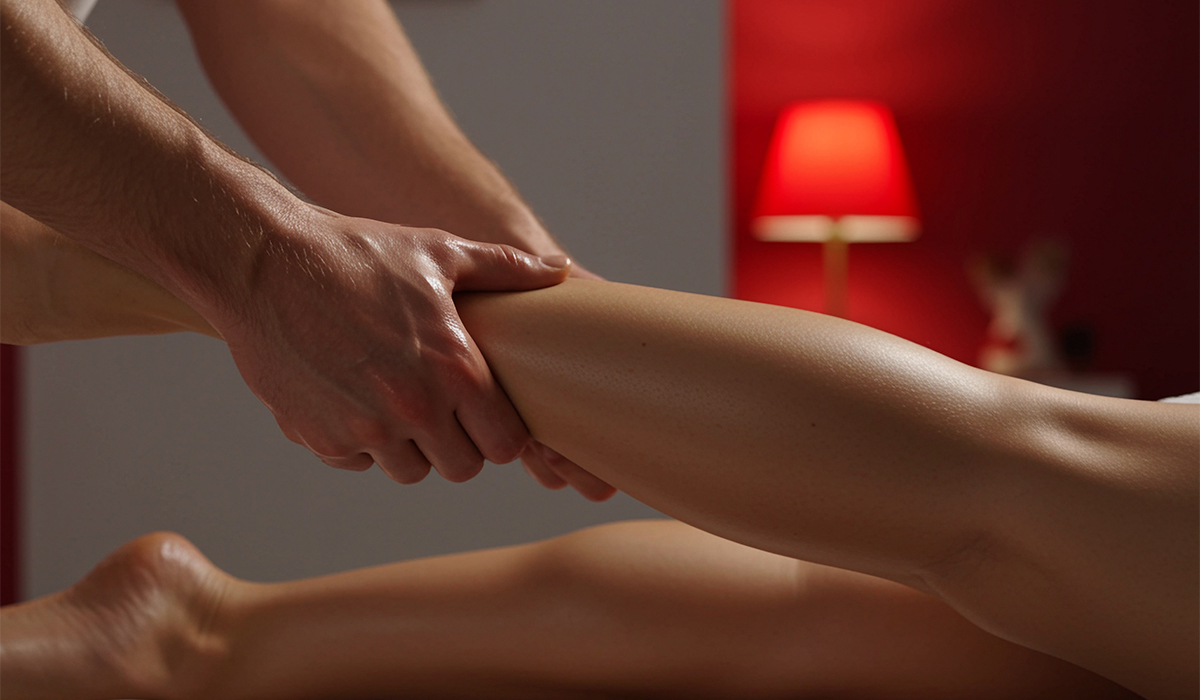
Every square centimeter of human skin harbors nearly a thousand nerve endings. When fingertips brush against velvet, this vast sensory network transmits tactile signals to the central nervous system at 120 meters per second. Behind this seemingly mundane physiological phenomenon lies the profound wisdom of evolution – skin and brain, these timeless twins, have maintained a deep, resonant connection across billions of years, transcending physical distance through an invisible dialogue.
The Embryonic Duet: A Dance of Skin and Brain
During the third week of embryonic development, ectodermal cells perform life’s most exquisite choreography. One group ascends to form the neural tube, evolving into the intricate central nervous system; the other descends, differentiating into the skin that envelops the body. This shared origin leaves molecular imprints: both systems are rich in nerve growth factor receptors and share identical signaling pathways. Remarkably, scientists have discovered that keratinocytes – skin cells – autonomously secrete acetylcholine, a quintessential neurotransmitter. This revelation uncovers a synchronized resonance between skin and brain at life’s very genesis.
Cross-Dimensional Dialogues of Neural Networks
C-fiber nerve endings in the skin weave a unique biological communication network. Far more than mere pain sensors, these free nerve terminals act as microscopic intelligence outposts for the brain. For instance, when ultraviolet radiation strikes the skin, keratinocytes release substance P, a neuropeptide that triggers localized inflammation while directly activating glial cells in the central nervous system. Recent breakthroughs reveal that chronic eczema patients exhibit abnormal thickening of the insular cortex – a structural adaptation mirroring persistent itch signals. This discovery confirms the dynamic interplay between skin disorders and brain remodeling, as skin and brain engage in relentless, multidimensional dialogue through their vast neural networks.
The Emotional Resonance of Biological Twins
A mysterious mirroring exists between the prefrontal cortex and cutaneous vascular networks. When experiencing shame, facial capillaries flood with blood within 0.3 seconds – a physiological response occurring faster than conscious control. Langerhans cells in the skin serve not merely as immune sentinels but as emotional decoders. Through dendritic synapses connecting directly with sensory nerves, they translate psychological stress into histamine release – the molecular basis of anxiety-induced urticaria. Clinically, over 60% of psoriasis patients present significant mood disorders, echoing the Chinese folk wisdom: “Allergic children yearn for love.” These intricate psychosomatic interactions are revolutionizing conventional medical paradigms.
This cognitive revolution reveals that every tremor of a skin cell carries ancient echoes from the brain. In this realm where matter and consciousness intertwine, we come to understand that skin is not just the body’s boundary, but a complex, enigmatic map to the psyche’s depths. From their shared embryonic origin to their ceaseless neural dialogue in adulthood, skin and brain maintain an extraordinary interconnected communication system.
Decoding the Two-Way Healing Revolution
At an exclusive Hangzhou spa, a 45-year-old executive named Ms. Li witnessed her persistent eczema and migraines vanish after completing twelve sessions of neuro-integrated spa therapy. This was no medical fluke, but rather modern wellness technology unlocking the profound dialogue between skin and brain. In our AI-driven era, neuroscience-based spa systems now bridge skin physiology and brainwaves through precise biofeedback mechanisms.
Urbanites’ skin has become nature’s stress dashboard. Clinical data reveals individuals under chronic mental pressure experience 43% faster epidermal water loss and 2.7 times greater risk of fascial collagen damage – a condition dermatologists term “stress-induced dermal dissociation.” Biopsies show that prolonged stress compromises the epidermal barrier and causes deep fascial adhesions. When cortisol rhythms are disrupted, the skin’s natural nighttime repair cycle falters; instead of dipping at night, stress hormones surge unpredictably like runaway horses, ravaging collagen networks.
Modern contributors to this “mind-skin dissociation” include digital overstimulation, dopamine dysregulation, poor sleep hygiene, and erratic eating patterns – leaving skin parched like desert terrain, fascial layers brittle, and muscles rigid as stone. Simply put, neural hyperexcitation itself becomes a form of cerebral stress, depriving the brain of essential restoration.
The 2021 Nobel Prize-winning discovery of TRPV1 receptors by David Julius’s team brought transformative insight. These skin receptors don’t merely detect heat – they are molecular translators of stress signals. This breakthrough birthed “neurocosmetics,” and tactile perception is emerging as a frontrunner for the 2025 Nobel in Physiology or Medicine. Consequently, anti-aging is evolving beyond wrinkle reduction into holistic maintenance of our neural-cutaneous-metabolic network.
The beauty industry has responded fervently. Neurocosmetic products now dominate luxury skincare lines, with global brands investing heavily to decode the skin-brain connection. From stress-sensing moisturizers to neural-calming serums, these innovations don’t just beautify – they facilitate cross-organ communication, proving true wellness requires harmonizing our largest organ with our most complex one.
Herein lies the future: therapies that don’t simply treat skin or soothe mind, but orchestrate their eternal dialogue – where every therapeutic touch transmits wisdom written in our evolutionary biology.
Neuroplasticity: From Skin to Brain
At our high-end spa laboratory, we have observed through functional near-infrared spectroscopy (fNIRS) that when microstimulation devices apply stimuli to connective tissue at a frequency of 21,600 times per minute, the blood oxygen saturation in the insular cortex increases by 23% within 20 minutes. This “tactile-brain activation” phenomenon arises from quantum-level resonance between mechanoreceptors and glial cells – a principle closely aligned with tapping therapy used in psychotherapy. Rhythmic tapping not only restructures skin tension but also enhances the connectivity strength of the brain’s default mode network.
Further insights come from the Dance Therapy research team’s discovery of the “vagus nerve code.” When a therapist applies rhythmic pressure at 1.2 Hz to specific areas of the forearm, C-fibers beneath the skin generate distinctive bioelectrical pulses. These signals travel rapidly along the vagus nerve “highway” to the brainstem, functioning like precisely delivered neuro-sedatives. The result: a 41% decrease in amygdala activity, effectively reducing hyperarousal symptoms associated with PTSD.
Reverse Healing: From Brain to Skin
The “4-7-8 Breath Synchronization Technique” practiced by modern spa therapists is, in essence, a form of neuroimaging bioengineering.
Inhale for 4 seconds: the therapist’s touch lightens like an ebbing tide, activating the anterior cingulate cortex, which governs attention regulation.
Hold for 7 seconds: static palm pressure triggers calcium waves in astrocytes.
Exhale for 8 seconds: the gradual release of palm pressure induces GABA (gamma-aminobutyric acid) secretion, raising pain thresholds by 57%.
This dual-frequency resonance between breath and touch establishes new neuroplastic memory. When a therapist’s technique is fully synchronized with the client’s breathing, mirror neurons generate “empathetic brainwaves,” increasing β-endorphin secretion by 2.3 times – simultaneously enhancing both microcirculation in the skin and emotional resilience.
Somatic Decoding: The Neuro-Linguistics of Skin
Elite spa therapists can be seen as translators fluent in the expressive language of the body.
Neck and shoulder rigidity: a trapezius muscle stiffness above 35 kPa often corresponds to responsibility stress exceeding cognitive load by 300%.
Cold hands: persistent palm temperatures below 32°C may reveal vasoconstriction driven by social anxiety.
Lower back stiffness: a 20% drop in erector spinae elasticity could indicate suppressed creative expression that remains unspoken.
When a therapist notes, “Your suboccipital muscle tension reflects anxiety from unresolved events,” they are engaging in what we call neuro-somatic decoding. This process of reconstructing cognitive awareness through the skin’s neuro-linguistics not only deepens the therapeutic experience but also activates the dorsolateral prefrontal cortex – establishing new paradigms for mind-body interaction. In this process, the skin serves both as a stress sensor and a feedback screen for neural remodeling.
When we use specific tactile frequencies to stimulate the insular cortex, the skin becomes a programmable interface for the brain. And when breath patterns reshape the limbic system, the brain in turn imbues the skin with a new biological rhythm.
The Ultimate Competitive Edge in Future Spa Therapy
As Nobel laureate Rita Levi-Montalcini once said, “The moment the fingertip touches the skin, it is in dialogue with the primal cortex of the brain.” The ultimate form of future spa therapy will be a neuro-aesthetic practice – one that fuses quantum biology with existential philosophy.
When a therapist’s palm lines become quantum-entangled with the fine textures of a client’s skin, when personalized sound frequencies resonate precisely with hippocampal theta waves, we begin to understand: true anti-aging is the synchronized blossoming of skin memory and brain wisdom across time and space.
In this quiet neural revolution, the therapist’s 38°C palm can never be replaced by AI. It carries within it the intuitive essence of life, evolved over millions of years, weaving a healing network between skin and brain that transcends algorithms. For in that space lies both the rational science of cortisol curves and the poetic shimmer of neural constellations.
Paper Moon
She graduated from George Washington University with a double major in neuropsychology and public health. She is now actively engaged in research on the physical health of women, the elderly and high school working people. She combines neuropsychology, traditional Chinese medicine, sports integration concepts, and mindfulness health services.