Category: Spa knowledge

  • Himalayan Salt in SPA

    Himalayan Salt in SPA

    Subjected for hundreds of millions of years of extrusion and high temperatures, the mineral and sea salts originally lying 600 meters under ground have combined to become salt fossils, which is the Himalayan mineral salt. By Ms. Amy Huang

    Very different from ordinary white sea salt, Himalayan mineral salt is transparent and features various colors including white, pink and red. Among them, the purest are those deeply hidden deep in the mountains, and when all the necessary conditions are mature over time, they form perfect crystal structures. They are the highest grade rock salt in the whole world. Personally, I prefer to call them Himalayan crystal salt.

    Nowadays, more and more Spas have begun to introduce treatments involving Himalayan salt.

    Himalayan salt blocks can be placed in the rooms as a natural artwork to kill germs and bacteria or can be attached to the walls and floors to purify the interior magnetic field energy and the air. According to individual requirements, the salt blocks can be cut into different shapes and sizes as decorations or even salt lamps. The round or oval salt blocks with smooth texture are best for hot stone massage while the small or coarse grained ones can be used for bathing. Small salt particles are good tools for body scrubs, as well as raw materials for exfoliating creams and bath foam. Even smaller particles can contribute to sniffing treatment combined with steam, or be added into distilled water to clean nasal cavity, mouth and face. Himalayan salt is also edible. You can put it into food or drinks. They will not only improve your gestation, but also bring more mineral and nutrition to your diet, as well as sterilizing and alleviating diarrheal symptoms. Moreover, they will give you more natural positive energy.

    Bathing: Himalayan mineral salt is rich in sodium chloride which is highly sterilizing and antibacterial. Dissolved in water, sodium chloride is decomposed into sodion and chloridion and thus form a powerful electric field. In physics, an electric field is able to turn a magnetic field into a low volt electric field. This process of demagnetization eliminates malign magnetic fields in the surrounding environment. This explains why when people enter into forests or temples where there is no influence of environmental magnetic fields, they will feel peaceful and sober in mind. Apart from cleansing the magnetic field around the body, the mineral salt, while dissolved in the water, also stimulates body circulation and detox, according to cytology theory.

    Exfoliation and Body Wrap: Himalayan salt can be used for body scrub, or to form exfoliating cream, body mask and bath foam, leaving the skin smooth and tender.

    Nasal Therapy: Dissolved into warm distilled water, Himalayan salt can be adopted to clean nasal cavity with the help of a nasal irrigator. We call it nasal therapy in Spa and it is very popular nowadays.

    Facial Cleansing: Himalayan salt is able to do facial exfoliation. If you use the mineral saline to clean the face, it will further sterilize and fight skin inflammation. Combined with other natural elements, Himalayan salt is a superior source to create different facial products for deep cleansing.

    Steam Bath: Micro-sized Himalayan salt particles are often found in steam rooms because they can kill the bacterial generated inside due to the humid environment. When people inhale the particles, they will further display their anti-inflammatory functions in the human body and improve the immune system. Many Spas will also enrich steam therapy with natural plant essential oils of different fragrances to give guests total relaxation.

    Salt Room: Many brands have launched salt rooms. Their installation and usage are quite simple. It is a highly effective way to give full play to the diverse functions of Himalayan mineral salt.

    Stone Therapy: Himalayan salt blocks can be used to perform stone therapy, yet with better cleansing and detoxing effects than common stone massage. Combined with essential oils and heated, Himalayan salt will work miracles on your body by healing skin problems, deeply relaxing muscles, calming nerves and improving sleep.

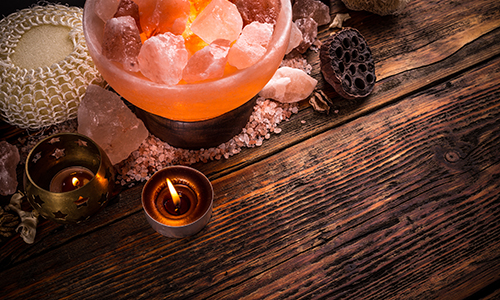
    Lamp Therapy: Himalayan salt lamp is very practical and easy to use, so it is a popular Spa retail product. Being lighted, the salt lamp can absorb the moisture in the air to its surface and thus form a saline solution. After evaporating, the salt will release numerous negative ions to degrade the pollutants in the air, cure respiratory diseases and remove dampness in the environment. Besides, the salt lamp sends out natural bio-electromagnetic frequencies which resemble that of the human body, which will generate a healthy spectrum through the semitransparent crystal structure and largely improve sleep quality.

    Tea and Food Therapy: Himalayan mineral salt can also be introduced to the Spa healthy drink menu, such as fresh mint leaf + black tea + Himalayan mineral salt or rose water + a little Himalayan mineral salt. Furthermore, added into sweet fruit juice, the salt will improve the overall flavor; combined with porridge, it alleviates diarrhea and supplements high quality electrolyte to the body. The nutritional mineral salt can even sometimes replace common white salt in cooking so as to improve physical conditions.

     As we can see, there is a wide range of Himalayan salt therapies. Natural and result proven, they are more and more recognized by spas and spa goers. The Himalayan Crystal Salt treatment (RMB 2980 / 120min) introduced by Bulgari Spa at The Bulgari Hotel Beijing has nearly included all the properties and functions of Himalayan mineral salt with mineral salt foot bath, warm salt body wrap, salt exfoliation and stone massage with mineral salt and essential oil, completely restoring body functions and body-mind harmony. In addition, the treatment also involves herbal tea with Himalayan salt and the songs of Devid Prayer. On guests’ demands, therapists will conduct Tibetan bowl meditation or Tibetan incense.

  • Salt Lamp Healing

    Salt Lamp Healing

    The therapeutic salt lamp traces its origin to the mountain grottos in the Himalayas where the orange-red crystal salt blocks are hand mined. They are chiseled and hollowed to hold a bulb or other heat source inside and thus become salt lamps featuring Feng Shui energy. By Ms. Ji Zhijuan

    In Tibetan, Himalaya means the “home of snow”. Located at the southern edge of Qinghai-Tibet Plateau, the Himalayas is the highest mountain range in the world with Qomolangma (Mount Everest) the highest peak and one of the eight holy mountains in Tibet. Himalayan salt, the rock salt found on Mt. Himalaya, contains over 98% sodium chloride, as well as 10 mineral substances including iron, calcium, magnesium, potassium, aluminum, zinc, gallium, silicon and etc, being the true “king of salt”. Like the natural herbs grown in the holy mountains, the Himalayan salt is also bestowed with spiritual and healing powers.

    Salt therapy is a primal choice to sterilize and remove body dampness due to the powerful detoxing effects of its content such as chloride, bromide, sulfate, bicarbonate, magnesium, sodium, calcium, iodine and potassium. For example, the sea mud (containing sea salt) which is filtered, purified and sterilized is often used in body wrap treatments at Spas to completely remove the redundant oil, dirt and sweat stain in the pores, exfoliate, sterilize and detox the body, leaving the skin radiant, tender and elastic.

    However, Himalayan salt has much greater healing powers than the ordinary salt mentioned above. Being heated or atomized, the salt can absorb the allergen and pollutant in the air to its surface. Meanwhile, it releases anion to absorb humidity and neutralize the superfluous positive ion. So a Himalayan salt lamp is indeed a natural ionizer. Furthermore, the salt can purify the air by removing the cigarettes smell or other foul smell and absorbing and removing the dust mite, pollen, germ and spore. Therefore, it is effective to adjust commonly seen children diseases like allergy and asthma and improve immune system.

    Being lighted, the salt lamp will release a frequency called Schumann waves which can naturally adjust and restrain the high-frequency electromagnet wave generated by electric appliance. The soft and pleasant natural light the lamp gives off is incomparable by any man-made decorative lighting, and will effectively alleviate eyes fatigue, relax body and soul, calm the emotion, sober the mind and cleanse the heart, highly beneficial to spirit cure and cultivation.

    Sourced from natural mineral, the Himalayan salt lamp is a gift from Mother Nature and every piece is unique with its distinct salt shape and color. While choosing the salt blocks, deep colors with even texture is preferred. Pure bright red salt is the highest grade and orange-red is also top grade, while pink are more commonly seen. However, after being heated and used for one month, the color will turn redder and redder, brighter and brighter. Since they are pure natural salt blocks, they will forecast the plum rain season or rainy days by exuding water. When this happens, just keep the lamp on to stop the water exudation.

    In Europe, the U.S. and Japan, you can find salt lamps in numerous spas; but it hasn’t become so common in China yet.  Due to the state regulation of the salt industry in China, salt lamps, as a kind of salt product, haven’t come to China’s market until recent years, and the true quality Himalayan salt lamps are very few.

    With the aim to heal and relax, the Spa industry has now integrated Himalayan salt into its services to satisfy the demands of guests in the form of salt walls, salt rooms or salt cabins. In addition, salt particles can be used for body scrubs, bathing or food ingredients.

    Compared to salt walls and salt rooms, the salt lamp is smaller, more decorative and therefore is suitable for Spas that find it hard to execute big changes in their hardware; they can simply place a salt lamp in each treatment room. Moreover, it is also a perfect retail product due to its acceptable prices.

    The salt lamp can be placed in the bedroom, study, treatment room, and yoga and meditation room with its warm red orange light benefitting both body and mind. Spas can also place a salt lamp near guests’ faces while they are enjoying a treatment so that they can inhale salty air rich in negative ion at the same time, which helps them clear away the lung heat and infuses oxygen into the brain. If conditions permit, Spas can also combine the salt lamp in the psychological counselling sessions or meditation courses to help guests reach body-spirit harmony and complete relaxation amidst the energy ambience created by Himalayan salt. When night falls, sit a while by a 300,000,000-year Himalayan crystal salt lamp and breathe in the pure air, you will find yourself back with Mother Nature in total relaxation.

  • Advantages of Halo Therapy

    Advantages of Halo Therapy

    Halo therapy facilities usually include salt rooms and salt walls, which are installed proportionally based on the actual area space provided. Various venues are suitable for such installations including hotel spas, fitness clubs, day spas and private villas. By Mr. Xu Hongtu

    Five years ago, some SPA equipment companies such as TouchAmerica and Starpool had already begun to study halo therapy and launched halo therapy equipment in the China market. In fact, this concept has been popular in Europe and the United States for a long time. A good many wellness publications have included reports on halo therapy and plenty of experts have recognized it, as well as helping to promote the idea.

    Generally, a salt room involves a salt wall and a heater proportionally placed inside. The heater makes the temperature rise and thus volatilizes the salt wall tiles into micro-sized salt particles. The salt wall is made up of natural Himalayan salt tiles all of the same size, originating from Pakistan. Some 250 million years ago, due to the diastrophism, a vast sea turned into the Himalayan Mountains and the original crystallized sea salt beds become the pink rock salt used in salt therapy today. Thanks to the high altitudes and fresh air, the salt is free from pollution and maintains a high purity as well as rich mineral composition with as many as 84 elements, 2-3 times more than ordinary sea salt, and particularly rich in NaCl.

    The heated salt micro-particles not only cleanse the air to enable healthier breathing, but also, being inhaled into the body, stimulate blood circulation, heal respiratory diseases, improve mood and alleviate stress and anxiety. Besides, salt therapy has marvelous effect on the skin by promoting skin metabolism, fighting bacteria and inflammation, and repairing minor wounds. As a result, your skin will be left tender and smooth. For those who suffer rheumatic arthritis, salt therapy can decrease selenium and zinc concentration so as to alleviate the pain.

    Today, salt therapy is still in the market education stage and most spa people don’t really understand its advantages. Main venues offering salt therapy now are high-end luxury hotels. First, they want to take salt therapy as a selling point for their services and marketing promotions. Secondly, with the increase of air pollution, salt therapy can truly help guard against the dangers of such pollution and restore a healthy life for all.

    So what is the difference between salt therapy and sauna? They differ little in temperature, both about 42-47oC. However, some salt rooms adopt a lower temperature of about 30-35oC.

    But the materials for building a salt room and a sauna room are totally different. First of all, a salt room for halo therapy is of course made up of salt, while a sauna room is constructed with bamboo. Nevertheless, their interior structure and furnishing are similar. In other words, a salt room can be a qualified sauna room while the latter cannot substitute the former.

    Like sauna, salt therapy will also take away body water and electrolytes as people sweat. Since the heated salt will release abundant sodion which, when entering the body’s microcirculation through the pores opened by the high temperatures, will supplement plenty of microelements that the body needs, as well as the lost salt due to perspiration. So there is no time limit for salt therapy. No matter how long the session lasts, it won’t cause problems for the body. So one can have the treatment once or several times a day. On the contrary, one sauna session should be limited to 5-15 minutes, otherwise there will be dangers of body problems and the treatment frequency varies according to individuals.

    Halo therapy has a remarkable power to heal respiratory diseases such as asthma, trachitis, pharyngitis and rhinitis. Halo therapy at a comparatively lower temperature can be done by all people including pregnant women and infants. But Sauna is not recommended for pregnant women, infants and children and those suffering from heart disease and high blood pressure. Halo therapy is very good, particularly for people with respiratory diseases. Patients will notice obvious changes 15 minutes after they enter the salt room. They will find their breathing becoming easier and deeper and their mind clearer and more sober. However, sufferers of serious respiratory problems are not advised to have sauna.

    Please note that, since the volatilized salt due to high temperatures may have the danger of being melted in humid environment, therefore, the salt room should be kept away from facilities which will make the environment humid such as steam rooms. Humidity inside the salt room should be controlled under 40%. It is also recommended to install dehumidification and fresh air equipment.

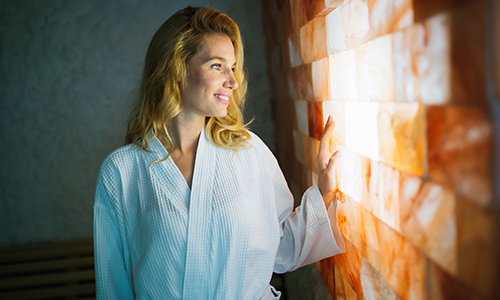
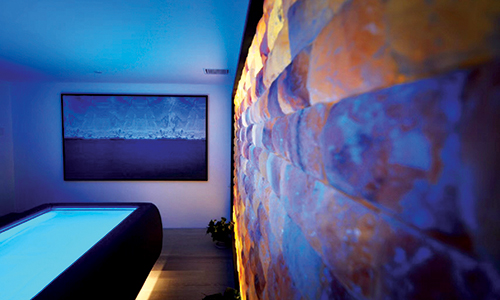
    The salt wall can also serve as a decorative wall. Lights can be set up around or behind the wall. It will create a marvelous effect when being reflected through the rosy salt tiles.

    Due to the corrosive properties of salt, iron frames should be avoided and the load bearing capacity of the wall needs to be taken into account.

    The maintenance for the salt wall is very simple. As long as the interior humidity is kept under 40%, a salt wall can be used for decades after installation. But we need to add salt tiles above the heater after certain period.

    Another advice is to place inside the salt room some lounges featuring wood materials and leather surface to avoid being corroded by the salt.

  • Halotherapy Knowledge

    Halotherapy Knowledge

    Halotherapy can be integrated with chromotherapy, aromatherapy or sound therapy to make a session more interesting. By Stewart Griffith, Founder of TouchAmerica

    Halotherapy, also known as Dry Salt Therapy, is a holistic approach that mimics the microclimate of a salt cave. Dry salt air is dispersed into an enclosed environment (Salt Room, Salt Capsule, Salt Cabin) through a unique process generated by a halo generator. It is a safe and effective way of using salt’s natural antibacterial, anti-inflammatory and super absorbent properties to provide relief for respiratory and skin conditions.

    When you heat salt, it becomes super dry, and kinetically more active. The heated and dry pure sodium chloride is then crushed into micro-sized particles and dispersed into the air. When micro-particles of dry salt are inhaled into the respiratory system, it does its job by absorbing and removing allergens, toxins and foreign substances in your lungs and throughout your respiratory tract. Salt also reduces any inflammation and opens airway passages.

    Many patients with asthma, allergies and other bronchial issues have seen some amazing results in a short period of time. Breathing became easier; more energy was experienced and just overall better quality of life. Those who have severe skin conditions such as psoriasis, eczema or acne have also had incredible improvements in their skin health. Dry salt therapy has also been very successful in reducing stress and enhancing the cardiovascular system.

    All in all, those who suffer from the following conditions can greatly benefit from halotherapy: allergies, emphysema, asthma, psoriasis, bronchitis, pneumonia, bronchial infections, rhinitis, chronic ENT illnesses, sinus infections, cold/flu, cystic fibrosis, smoker’s cough, dermatitis, snoring, ear infections, stress and fatigue, eczema, wheezing.

    Personally, I notice a difference after once 20min session, but halotherapy offers the best results when practiced regularly. People with chronic issues will benefit greatly if visiting salt rooms at least 3-4 times a week. Those who are looking to incorporate salt therapy into their regular wellness routine would benefit from a weekly session. Halotherapy is safe to use on a daily basis if desired.

    There are almost no contraindications to this therapy. However, because halotherapy has a detoxifying effect by releasing toxins and bacteria from the body, people who are taking certain medications might wait until they are done with the medication. Always check with your doctor before starting any salt therapy treatments if you are taking any medications for severe conditions.

    There is another question about how you feel inside the salt cabin. Can people processing halotherapy notice the changes? These questions lead me to the idea of incorporating some chromotherapy, aromatherapy and acoustic resonance therapy. Halotherapy is the inhalations of dry salt partials and during a session one might notice a salty smell and deepening of breath. Ultimately, unless the client is well practiced in meditation they might find themselves looking for stimuli. You don’t want anyone bringing their cellphone into the room for many reasons. One, the phone can get ruined by the salt particles. Second, people are too dependent on their phones and need to be able to self-reflect away from such attachments. We don’t have this and a projector would need to be outside the room due to the salt air.

    Different sizes of halo generators are used for salt rooms and salt cabins and both are great solutions. Salt rooms can be incorporated with traditional treatments. For example, Spas can use treatment beds, sound therapy lounges or salt table, etc. into a salt room, and charge additional for added services, while salt cabins are more flexible, can easily be added into an existing spa, and the investment is less. 

    Halotherapy usually takes 20-40 mins. Standalone treatment for $70 for 40mins includes Harmonial (color, sound, and light therapies). Standalone halotherapy for $30 for 30mins can be added on to a massage for extra $20. Of course, you can have your own price and presentation and promotion for this special halotherapy.

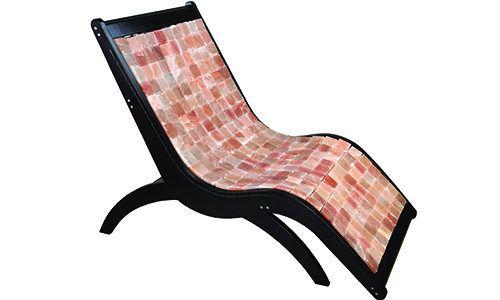
    In recent years, TouchAmercia keeps renewing its Halotherapy Range based on pure Himalayan salt. After Atlas Flex-Block™ Salt Table, Salt Capsule™, and Back-lit Salt Wall, it now has launched the Atlas Flex-Block™ Salt Lounge. The client lies directly on the flex-top surface – Himalayan salt tiles that cushion and give way to the body for a cradling feel. With remote control, the electronic lounge moves easily from upright to zero gravity position to provide such benefits as back and muscle pain relief and more. Waterproof heater warms the salt tiles to release negative ions and clean the air, improve breathing and allergy problems, decrease anxiety, improve sleep and more.

  • Mauritius Pearl of the Indian Ocean

    Mauritius Pearl of the Indian Ocean

    Europe, Africa, India and China… The whole world in one island! More than a tropical island with breathtaking scenery, Mauritius is brimming with exotic charm due to its diverse cultures and ethnicities

    Amazing white coral sand beaches and crystal clear lagoons are set against the backdrop of black volcanic mountains – forming a strong and beautifully inviting contrast. This is the first impression that Mauritius leaves on people.

    Mauritius is a small, multi-cultural island in the Indian Ocean, east of Madagascar, and about 2,000 kilometers off the southeast coast of the African continent. It was created by volcanic activity some 8 million years ago, surrounded by more than 150 km of white sandy beaches and lagoons protected from the open sea by the world’s third largest coral reef. The whole island enjoys a quite diverse geography. The east coast has some of the most beautiful beaches, as well as an array of world-famous luxury hotels and resorts. Heading south, you will see a more pristine and natural picture, represented by basalt cliff, hidden sandy bays and old fishing villages. The southwest is covered by forests, featuring several well-known scenic spots such as Black River Gorges National Park, Seven Colored Earths, Le Morne Peninsula and more. Local citizens mostly dwell in the middle of the island where lots of lakes and extinct volcanoes spread. Therefore, if you want to experience the authentic Mauritius life rather than a popular tourism destination, go to the middle area.

    Mauritius was colonially ruled by Netherlands, France and Britain before it finally declared independence in 1968. Such an unusual past has bestowed the island with a unique charm integrating multiple cultures.

    Outdoor Activities

    Life in Mauritius revolves around the warm waters of the Indian Ocean. Visitors can try out a variety of water sports and activities including pedaloes, kayaks, water skis, sea karting, surfing, stand up paddleboarding, glass bottom boats, catamaran cruises, and big game-fishing… But that is not all.

    Dolphin Watching

    Most islands offer dolphin watching activities, but the chance is rare when one can really encounter dolphins, let alone a group of them. In Mauritius, however, everyone can swim abreast with the lovely dolphin team.

    Every morning, nearly a hundred mild bottlenose dolphins will gather at Tamarin Bay in the west Mauritius to seek food. Take a motorboat or catamaran to the sea, and you will amaze at these lovely creatures jumping in the water. And you can also jump into the sea to swim with them if you like! The catamarans are bigger and slower, suitable for middle-aged and older people, while the motorboat is welcomed by thrill seekers for it is much more speedy and can take one closer to the dolphins. If you happen to be in Mauritius in September, you may even get to spot the whales as they migrate at that time of the year.

    Diving

    With 330 kilometers of coastline encircled by a coral barrier reef, Mauritius offers exclusive diving experiences all year round. When you dive down, you will immediately be greeted by a whole world of color reefs and tropical fish. Mauritius is a five-star diving destination granted by Professional Association of Diving Instructors. There are at least 40 diving centers on the island that provide a range of diving programs and advanced equipment to different levels of divers.

    In Blue Bay, a nature reserve in the southeast of the island, you can take a glass bottom boat into the reserve and then snorkel in the lagoon. There are huge coral thickets where groups of reef fish shuttle back and forth. For more changing diving experience, the Colorado diving spot features plenty underwater breaches, channels and rocks where lobsters, pikes, garrupa and mullet hide. The diving area in the north offers some of the most unforgettable experiences for some shipwrecks are found there. The beautiful Waterlily and Emily are two ships which sank in 1987 and now lie 26 meters underwater. Due to the mild climate and a constant water temperature between 22 to 28 cent degrees, you can dive any time around the whole year.

    Sega Dance

    You cannot possibly leave Mauritius without learning to dance a few Sega steps. Whether you have twinkle toes, or two left feet, this vibrant local dance with distinctive African rhythm will have your hips undulating to the beat!

    Sega is not exclusive to Mauritius but is commonly seen in Madagascar, Reunion, Seychelles and other islands in the Indian Ocean. However the Sega in Mauritius is surely the most gorgeous, vibrant and inviting. Sega was brought to Mauritius by black slaves from Africa. It was then innovatively infused in European musical elements including polka from Czech, Waltz from Austria, and quadrille dance of the 19th century, thus forming the characteristic Mauritius Sega.

    Each resort has its own Sega show, which is a perfect way to end an evening. The spirit of Africa resonates through the musical instruments – usually ravanne, maravanne or triangle are played, while the songs, sung in Creole, depict the Mauritian way of life. If you want to keep moving to the beat, you can purchase a range of Sega music in all music stores around the island. A well-known Sega artist is Ti Frère but there are dozens to choose from, each with their unique flare.

    Golf

    As early as 1844 when Mauritius was still a colony of Britain, the first golf course on the island was built, making Mauritius the third country in the world that introduced golf. Owing to advanced facilities, breathtaking ocean views and privileged warm climate, Mauritius is highly praised by golf lovers. There are eight standard 18-hole golf courses and five standard 9-hole golf courses on the island and most of them are inside hotels and resorts. The hotel guests usually have the chance to enjoy free plays.

    Le Touessork Golf Course extends nearly the whole island of L’Ile aux cerfs. One has to take a boat to arrive at the first hole. Vast white beaches and green hills spread around to make the playing quite enjoyable. The Anahita Golf Course on the east coast is the first course in Mauritius that is designed according to USGA standard. The wide fairways and quality vegetation largely improve the success of first tee. Therefore, it welcomes a lot of primary level golf lovers. The Afro-Asia Masters Golf Tournament is held here every December.

    Flora and Fauna

    Thanks to its volcanic origin, age, isolation, and unique terrain, Mauritius is home to varied flora and fauna, with many species unique to the island and some of the world’s rarest plants and animals. To fulfill the wishes of nature lovers, the Mauritius government has built a dozen nature reserves and botanical gardens, plus mountainous vistas, waterfalls and tropical forests.

    Located to the west, the Black River Gorges National Park extends over 16,680 acres. There are around 311 species of native and endemic flowering plants and nine species of birds that are only found in Mauritius including wind hover, pink pigeon and echo parakeet. You can walk along a number of dedicated trails inside the gorges itself or even hike up to the plateau. Make sure you wear the right shoes and clothing if you want to attempt a hike, and take food and drinks and other supplies along with you, as there are no shops or medical support within the park. The most ideal visiting time is September to January when flowers come to full blossom and trees turn the most green.

    Created in 1750 and considered to be the oldest botanical garden in the Southern hemisphere, the Ser Seewoosagur Ramgoolam Botanical Gardens in Pamplemousses has 500 species of plants, including giant water lilies and more than 80 varieties of palms, including bottle palms, royal palms, talipot palms, raffia palms, sugar palms and more. The giant Victoria Amazonica waterlilies sway with the breeze. It takes only a few hours for the newborn tender leaf to develop into a two-meter wide saucer shape. Flowers are wrapped in the middle which bloom every other day. There are also numerous birds and deer in the garden.

    Located off the southeast coast of Mauritius, Île aux Aigrettes is a small 27-hectare island, home to the last remnants of dry coastal forest, once found around most of Mauritius. A professional will guide you amongst the kestrels, giant tortoises and pink pigeons that have been rescued and freed after a 30-year conservation effort.

    Cuisine Palette

    Mauritian cuisine is one of the most diverse in the world, borrowing from French, Indian, African and Asian kitchens to create its own unique flavors. They are based on Creole cuisine with curry and tomato as the major boiling sources. Be sure to scan restaurant menus for daube, a classic tomato-based chicken stew, and fish vindaye, a Mauritian take on Indian vindaloo.

    You can also try Mauritian snacks like Dholl Puri, a traditional flatbread filled with spicy ground split peas and served with chutney. Roti is another best seller. It’s a thin pancake wrapped into a tube. The pancake is made of corn flour while the fillings include various flavored curry made from potatoes, tomatoes and more. It only costs 10-20 rupees (1-2 yuan RMB). Magic Box is exactly like its name, with a full array of fried egg, shrimp, maize, mushroom, green vegetables, agaric, green pepper and more things being orderly placed on the rice or noodles, mixed with garlic sauce. Moreover, don’t miss the Gateaux piment, a spicy pastry, Samoussam, a triangle curry pancake and Alooda, made of agar, milk, vanilla or almond.

    As a tropical island, Mauritius never lacks for seafood – tuna, dorado, oyster and mini lobster, to name but a few, and fresh fruits and vegetables, which are the main ingredients for local specialties like quail and strawberry vinegar sauce salad, fried banana, chicken roll with mango and coconut. Besides, the delicate ‘heart of palm’ salad is famous and something to try if your budget allows. It takes five years for a palm to grow mature and only the heart of the palm can be eaten, and one palm can serve only eight people. Since Mauritian history and prosperity are linked to the sugar cane industry, its by-products, such as rum, remain extremely popular.

    Hotels and Wellness

    There is a wealth of accommodation to choose from in Mauritius – ranging from small to medium-sized hotels and charming villas right through to luxury resorts. More and more hotels in Mauritius now begin to recruit staff who can speak Chinese. Major hotel groups include Accor, Starwood, Four Seasons, Hilton, Intercontinental, Lux* Island Resorts, Indigo Hotels and Resorts, Sun Resorts, Veranda Resorts and Heritage Resorts, and One&Only Resorts, etc.

    Surrounded by white, sandy, spotless beaches enclosed by safe turquoise lagoons, a wide range of small and medium-sized hotels offer more homely and cozy experience. These establishments place emphasis on ‘the human touch’, customised services and delicious home-cooking – Mauritian style.

    Most hotels and resorts have spas, in addition to a series of day spas. With the increase in demand by foreign visitors, the market has become extremely competitive, resulting in an amazing range of pampering treatments and state-of-the-art health and beauty facilities. The big cosmetics names such as Clarins, Givenchy, Guerlain, La Prairie and Shisheido, are found in the best spas in the country. A local brand, Seven Colours, has earned wide respect from clients as well.

    The island’s mix of cultures has inspired an eclectic blend of therapies, with visitors able to choose from a range of Asian Ayurvedic massages, ocean-inspired treatments, and African and Creole treatments made from locally grown flowers, herbs and essential oil. Making the most of their beautiful surroundings and the warm year-round temperatures, some wellness centers have created dedicated outdoor treatment areas, in gardens or private gazebos on the beach. If you are not staying in a resort, do not despair! Most hotels and resorts welcome non-guests to their spas and there are a number of independent health and beauty centers around the country.

    Special local experiences include Navasana Spa at Outrigger Mauritius Beach Resort which boasts a hammam set in a Moorish atmosphere, a perfect place to experience the secrets of Moroccan wellness. Guests can enjoy various treatments and soothing Mauritian massage, as well as hydro-massage corridor, sauna and solarium featuring a swimming pool. Or visit Les Mariannes Wellness Sanctuary nestled in the lap of a mountain where the expert team of qualified health practitioners, spa therapists, fitness instructors and nutritionists will ensure a personalized service for every individual. As mentioned above, the local brand Seven Colours has something quite original. According to age-old Eastern wisdom, light – the primary source of energy – breaks down into seven colours, which resonate with our seven energy centers, called “chakras”. Seven Colours, seven chakras – that is where the name comes from. Seven Colours draws on the island’s natural richness as well as local know-how and multicultural influences to offer a colorful array of experiences. An optimal energetic atmosphere is created through chromotherapy lights, vibrational music, aroma therapeutic fragrances, energized water and healing hands, for the stimulation of all the senses and the harmonization of the chakras.

    From cosmetic surgery to dentistry and hair grafting, Mauritius has become one of the top destinations for medical tourism. The tranquil, dreamy location is a sure recipe for a relaxing vacation while the quality of the healthcare and the competitiveness of the prices are very attractive.

    Popular Events

    Embraced by the tranquil azure above and the vast ocean all around, Mauritius is also a nation full of energy. A trail of amazing events runs through the whole year. The monthly Regatta takes people back to the past. The Marathon held every July is a must for running lovers. It is not only a match but more a chance to meet the beauty of the island. Other traditional events like the Holi Festival, Creole Festival and Mauritian Light Festival give visitors a deep understanding of the culture of this marvelous island.

    Generally, the best time to visit Mauritius is between June and November because it is the cool season without too much rain. January to March, however, sees much rain and frequent visit of tornado and the weather is hot and humid. Visitors with China passports are exempted from visa applications to Mauritius.