Category: Interview

  • The Respective Strengths of Medical Aesthetic and Life Beauty

    The Respective Strengths of Medical Aesthetic and Life Beauty

    An interview with Dr. Li Kai,
    Doctor of Medicine; Head of Dermatology & Cosmetology Center of Xijing Hospital, The Fourth Military Medical University

    The two dominant parts of the beauty industry – the Medical Aesthetic and Life Beauty – continue to amaze the public with new technologies and innovations. However, we can sense a subtle integration of the two nowadays. Many medical beauty centers want to import life beauty elements while many life beauty owners plan to open medical beauty stores. Is it really a wise decision to cross the boundary? SpaChina invited Dr. Li Kai, a dermatology expert who has rich experience in medical beauty field, to share his insights on the respective strengths of the two, and reveal some of the latest medical beauty trends.

    Dr. Kai got his bachelor’s degree of Medicine from The Fourth Military Medical University in 2004, and then a Master’s and doctoral degree of Dermatology and Venereology from the same university in 2007 and 2010. He once went to the Dermatology Department of the Henry Ford Hospital in the US and Perugia Hospital in Italy for academic exchanges. He has so far been responsible for two Natural Science Foundation of China (NSFC) projects and one hospital-wide fund project, and has participated in various national research projects. Dr. Kai specializes in laser cosmetology, facial rejuvenation, chloasma therapy and scar repair. He has published over twenty essays on Dermatology with SCI.

    Do you see a huge demand for health improvement among Chinese people today?

    From what I see in my own field, people truly have increasing concerns about their skin health. Even when they had limited access to hospitals during the pandemic in the first half year of 2020, they still actively consulted doctors online.

    Meanwhile, I believe education is of great significance. Not only the patients but also we doctors need to be further and continually educated. When I meet my patients, in many cases, I understand that they don’t only have skin problems. I often suggest they visit other departments as well like psychology or TCM departments. The human body is an integral concept. Many conditions are connected to each other. I’m sure it is the same in the spa industry. Spa guests usually have diverse health or beauty concerns.

    What changes and new technologies are there in the medical beauty industry in the last two years?

    Medical beauty industry saw a robust development in 2019. In that year alone, there were 2,000 registered medical beauty institutions in Shenzhen. The year 2020 began with the coronavirus outbreak during which period the whole industry pressed the pause button. Almost all medical beauty institutions stopped their business from January to March, and a few even went bankrupt due to capital chain rupture. As April came, the pandemic was much alleviated and there was a consumption rebound, so we also welcomed a small development peak. But that didn’t last long since more rational consumption was restored. Later in August and September, the market again became quite vibrant. So after several rounds of test and filter, a more sound medical beauty industry is the result.

    The hottest technology in the medical beauty field in 2020 is Thermage. The anatomical mechanism of facial slackness, puffiness and emergence of wrinkles is that the fibrous mediastinum, which originally fixes the superficial fat layer like a honeycomb, becomes loose with the increase of age, which makes the facial fat flow downward, and triggers the emergence of nasolabial folds. The face contour becomes larger and wider. Thermage can heat the fiber mediastinum to finally lift and firm the face. The effect of one session lasts six months to a year. Moreover, the newly launched fifth generation Thermage can be used in the spa since it doesn’t fall into the category of medical device.

    Another new technology is DMA. It is a micro-current stimulation mechanism and precedes other electrical stimulation techniques with adjustable and controllable intensity, frequency and depth. So it proves to be safer. It gives 50-750 frequencies of stimulation per minute to the muscles and effectively activates the autonomous contraction of muscles. It can further target specific muscle group and activate its autonomous contraction. As a result, the muscle lines are perfected.

    Technologies to achieve microecological balance have begun to show up in recent years. There is a microecological system of bacteria in our digestive tract, respiratory tract, urogenital system, and skin. There are good and healthy bacteria and there are bad and pathogenic bacteria. These two types of bacteria needed to reach a balance. Take skin for example. On the surface of our skin live abundant bacteria and microorganisms that, in an ideal case, reach a balance. However, due to stress, wrong skincare procedures, poor diet and environmental pollution, this balance is easily destroyed. What come after are skin problems like acnes, eczema, chloasma and more. Now more and more skincare products that proclaim to improve the skin microecological system have been launched. These products aim to increase the content of good bacteria by supplementing them with prebiotics (which the good bacteria like to eat) so as to reach a balance. Some of them can directly kill the surplus bad bacterial and restore the balance.

    Today many salon and spa owners want to open medical beauty centers and many people in the medical beauty field want to be more spa style. What strengths do they each have?

    The biggest strength of medical beauty is its technology and instant effects. The strong points of life beauty is its meticulous service and a long term relationship with guests.

    I think the reasons why many spa operators want to open medical beauty clinics are because they can’t find a value-added program or service. To put it more directly, they don’t know which beauty devices or equipment can be used in spas so as to guarantee a stable guest flow, the novelty and effect of programs and finally an increased revenue. The biggest challenge for medical beauty centers is that the doctors there are always placing themselves on a high position in a somehow arrogant way. They fail to give guests the same experience as they can enjoy in the spas. Even though they can decorate their clinic into a spa style, it’s not easy to change that sense of alienation.

    As far as I am concerned, the medical beauty and the spa operators should find the things that best suit themselves instead of blindly copying one another.

    Take body shaping programs for example. Spas show more advantages than medical beauty centers to launch body shaping programs. One reason is because the doctors at medical centers are usually unwilling to carry out the treatment on a patient’s abdomen for one hour. It is too time-consuming for them. In addition, people who visit medical beauty centers usually seek immediate and obvious effects. So they would rather try plastic surgery for a slim body shape than a long-term treatment which they have one or two sessions a week and go there several weeks. However, in this aspect, spa has obvious advantages. Today in many spas, body shaping programs have taken up more than half of the menu. Data issued in recent years show that the market size of body shaping programs is increasing year by year and the number is estimated to reach 3.44 billion dollars in 2022. That’s why more and more beauty equipment are developed to target the body shaping needs.

    However, the popular muscle contraction technology – High-Intensity Focused Electro-Magnetic Technology doesn’t suit spas and life beauty centers. Firstly, the function is quite simple – the sore effect of enhancing muscles. Secondly, the process is painful. However, spa goers usually don’t have much requirement for muscle enhancement, and have high demand for a sense of comfort.

    What are the trends of medical beauty consumption among Chinese people in the next two to five years?

    From my perspective, the future consumption of medical beauty programs will be more rational. It will be hard to see a 200,000 RMB bill as today. In addition, both male and female consumers will focus more on their daily health management. When choosing products and services, they will have a more holistic consideration. For example, they will study the ingredients, effect, and efficiency more carefully. This is partially because today’s major consumption force are young people who have wider knowledge and experience and tend to make purchase decisions more rationally.
  • 医美与生美

    医美与生美

    访医学博士、西京皮肤医院皮肤美容中心主任李凯医生

    医美和生美作为美业蓬勃发展的两大板块不断涌现新技术、新创意,也不乏相互借鉴之势,不少医美想要融入生美元素,不少生美运营者计划着开医美店。这样的转型是否合适?SpaChina邀请到皮肤科专家、在医美领域具有丰富经验的李凯医生为我们解读医美新趋势,以及医美与生美、SPA各自所拥有的优势。

    在第四军医大学完成本硕博学业的李凯医生于2007年获得皮肤病与性病学硕士学位,2010年获得同专业博士学位。他曾在美国Henry Ford医院皮肤科,意大利佩鲁贾医院交流学习,主要从事激光美容相关研究,先后负责国家自然科学基金2项,院内基金1项,并参与多项国科金课题研究。长期从事激光美容相关研究及敏感性皮肤的诊治,专业特长包括激光美容,面部年轻化,黄褐斑治疗,瘢痕治疗。发表专业相关SCI收录论文二十余篇。

    据您观察,目前中国人对健康的需求大吗?请为我们具体阐述。

    从我的角度讲,我觉得人们对皮肤健康的需求是越来越多的。即使在今年上半年有疫情的情况下,大家对于健康的需求也只是形式上变了一个角度。比如当门诊上有诸多限制时,人们不愿意去医院,但会积极地通过线上服务进行健康咨询。而这也许就是一个新的机遇。

    我认为教育是一个重要的方面,不仅是患者的教育,医生的教育也非常重要。比如当我面对许多患者时,我认为他们不单单是皮肤问题,我会建议他们到心理科、中医科去看,因为人身体的很多情况是相互关联的。相信在SPA行业也是一样,客人们的健康需求往往是多方面的。

    近两年医美行业有哪些新变化和新技术?

    2019年是医美快速发展的一年,在这一年,深圳有超过2000家正规的注册医美机构。2020年伊始,疫情爆发,整个医美领域出现停滞,从1月到3月,基本上所有的医美机构都没有开业,也出现了一批由于资金链短缺而倒闭的医美机构,4月大家开始报复性消费,出现了一个小高峰,紧接着由于口袋里的钱不是特别多,消费就又变得比较理性。后来的8月和9月,整个医美市场又出现了蓬勃的发展局面。这样一轮一轮的筛选之后,留下来的是一个更健康的医美领域。

    2020年最火的医美技术是热玛吉。面部松弛、臃肿、皱纹形成的解剖学机理是由于原本像蜂窝一样固定着浅层脂肪的纤维纵隔随着年龄的增大而变得松弛,使面部脂肪向下流动,进而出现法令纹,面部变大变宽。而热玛吉可以针对纤维纵隔进行加热,起到非常好的紧致提升效果。一次疗程可以维持六个月到一年的时间。今年最新上市的五代热玛吉不作为医疗器械管理,因此理论上是可以在SPA里面使用的。

    另一个新技术是DMA动态肌肉激活技术,是一种微电流刺激手段,它拥有三重参数可调,强度、频率、深度可控的特点,更加安全;针对肌肉可达到每分钟50-750频次的刺激,实现肌肉自主收缩和跳动;也可根据每块肌肉的走向进行滑动定向护理,从而减少疼痛感,使肌肉线条更加完美。

    微生态平衡技术在这两年也开始进入人们的视野。其实在我们的消化道、呼吸道、泌尿生殖系统、皮肤都有细菌的微生态,那里有好的健康的细菌,也有不好的会致病的细菌,需要达到一个平衡点。以皮肤为例,正常的环境下,在我们的皮肤表面有大量的细菌和微生物,且达到一个平衡的状态,但是由于生活压力、错误的护肤方式、饮食不当以及环境污染,这个平衡常常会被打乱。这时就会表现出一些皮肤问题,最典型的就是长痘痘,还有湿疹、黄褐斑、玫瑰痤疮等。现在市面上出现了越来越多维持皮肤微生态的护肤品,通过补充益生元,即好细菌可以吃的东西,来增加它的含量,达到平衡;或是通过涂抹的方式,使好菌群生存,不好的菌群死掉,重拾平衡。

    现在不少美容院和SPA开医美,医美想要更SPA,您认为医美和生活美容、SPA相比,各自有什么长项?

    各自的强项就是医美的技术和即效感,生美的细致服务和长期客情维护。

    我相信,许多SPA从业者想要开医美诊所,是因为他们找不到一个可以给自己的生意增值的点,或者说不了解有些仪器是可以在SPA里做的,足以保证客源的稳定性、项目的新颖度、功效性和利润度。反过来同样的,医美诊所中医生的最大的问题就是高高在上,没有办法让患者享受到在SPA或者优质生美里的体验感。即使他们的装修可以做得很好,管理可以做的很好,但骨子里的东西是不一样的,冰冷感一直存在,有些东西需要长时间的积累和渗透。

    另外我想说的是,医美和SPA其实也是有着各自更适合去做的项目的。

    以身体项目为例,SPA就比医美机构更有优势。医美机构里,如果你让一个医生在客人的肚子上操作一个小时,他们往往不太乐意。另外,到医美机构里的求美者大多要求速成、有效,从而更多会去选择溶脂或者是消脂类的微创手术,不太会接受一个星期一、两次,连续几个星期的疗程。在这方面,SPA一直都有得天独厚的优势,在许多SPA里,身体项目已经占了全部项目的超过一半以上。人们越来越注重身材管理,近几年的数据也显示,身体塑形市场的容量逐年增加,预计到2022年市场消费将达到34.4亿美元,这也就是为什么越来越多的设备技术进入到身体领域。

    而时下很新的增肌科技——高强度聚焦电磁场技术就不适合SPA和生美。第一是因为它的效果比较单一,只有增肌的作用;第二点则是舒适度较差,疼痛感较强。而SPA的客人们一方面并没有太多增肌的需求,另一方面也是对舒适度体验感有着很强的要求。

    在接下接的两到五年内,中国人在医美方面的趋势是怎么样的?

    我觉得在未来几年医美会有一个冷静期,大家不会像这两年这么疯狂,会趋于理性选择,因此可能不会再见到20万元、10多万元的大单。同时我觉得无论男女,大家都会把精力更多放在日常的健康管理,而且从成分、效率上做一个综合的考量。这和市场年轻化也有关系,年轻人的知识面越来越广,也更加注重理性消费。

  • An Urgent Call for Health Education

    An Urgent Call for Health Education

    An interview with Mr. Dai Jiongjie, CEO of PERFETTO MEDICAL

    The increasing health concerns of Chinese people is a driving factor of the boom of health industry. Spas,  medical clinics, urban wellness centers have emerged one by one in a rapid pace. Meanwhile, the operators seem to be unsatisfied with the current business and continually seek to transform business modes and even cross boundaries. With regard to the consumers, industry prosperity doesn’t necessarily mean a due increase of health knowledge among the public. With rich working experience in public hospitals and private medical groups, as well as being a trustworthy consultant sought by many life beauty and spa operators, Mr. Dai Jiongjie shares with SpaChina his insights on the challenges faced by China’s wellness industry today and the common mistakes consumers have made on the way of seeking health.  

    A graduate from Shanghai University of Traditional Chinese Medicine, Dai Jiongjie is a TCM medical practitioner, a TCM physical therapy consultant, a visiting lecturer at Shanghai Jiaotong University and a TCM consultant for Hyatt Group. Taught and trained by TCM masters Wang Ximing and Lu Shichang, Dai Jiongjie has long been dedicated to TCM clinic practices and carried out deep study on acupuncture, Tuina, TCM wellness and TCM basic theories. He co-founded Zen Anti-Aging Health Management Center in the Netherlands before serving as the chief health expert consultant of BESTWAY Medical Group and the CEO of OMINICELL Health Management Center in China. He is now the CEO of PERFETTO MEDICAL.

    Please tell us your working experience and current business.

    I have once been involved in the operation of two anti-aging centers abroad in two countries, both including spa facilities. I worked overseas for quite a long time before coming back to China. Now I am running a medical company. We have 12 clinics and hospitals nationwide that cover medical beauty, dermatology, exercise rehabilitation, gynecology, pediatrics, TCM and more.

    Is there a huge need for health enhancement among Chinese people? What are the major health concerns? What challenges and problems do you see among the operators and the consumers?

    People’s need for health enhancement in China is huge. That is why I came back from the Netherlands. Today, everyone is talking about big health and health management. But do we really know what they are? Before these, there is one thing called health education. Both our customers and we ourselves are eager to be educated instead of casually choosing one single so-called health product or program. I believe that after proper health education, the health market will experience even bigger prosperity.

    I discovered that there is a wrong trend in the health industry. The spa and life beauty center’s operators always want to share a portion of the medical beauty or even medical field while the people in the medical beauty section often covet the business modes of spa and life beauty centers. However, in my opinion, we shouldn’t mix up the two concepts, one is health management and the other is disease control. For example, sleep disorder is a disease which belongs to the latter category and requires specialized medical interventions. We mustn’t arbitrarily say one of our spa treatments can cure sleep disorder. However, spa people also have their significant missions. They are important health practitioners, promoters and educators to the ordinary public.

    Concerning consumers, the most common mistake they make is to take a single product as a complete solution for health. When they eat something nutritious, they feel they have lived a healthy life. This is not true. There are many aspects that should be taken into consideration such as food intolerance or problems triggered by over intake. Especially if you take functional supplements or try some advanced programs, it’s better to do it under a specialized guidance of a professional personnel. Never simply copy everything on the Little Red Book (Xiaohongshu) or Tik Tok.

    Many spa operators come to you for business advice. What do you think are the points in which spas do well today and what are the challenges facing the industry?

    As far as I am concerned, spas do well especially in two aspects, one is the integration of functional medicine concepts and the other is the introduction of TCM programs. Many spas have begun to develop treatments inspired by TCM theories.

    There are truly some challenges in the spa field. The government is now encouraging doctors who are in public hospitals to open clinics, which can be clearly seen from the policies. In Shanghai, for instance, it takes only 2 weeks for a doctor to open his own clinic. We know it’s forbidden to do invasive treatments or acupuncture at spas. Now these doctors can build their clinic in the style of a spa, and meanwhile offer medical programs. So at this point, spas need to think, what core competitiveness do we have?

    So I think “big health alliance” is a very good direction. We are in the process of building such an alliance. We all have our own advantages, so why don’t we unite together on one platform, to give our specialties into full display and let the customers come and choose what they want. 

    What health-related needs can you predict in the following 2-5 years for China? I believe, the most urgent need in the next 2-5 years is health guidance or health education. For example, when a patient suffering waist pain comes to you, you need to understand that this pain may be caused by joints, or intervertebral disc, or muscles, or even gall bladder. You also need to make your patients understand this. However, today many patients firstly take up the role of a doctor themselves. Before going to visit the doctor, they have decided which department they will visit. For stomach ache, they will choose gastroenterology department without hesitation. But in many cases, this first step is already wrong. So I believe in the future, there will be more certified health personnel who can provide health guidance to the public. Spas can also consider recruiting such personnel to give guests a more specialized consultancy. 

  • 健康教育迫在眉睫

    健康教育迫在眉睫

    访上海臻熙医疗中心CEO戴炯捷医生

    中国人日益增长的健康需求是推动健康行业发展的关键因素。生活美容机构、水疗中心、医美中心、综合养生体在城市里蓬勃壮大起来,与此同时,经营者们似乎总不满足于自己目前的业务范畴,而尝试升级、跨界。在消费者方面,选择多了,却不一定意味着健康知识的同比提升。先后在公立医院、医疗集团工作,同时拥有丰富的生美领域顾问经验的戴炯捷医生,洞见到时下中国养生行业面临的挑战,以及消费者市场在追求健康之路上的误区,与SpaChina读者分享。

    毕业于上海中医药大学的戴医生不仅是一名中医医师、中医理疗顾问,同时也是上海交通大学客座讲师,以及凯悦酒店的中医顾问。他师承中医泰斗王曦明先生、陆世昌先生,长期从事中医临床工作和针灸、推拿、中医养生、中医基础理论等方面的研究。戴医生曾于荷兰创立并运作ZEN抗衰老健康管理中心,并在回国后担任柏荟医疗集团首席健康专家顾问,奥尚健康管理中心CEO,现任上海臻熙医疗中心CEO。

    请介绍一下您的从业经历和目前从事的业务内容。

    我曾经在国外的两个地方参与经营了抗衰老中心,也会把SPA放在里面。当时一直想了解SPA到底是什么,于是就想去国外看看,后来也在国外工作了不短时间。现在我主要是在做医疗中心的运营,目前在全国有12家全科门诊部和医院,主要涉及医疗美容、皮肤科,也包括运动康复、妇科、儿科、中医科、美容中医科等。

    据您观察,如今中国人对于健康的需求大不大?为什么?主要有哪些需求?从健康事业经营者和消费者两方面,您观察到哪些挑战和问题?

    在中国,人们对健康的需求是非常大的,所以我从荷兰回来了。我们都在讲大健康,大健康到底是什么?很多人讲健康管理,健康管理到底是什么?而在这两点之前,还有一个东西叫健康教育。包括我们的顾客和我们自己在内的很多人都希望被正规的教育,而不是被某一个产品或者说某一个项目所束缚。我相信有了健康教育的过程,健康市场在未来的潜力是非常巨大的。

    但在健康行业里,我也发现有一个问题,从业者往往进入了一个误区,做生美、开SPA的总想做医美的事情,做医美的人就想做大健康的事情,而做大健康的人就想去给别人看病。但我认为,我们千万不能将两个概念混淆,一个叫健康管理,一个叫疾病管理。比如睡眠障碍是一种疾病,需要接受专业的医学诊断,属于疾病管理的范畴,我们不能随便拿出一个生美项目,就说它能治疗睡眠障碍。而我们SPA行业的同仁也肩负着重要使命,如今国家极力倡导培养基层的健康教育者,我们应该成为真正的健康践行者和教育者。 

    在消费者方面,我也观察到一些误区,人们往往简单地把一些产品当做是一个健康的方式,比如我今天吃了一个营养的食品,它就是一个健康的方式。不是的。我们需要考虑到无复制饮食、食物不耐受、维生素摄取过多引发的问题等等,特别是功能营养素的摄取是需要在专业健康管理师指导下进行的,不能说小红书或者抖音上面说这个东西可以抗衰,我就马上去用。再比如,最近很火的氢医学是很好的东西,但也必须有专业人士为你进行推荐和做整体的打包方案,这样的话效果会更好。

    您以前在体制里做,后来出来后在医美、健康管理、海外医疗等领域都有过涉足,在您和生美SPA对接的过程中,您觉得做的最好的点是在哪里,这个行业面临的挑战是什么?

    我觉得有两个点做得很好,一个是功能医学,另一个是中医。许多生美SPA会运用中医的思维理念进行项目设计,这种嫁接是很好的。

    当然,生美SPA也会面临一些挑战。从国家政策来看,国家鼓励体制内的医生自己开诊所。在上海,只需要花两周时间做备案,就可以自己开个诊所,以前是注册制,现在是备案制。在生美SPA里做中医是不能破皮的,也就是说不能做针灸类的项目。但如今,有这样一批医生,他们诊所的装修风格就和SPA一样,同时又能提供医学项目,这时SPA行业人士就需要思考了,你的核心竞争力在哪里?

    所以我非常主张“大健康联盟”这样一种形式,我们的连锁医院也正在做这件事情。我们都有自己的优势,那我们不如整合在一个平台上面,让管道通畅,各自发挥所长,让人们在这样一个平台上选择所需的各类信息。

    在接下来的两到五年内,中国人会有哪些关于健康方面的需求?

    我认为在未来的两到五年,中国最需要的是健康指导。举一个例子,当一个腰痛患者来到你这里,你如何去判定?你自己得知道,你也得告诉患者,疼痛可能是关节的问题,也可能是椎间盘的问题,还有可能是肌肉的问题,甚至可能是胆囊的问题。而三甲医院的分诊弊端就在这个地方,患者在就医前已经自己作了一回医生:我今天胃不舒服,所以我就要去看消化内科。但很可能这第一步就错了。因此,我相信在健康指导上面,未来会有一大批持证的健康管理师,渗透到我们的每一家店里面去,给我们的顾客做健康指导,让他们第一步就选对,后面的解决方案才可能是对的。

  • Health Promotion with Hydrogen

    Health Promotion with Hydrogen

    An interview with Mr. Mu Hualun, CEO of Nanobubble Co., Ltd

    In recent years, hydrogen therapy has drawn more and more attention in China’s big health field. Not long ago, hydrogen/oxygen mixed gas inhalation was officially suggested as a method for treating patients with Coronavirus disease. Research proves that hydrogen molecule features great biological effects to combat free radicals, inflammation and apoptosis. It is also proven that hydrogen therapy can cure and prevent a number of different diseases. 

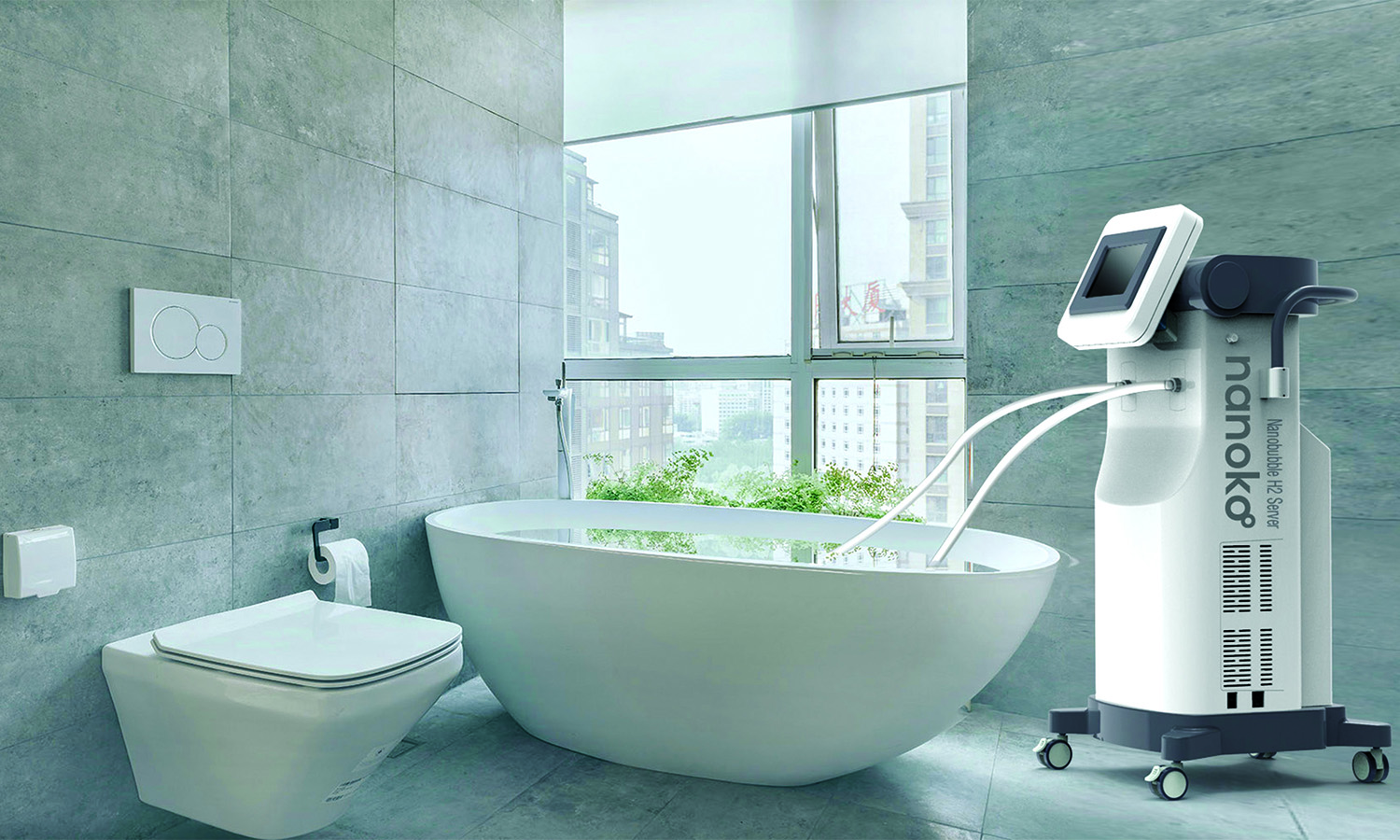
    Nanobubble Co., Ltd is the only company in China that manufactures hydrogen therapy equipment and devices. The team’s vision is to not only provide advanced hydrogen therapy equipment to medical institutions, but also let ordinary people benefit from the therapy in their daily life. Since its foundation, the company has been dedicated to improving people’s health and driving the development of health industry. Mr. Mu Hualun, the CEO of Nanobubble, is currently engaged in the application and promotion of high-tech industrialization and transformation at Zhangjiang Pharmaceutical Valley in Shanghai. He focuses on the frontier progress of physics, material science and life science. He looks particularly at the intervention of non-communicable chronic diseases, accurate medical treatments and effective health management schemes and implementation. SpaChina interviewed him.

    How many years have you been in the industry and what kind of work are you engaged in?

    Compared with many professionals, I have a relatively short time in the industry. So far, I have been involved in product development for eight years. If you ask me what kind of work I am engaged in, I feel it’s difficult to give a single answer. Maybe just one month ago, I thought I was a manufacturer of equipment and I felt I had won a battle in a brand new area and spearheaded its development. But with an increasing interaction with clients, I realized I was playing the role of offering services to the public and working for the better life of people. This is a role that I am more willing to take up. My work also involves skin management since we also provide interventions for skin management with our products and devices. In a word, all for “wellness”. This is the goal of our company and myself – working for the wellness of people by improving their lifestyles.

    From your business’ perspective, do you see a huge need for health enhancement among Chinese people?

    Yes, the need is huge, especially after the pandemic and a consumption upgrade. Our business mainly covers three aspects: big health, consumption upgrade and innovative technology. This year, when the service industry has been severely hit, we still realize a 50% business increase. The number is not satisfying, but at least we keep increasing even during this difficult time. It demonstrates that as long as you can capture and meet the needs of the market – the need for health products – then you will naturally reap the reward.

    In addition, the increasing need for health enhancement is also generated by today’s age structure, which augments people’s concerns to their health and lifestyle. When people have some discomforts or minor illness, they may not immediately rush to the public hospitals. Instead, they seek some more convenient ways. During this process, to gain customers’ trust is the most important thing. That’s why we attach great importance to the brand’s image or word of mouth. I am convinced that once we find the true needs of the customers and provide them with truly valuable products, business growth is a sure consequence.

    As China is entering an “aging society” era, there is a requirement for more effective and labor-free health management approaches. I know your hydrogen therapy equipment have received big orders from medical beauty experts and senior care institutions in UK. Could you share with us more of such cases?

    Our team is composed of senior engineers. So we are always confident of our products’ quality. We also pay attention to international cooperations. We joined hands with London Dr. Michael Prager Skincare Clinic to work on postoperative skin recovery of medical beauty treatments. We do medical programs together with Prof. Shigeo Ohta, the “father of hydrogen health”, from Japan. Prof. Ohta is specialized in the study of Alzheimer’s disease and has so far achieved quite good results. He chooses our equipment to do his study in Japan. We also do third-party tests in US and the client wants to become our distributor in US. I firmly believe that as long as your products are good and valuable, they will surely be recognized sooner or later.

    Concerning our domestic endeavors, I agree with the concept of “precise positioning”. Hydrogen therapy falls in the category of health management rather than medical cure. Nevertheless, hydrogen/oxygen mixed gas inhalation was officially suggested this July as a method to treat COVID-19. This is a reasonable trial in the face of the crisis. It’s a good chance to let more people know the effects of hydrogen therapy. Meanwhile, we actively support clinical research. Hydrogen therapy has showed quite satisfactory results in treating early and mid-phase coronavirus patients, equal and even better than the effects delivered by Traditional Chinese Medicine.  

    Surely, we are doing a lot of work in the field of evidence-based medicine, but we clearly understand that our goal is to integrate hydrogen therapy into a wider daily life scene, to concretely help numerous people who suffer sub-health conditions and chronic diseases. For this reason, we have established a community health program with the China Health Promotion Foundation. We enter into the community quarters and provide hydrogen interventions to patients of Type II Diabetes. The result is very encouraging. Two months of hydrogen inhalation and drinking hydrogen water result in obvious improvement of the saccharification system. In terms of skincare, we do several cooperative studies with the dermatology department of Huashan Hospital. The studies prove that hydrogen therapy can alleviate a variety of skin problems and diseases.

    What health trends can you see among Chinese people in the next two to five years?

    I think health guidance and health services accessible to ordinary residents will be a significant future trend.

    I once had a 4-hour talk with some personnel from the government. He said to me: “What you want to do is what the government also wants to do concerning big health. We have tried many different ways and made many new policies in order to solve the problem. But the patients’ number haven’t decreased. Medical budget control fails to solve the problems triggered by the aging population structure.” So I think in the future health intervention process, the core is that it must be accessible to the ordinary residents. Volkswagen has purchased Porsche, not vice versa. Our health management and service should also come down to every ordinary resident.

    In fact, the government has already taken actions. Every residential area now has its own community police and doctors. However, their true functions haven’t been given play to. I believe the situation will be improved if hydrogen therapy is introduced to the community health service. The community doctors then will be able to give more effective health guidance and practical solutions to the residents with the knowledge and equipment of hydrogen therapy.