Author: bianlijun

  • Wellness Philosophy of Six Senses

    Wellness Philosophy of Six Senses

    Interview with Kent Richards, Corporate Operations Director (Spa & Wellness) of Six Senses Hotels Resorts Spas

    Born into a family of gym fitness

    fanatics, Kent Richards grew up in Durban, South Africa, following all the fitness trends of the 1980’s and 1990’s before finding himself in the middle of the global spa and wellness industry. After a career of 20 years in fitness and 10 years in spa, today Kent is Corporate Operations Director (Spa & Wellness) of Six Senses Hotels Resorts Spas, based in Bangkok, Thailand, and is responsible for over thirty spas across the globe. Six Senses actively participates in the Global Mentorship Program, Global Wellness Day, Wellness for Cancer and Wellness Weekend initiatives. SpaChina interviewed Kent.

    How does Six Senses Integrated Wellness stand out?

    Being wellness pioneers means that we have to venture out into the unknown to discover new approaches that promote mental, physical and spiritual health. Over the last four years we have worked with some of the most respected doctors and wellness professionals on developing an approach to wellness that addresses some of the most common issues people face as a result of their stressed daily lives. The result is our overarching wellness philosophy Six Senses Integrated Wellness. It is founded on numerous pillars including nutrition, sleep, movement, holistic and alternative therapies; and advanced technology that allows our experts to tailor programs specific to.

    How does Six Senses ensure each of the brand’s spas are unique?

    Six Senses has always believed each property needs to match our vision and values. We strive to help our guests reconnect with who they are, the people around them and their worlds too, and we do this by bringing our values into the design. The values include “local sensitivity and global sensibility”, making each design different as we include local features and activities. Designs are not duplicated in a cookie-cutter manner and we make each property unique. Key to our brand are wellness and sustainability which also play important roles in where our properties are situated and what materials are used. Locally inspired architecture and materials are always important to ensure we contribute to the landscape and do not interfere with it.

    What is special about the spa at Six Senses Qing Cheng Mountain?

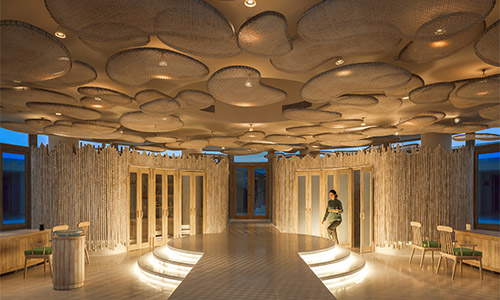
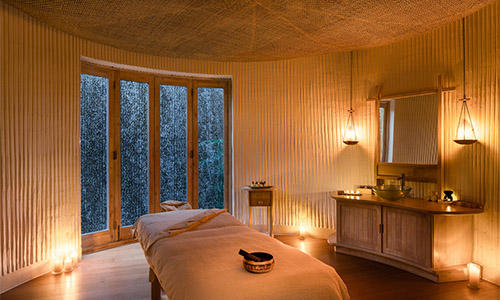
    The spa at Six Senses Qing Cheng Mountain is in the middle of the resort, which is located at the picturesque gateway to the majestic Qing Cheng Mountains. The design complements the UNESCO World Heritage & Natural Cultural site nearby, Dujiangyan. The spa design has Taoist elements to harmonize with nature and reconnection and it appears to rise from under the ground incorporating responsible luxury, regional architecture and landscaping, resulting in an extraordinary cultural offering with a strong sense of place, wedded to contemporary attitude. Six Senses Spa Qing Cheng Mountain received the Grand Jury Award at the SpaChina’s 9th Annual Award Ceremony in Chengdu. The award is an acknowledgement of its superb performance and exceptional facilities and was presented to only three hotels in the country.

    The one signature treatment I would recommend is the Shen Ritual. It provides three hours of Taoism purity including a Herbal Bath Experience, Tui Na followed by a Six Senses Soothing Facial using jade stone. My favorite by far.

    Your view on China’s hotels and spas’ performance in terms of sustainable development and operation?

    Here, I would like to share with you a comment from our Vice President Sustainability, Jeff Smith.

    China is now the global leader in renewable energy investment. Hotel energy sustainability will increase tremendously once these new solar and wind projects go live. Yet, public awareness seems to be low when compared with other markets, and it appears that hotel and spa operators are therefore hesitant to roll out their sustainability initiatives. For example, our glass water bottling at Six Senses Qing Cheng Mountian in Chengdu is quite rare in China, whereas this practice is becoming quite mainstream in places like the Maldives and Thailand.

    What is Six Senses’ future development plan in China?

    China is a very exciting market for Six Senses as there are so many beautiful locations, and traditions for wellness lifestyles. The domestic market has shown us great support for our brand values, which has encouraged us to expand further in China. Our second resort in China will be Six Senses Yangshuo. The property is surrounded by the karst mountains with its beautiful natural landscape, allowing us to create another special resort.

    Also, Six Senses has been active in growing and developing our team through cross-training between our properties around the world. By doing so, Six Senses guests in Thailand, the Maldives and further afield have had the pleasure to enjoy the services and warm hospitality of Six Senses Qing Cheng Mountain.
  • Hotel Spas – Assessing the Future

    Hotel Spas – Assessing the Future

    Interview with Trent Munday, Vice President for Mandara Spa and Steiner Spa Consulting

    In his 25+ years’ experience in the hotel and spa industries across over 30 countries, Trent has developed a unique perspective on the business of spas. Trent’s voice resounds as one of practical business realities. He is one of the few who looks at things the way they are and asks why, and then doesn’t rest until all alternative perspectives have been considered. He is on a mission to provide bursts of reality in a sea of fluff. In addition to being Senior Vice President for Mandara Spa and Steiner Spa Consulting, Trent is also the host of the popular podcast, Inside the Spa Business, and also of a short-form daily podcast titled Trent365! SpaChina interviewed him.

    What is your view on the current state of the global hotel spa industry?

    I’ve been saying for some time now that the global hotel spa industry needs a wake-up call. Why do I say that? By any metric you want to use, most hotel spas in most countries around the world, are struggling.

    In a little over twenty years, hotel spas have gone from being a rarity to being ubiquitous. Twenty years ago, you would have difficulty finding even a 5-star hotel with a spa. Today, you can almost guarantee that any 4-star or 5-star hotel in the world will have a spa. Most hotel ratings bodies require a hotel to have a spa if they want a 5-star rating. Many travel agents expect the hotel to have a spa. Spas are essentially ‘baked in’ to the system. This is good news for us in the spa business.

    However, the spas most hotels have now are not producing great results. This means that for those who can truly innovate and come up with new concepts and versions of the hotel spa model, there is a big opportunity. When I look back on the offering of those early hotel spas and compare it to today’s hotel spas, not much has changed. Sure, we’ve had some spa product, equipment and machines innovation. However, the core offering of the hotel spa has changed little over the years.

    How can hotel spa better play its role in wellness-care?

    It is true that Wellness has become a hot topic of conversation, not just in spa circles, but everywhere. I think it’s important to understand that Wellness really is a lifestyle choice. So, for spas, that means if we want to go down the road of offering Wellness solutions, we need to understand our role in the total Wellness process.

    Mental Wellness, for example, is something I’m hearing a lot of people talk about across many industries and walks of life. It seems like every month or two there is another story of a famous person committing suicide due to Mental Wellness issues. There are, no doubt, many more examples we do not hear about. However, when I hear people say that spas can help with this, it troubles me. Most spas do not have the professional knowledge, skills and qualifications to deal with this. Of course, spas are places of serenity and solitude. But we should not overestimate and over-promise when it comes to offering real Mental Wellness solutions.

    Professor Gerry Bodeker once said to me that spas have the opportunity to become the Organizational Face of Wellness. And I think we can help guide people on their journey into Wellness. The hotel spa can be a safe place to learn about and try new Wellness concepts and modalities. But the key to the long-term sustainability of this idea is to find ways to continue the relationship with the client after they leave the spa.

    How can hotel spa’s problem of low profitability be solved?

    Hotel spas need to have a better understanding of their customer’s wants and needs. And importantly, the differences between wants and needs. A guest might like a massage, but they probably don’t need one. They definitely need to eat. Guests will always find a way to eat, because it’s a ‘must have’. Most hotel spas only offer ‘nice to haves’.

    I strongly believe the hotel spa of tomorrow should look very different to the hotel spas we know today. We need to totally deconstruct the entire spa experience. Everything from the location of the spa, to the service offering, to the way we market to our customers, and everything in between.

    The biggest marketing mistake we are making at the moment is that we keep asking our existing customers what they want. Chances are, as they are already your customers, they want what you are currently offering. What we should be doing is asking the guests who are not coming to the spa why they are not coming. That is how we can start getting some ideas about what new services and facilities we should be offering.

    What kind of hotel or resort spa tend to excel in today’s market?

    The most successful hotel spas I see as I travel around the world are those that have not been overbuilt and do not offer an extensive range of treatments. This is almost the exact opposite of what the vast majority of hotels seem to think is required. It’s easy to understand why hotels think like this. In the early days of hotel spas, they were very much seen as a USP (Unique Selling Proposition). As more and more hotels built spas, the easy way to stand out from all the others was to build bigger and more luxurious spas. The problem is, if that is the only differentiator, at some point, it just becomes impossible to keep up.

    Extensive and exotic treatment menus may sound like a good idea, but the fact remains that the bulk of most hotel spa’s revenue comes from their more basic treatments. The standard one-hour massage is still the biggest seller. Like everything, there are always some exceptions. But we need to remember that these are the exceptions and not the norm. That’s why they are exceptional. The problem we have is that many spas use those exceptional cases to justify a similar path.

    My simple advice is…

    1. Know who your customer is
    2. Know who is not your customer
    3. Build based on reasonable expectations, not best-case scenarios

    How can hotel spas maintain sustainable operations?

    It’s very difficult for a hotel spa to embrace sustainability if the hotel in which it operates does not. Nevertheless, there are always small steps a hotel spa can take towards sustainability. It can be as simple as selecting skincare companies that have sustainable practices. The same can be done in terms of selecting spa equipment. Spas can also implement a number of procedures to reduce water consumption, energy consumption, etc.

    How can hotels better integrate its spa into daily hotel operations?

    A good focus point for a spa that wants to help bring an element of Wellness to their hotel is sleep. Many guests report not being able to sleep well in hotels, even in the most luxurious of rooms. The spa can take the lead in educating guests on Do’s and Don’ts of getting a good night’s sleep. Spas can also help offer products, services and treatments to help guests sleep better.

    Offer a Pillow Menu, with a variety of options for guests to choose from. Stock the minibar with items like a Better Sleep Kit. Such a kit could include an eye mask, lavender pillow spray, chamomile tea, etc. Create a treatment designed to enhance sleep.

    Within the Food & Beverage department of a hotel there are a number of Wellness opportunities. Healthy food items could be presented as Spa Food. A healthy juice menu could be presented as Spa Juices. The opportunities are many and varied.

    How do you feel about the rising number of wellness-themed luxury hotels in the world?

    The rise of Wellness-themed hotels is a result of two factors. Firstly, an increased awareness by more and more consumers about Wellness. Secondly, an increasingly competitive landscape in the hotel industry. Just as hotels once looked to swimming pools, then gyms, then spas to help give them a USP, today they are looking to Wellness.

    If these hotels choose to incorporate Wellness into every element of the building, the services, the systems, the processes, etc., then they will find a market. They have a big opportunity to create powerful lifestyle brands.

    A number of hotel brands have added residential components to their properties in recent years. Adding a Wellness component to this real estate component also represents a big opportunity. Wellness Real Estate is an increasingly popular trend and hotels, especially branded hotels, are ideally positioned to take advantage of this.

    What is your view on China’s hotel spa industry?

    Whilst I do not have extensive knowledge of China’s hotel spa industry, from what I have seen, the challenges are the same as in many other countries. Namely, that we are still creating spas that are much the same as they have been for the past twenty years. This is not quite what our hotel guests want. To break the mold, we need to answer this question…If hotel spas didn’t exist today, what would we create instead?

  • Wellness Redefined

    Wellness Redefined

    Wellness was once associated with spas (and spas alone), before a wellness travel spree fast caught on. Today, the same word has been anointed with a more holistic meaning, deeper understanding and new insights. By Jenny Lo

    It is an exciting time, when wellness is gaining the global traction it richly deserves, opening up a whole new world of opportunity powered by innovation. It is more than a social mission, it is a belief, a conviction and a driving force. Let’s take a look at how the culinary industry, architectural firms and energy-efficiency practices are adapting to the changing consumer perceptions influenced by wellness.

    Planting a Future

    From baby boomers to millennials, their growing interest in healthy eating and concern for environmental issues have sparked a plant-based food revolution worldwide. Look around, there are now more plant-based alternatives to meat and dairy products than ever before. Even more impressive, these substitutes look, taste and appear like the real deal. In response, chefs, farmers, educators, policy makers, startups and food giants are working together to secure a future where there is sufficient access to nutritious food.

    Global food giants Cargill, Tyson and Unilever, along with startups like Impossible Foods and Beyond Meat, have invested heavily in creating plant-based protein alternatives. The Los Angeles-based Califia Farms is a noteworthy example. Dubbed one of the 25 most innovative consumer brands by Forbes’ CircleUp25 in 2016, they are leading the plant-based food and beverage revolution, committed to making healthy and great-tasting premium beverages through transparent, socially-responsible manufacturing from farm to shelves.

    While it may sound far-fetched to have vegetables as carbs, jackfruit steak, tuna tomatoes or meatless burgers that ‘bleed’, these items will feature heavily in restaurant menus in years to come. Where beef was once king at fast-food chains, more companies are expanding a serious vegetarian line, such as UK’s Veggie Pret and new veggie chains taking the lead like Amy’s Drive-Thru and Plant Power Fast Food. Closer to home in Shanghai, the one Michelin-starred Fu He Hui has glorified Chinese vegetarian cuisine with an haute spin, while offering diners an awe-inspiring journey of discovery of exotic plant-based ingredients from China.

    Farmer-chef collaborations are also reaching new heights, with chefs becoming farmers and vice versa, resulting in restaurants bringing the table to the farm. On the global stage, lists such as Plant Forward Global 50, which honours industry stalwarts and innovators who have taken steps to introduce plant-centric menus, will become as celebrated as The Michelin Guide and The World’s 50 Best Restaurants list.

    Now, imagine a world where pesticide-free fruits and vegetables are produced in cities and grown within former shipping containers using renewable energy. Sounds like a pipe dream? Due to a growing number of millennial engineers and agronomers, such as Agricool, which sells strawberries in the middle of Paris, these “mini farms of the future” could soon be found in major cities all over the world. It does seem achievable, after all.

    Wellness by Design

    Wellness design and architecture are high on agendas. Design plays a significant role in human health, both biological to neurological. From basic environmental factors like daylight, air filtration and sound, to more specific personal likes and dislikes. How our environment looks and feels is integral to our well being. These days there is even a term for designing for wellness – ‘salutogenic’ design – and it is the ultimate investment in people.

    Creating healthy living spaces as an antidote to the stresses of modern urban living is critical, especially in burgeoning developing cities, many of which struggle with the growing pains of rapid development – endless construction, traffic congestion, overcrowding and, of course, pollution. Working towards a world in which our built and living environments are sustainable and make us feel good is a challenge gaining traction with designers.

    As buildings get taller and cities denser, it is vital to instill a sense of community and nature into architecture. Beijing-based Ma Yansong of MAD Architects designed the undulating Fake Hills apartment complex in the coastal city Beihai to look like the surrounding mountains, a visual standard-bearer in the fight against those standardized housing blocks of Mainland cities.

    In Taiwan, Tao Zhu Yin Yuan, the 21-storey carbon-eating tower by Vincent Callebaut Architectures of Paris, will soon celebrate its opening. Shaped like the double helix pattern of human DNA, the tower is covered in 23,000 trees and shrubs in a bid to help purify the city’s air. Experts say this is a small but significant step forward in eco-friendly architectural design.

    The bucolic natural scenery and meandering waterways of the Xixi Wetlands in Hangzhou appeal to those who want to get back to Nature. A new 40-unit floating village-style residential project by British Firm David Chipperfield Architects taps into the ancient appeal of living on the water. Canals weave in and around the complex, with dark stone cubic buildings rising like floating monuments. Large windows welcome Nature in, shutters filter direct sunlight and the waterscape acts as a cooling agent to counteract the summer heat and humidity. Also in Hangzhou, on scenic Qiandao Lake, is the Ripple Hotel – the name inspired by the movement of the water on the lake – with Bauhaus-style architecture by German firm GMP and interiors by Shanghai firm XL-Muse. Here, the 12 duplex villas reflect a microscosm of Hangzhou’s natural landscape, incorporating natural materials like woven bamboo, wood and splashes of muted colour.

    Wellness design and architecture is also about creating experiences. Calvin Tsao of New York-based Tsao & Mckown Architects knows this well and has recently created the Sangha Retreat by Octave, set on 47 acres overlooking Yangcheng Lake near Suzhou. An all-encompassing wellness retreat of private houses, apartments and two hotels, Tsao conceived Sangha’s master plan, buildings and spaces to encourage both congregation and quiet individual introspection, mindfulness, and self-expression.

    Sustainability First

    Environmental challenges are prompting architects and designers to work hard to reduce – and even eliminate – their impact on the world around us.  Some design thinkers advise that we should pay less attention to ‘form follows function’ and instead concentrate on ‘form follows environment’ in a bid to create meaningful projects that positively impact human behaviour. This rings particularly true in China where decades of development have led to stresses (pollution, congestion, industrial production) which negatively impact health and lifestyles.

    Yet China has always embraced innovation and it is heartening to see this played out in eco-aware projects currently underway. Stefano Boeri Architects’ greenery-filled Nanjing Vertical Forest, backed by Nanjing’s Yang Zi State-owned National Investment Group is one example. The project, inspired by Boeri’s Bosco Verticale project in Milan (2014) is set to be Asia’s first vertical forest.

    Two plant-clad towers (the tallest 200 meters high) form the centerpiece of the 6,000-square-metre site that contains 600 tall trees and 500 medium sized trees (23 local species) as well as 2,500 cascading plants and shrubs. Aside from regenerating local biodiversity, the vertical forest will provide about 25 tons of carbon absorption each year and about 60 kg of oxygen per day.

    Inbuilt bioclimatic features help reduce energy and water consumption. When American architecture firm Perkins & Will designed the Shanghai Natural History Museum they saved 15% on energy consumption compared to a standard-design museum by including automated windows and skylights to naturally ventilate public areas and installing a geothermal heat pump which reduced heating needs by a staggering 86.2%.

    On a more modest scale, a rundown cave house in Weinan, Shaanxi province, was renovated by architect Shi Yang of hyperSity who used the energy-efficient elements of traditional cave design (warm in winter, cool in summer) as the basis for his redesign. Shi preserved the existing arched walls and used rammed earth (mixing local clay and sand) for construction, redesigning the interior as a series of courtyard spaces and punching a circular glass light well in the northernmost area for additional natural light and ventilation.

    Sustainable design was also the starting point for Beijing architectural firm OPEN’s new modular building system HEX-SYS. The award-winning project – a prototype of which was recently built in Guangzhou for developer Vanke – is composed of hexagonal units which can be disassembled and re-configured according to different site and programmatic needs. Light, industrialized, flexible, energy-efficient and reusable, HEX-SYS comes in three different unit types, each sitting lightly on the ground. A central column supports the funnel-shaped roof and collects rainwater at the same time.

    SPA – Fashion Orientation

    Now let’s return to our SPA industry. With the coming of the Internet Age and a boom in the “net star” economy, traditional SPA has undergone great changes. Nowadays more and more multiple and trendy packages are available at SPAs where innovative elements are combined together including beauty care, hairdressing, experiential retail, VR experience, private trainers for body shaping and yoga, and popular café and juice bars… In this way, SPA is creatively and closely connected to the lifestyle of modern young people.

  • HUALUXE Xiamen Haicang

    HUALUXE Xiamen Haicang

    HUALUXE® – the first international luxury hotel brand from InterContinental Hotels Group tailored for Chinese guests – has arrived in Xiamen. HUALUXE Xiamen Haicang is ideally located on the coastal landscape belt of Haicang Bay, with unparalleled view of Xiamen Harbor and the adjacent scenic parks. Inspired by contemporary Chinese art, 351 guest rooms have a refreshing Oriental tonality. The all-day dining restaurant Xian Yan delivers a memorable experience with live cooking stations preparing food using the finest seasonal produce. The LUXE Tea is a HUALUXE signature venue designed specifically for guests to discuss business in a more casual yet discreet environment while enjoying authentic Chinese tea. Certified tea masters perform tea ceremonies and offer seasonal tea tastings. Wellness facilities include a gym and an indoor heated swimming pool.

  • The Langham, Hefei

    The Langham, Hefei

    The Langham, Hefei will be opened in the next half year and is conveniently located in the city’s new administration and culture centre. Private havens of exceptional quality, all 339 guest rooms and suites welcome guests with a warm neutral palette and stylish interiors. The hotel offers four unique dining concepts with authentic Cantonese cuisine, local delicacies and global flavors. Continuing a much-loved tradition that began at The Langham, London in 1865, Palm Court offers guests an exclusive Afternoon Tea experience – serving specialty teas in tailor-made “Langham Rose” Wedgwood tea ware. Shake off tensions with a session at the health club or pool, or relax with a pampering spa treatment. In addition to a Grand Ballroom and 6 function rooms, the 2,616 m2 outdoor garden will be the ideal venue for celebrations, gala, wedding, private gathering and commercial activity.