Author: bianlijun

  • 个性与创造力

    个性与创造力

    访bKL Architecture, LLC中国区总监/设计总监Stephen Yas先生

    Stephen Yas从事设计行业超过四十年,是一位富有激情的领导者,他喜欢做的事情就是不断激励团队员工,并和客户积极沟通创造出灵感与火花。作为一位出色的建筑师,Stephen在大型综合体建筑项目、城市设计项目、酒店项目等方面拥有广泛的国际化经验。他致力于发掘每个项目的精神和灵魂,坚信建筑和城市设计是关于地域、环境、情绪对于物理空间的反应。

    Stephen设计过的项目涵盖了享有声望的多功能综合体,商业中心,医疗机构,酒店,高层建筑,政府办公楼和企业总部等,其中不乏国内外知名获奖项目,并获得美国建筑师协会、美国住房和城市发展部、牛津大学和俄亥俄大学的认可。他一直是许多建筑学校的特邀讲师,同时也是一位广受欢迎的演讲者,并经常为建筑出版物撰稿。

    您是什么时候来到中国的?当时中国给您的印象是怎么样的?经过这么多年,您觉得中国发生了什么变化?

    我第一次来到中国是2004年。在之后大约8年的时间里,我往返于中国和美国之间,同时处理在中国和芝加哥公司里的工作,2021年我搬到了上海定居。初到中国的时候,我的工作很繁重,因为很多中国的客户们对国际型的地产开发没有任何经验,而大多数画施工图的本地建筑师们对此也没有足够经验,因此就需要来自国际建筑师的很多指导和帮助。而近年来,他们去到英国、美国、澳大利亚留学深造的机会越来越多,本土建筑师的水平有了大幅提升。

    近年来,中国的建筑学教育也经历了很大改变。在过去,老师只是教学生如何成功把一栋楼盖起来的实操技术,而并非设计和创意。如今,在一些顶尖的建筑学校里也教设计了,也积极学习国外的优秀设计方案。因此,现在的客户和设计师们都比以前专业的多了,当然很多经验不足的人已经离开了行业。如今,在深圳、广州、上海、北京这样的大城市的项目里,政府都会选择与有经验的专业人士合作,以确保项目万无一失。

    您提到要在每个项目中找到精神和灵魂,建筑和城市设计是关于场所、背景和对物理空间的情感反应。您为什么认为这很重要?

    建筑不应该是没有任何语境内容而从天而降的东西。它需要和所在地的特殊语境相关联,让人感到它实实在在由此而生。建筑物不仅是一幢楼房,它必须要能够支持、滋育、鼓舞居住其中的人们,如果是在中国,最好还能够进行对于当地生活方式,以及中国情怀的现代解读,让使用者获得情感共鸣。此外,建筑应从城市设计角度,发挥起促进社群互动和联络的功能,是为了让这个建筑所在的社区社群变得更有特色。

    我们的目的,不仅要让项目好看,实用,而且还要保证在项目启动后越来越吸引更多的人进入,以至于进一步完善这个项目所在的社区和地区,使其充满活力。好的项目真的可以实现从无到有聚集人气,这就需要从一开始就明白项目的目的,以及其想要传达的精神层面的东西,也就是情感的传递。

    如何真的让一个设计标新立异和与众不同?怎样把艺术性和实用性结合起来?

    建筑是艺术与科学的结合。首先是功能,然后是形式,同时还要上升到艺术的高度。建筑的功能可以是非常有创意的,带给人们从未想过的新颖体验。我想到前美国司法部长罗伯特·肯尼迪常引用的名言:“有些人看到事物所呈现出的样子,问为什么会是这样;我却想象着事物还未呈现出的样子,问为什么不能是这样。”

    说到实用性,这是必须要考虑到的,为一个犹太人我可是相当务实的。每一个项目,我都会精准考虑到业主方的项目收益,不仅为了好看,而且是要实用,好用。如果是商业项目,那就要吸引招商,吸引招商有很多种方法,例如我会考量用节省能源的可持续设计来令商户们的运营成本降低;只要商户对入驻满意,那么项目方业主就会有所回报。因此,实用性是必须要考虑周全的极为重要的因素。

    请和我们分享两个您设计过的与环保和可持续性相关的最有意思的项目,它们分别有哪些亮点?

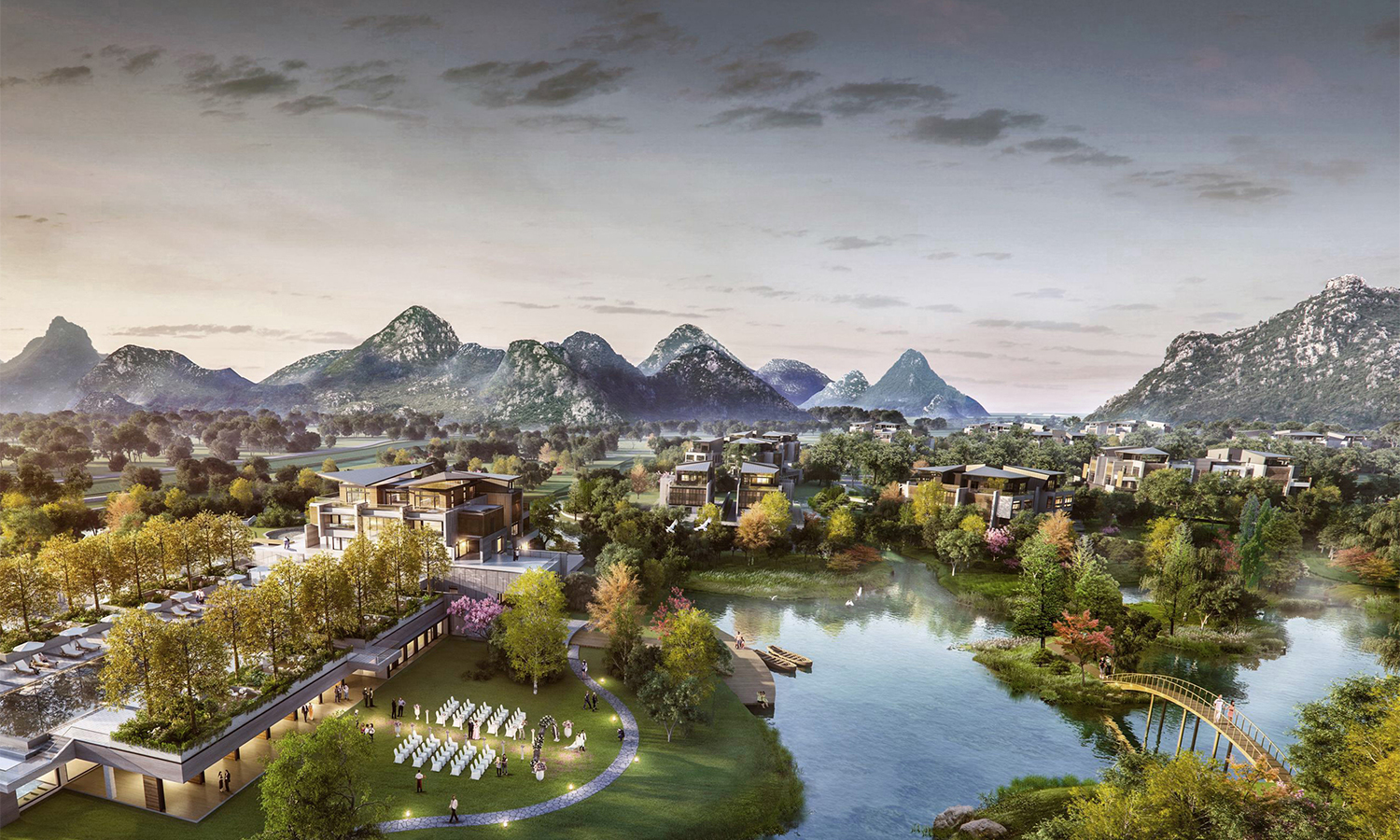
    第一个项目是位于德清县(靠近莫干山)的开元森泊度假酒店。这是一个占地1800亩的家庭健康养生度假村,450座别墅散落在生态自然之境,或凌于水上、或藏在山中、或置身山谷。度假村乐园内另建有两家拥有200个客房的酒店,零售商店,餐厅,室内水上乐园,会议中心。机动车不允许入内,需停在度假村外的停车处,度假村内通过有轨电车通行。度假村还为客人设计了具有历史意义的自然徒步路径。自2019年开业以来,几乎一直是满房状态。

    另一个项目是位于深圳的优必选科技有限公司总部。这是一座212米高的大楼,为优必选的员工们打造了一个健康和可持续的工作环境。这栋建筑关联了中国神话传说中的八仙。我们在巨型框架钢结构的外部打造了8个空中花园,分别对应八仙中的一个,以其为主题进行景观设计。整座建筑的外部罩有赤褐色的散热百叶窗,以保证建筑玻璃和空中花园掩映在阴凉之中。该大楼正在建造中,预计在2023年春天完工。我也特别期待看到这个项目的完工。

    全球开始有越来越多的养生度假村项目。从您的角度来看,这些项目在设计过程中需要包含什么必须有的“地域感”、“健康与可持续性”以及“经济回报能力”?

    如今,整个社会都更加注重健康与养生。人们也比以前更多进行锻炼和运动。健康本身就是一个行业。健康养生本身就是很多度假村和SPA的亮点,在这方面的进一步延伸和扩展也是非常自然的。

    2020年新冠爆发以来,由于中国出入境的限制措施,让大家没有办法出境旅游,这就令本土的酒店行业在全国范围内生意非常之好。但同时,我们也能看到中国本土养生度假村无论在硬件还是运营上,都与国外的同级别度假村有不少差距。我觉的,如果一旦国门开放,大量的中国客人就会去到国外旅游,因为很多国内度假村目前的水准,是肯定无法留住中国客人的。我听很多客人告知泰国、日本旅游的性价比相当高,而且也有更多的包括可口食物在内的养生项目选择。

    那么,如何让中国本土的度假村更具备竞争力呢?那就是我们在一开始设计和规划中就要做到的:“地域感”、“健康与可持续性”以及“经济回报能力”。简单来说就是项目必须具备吸引人的本土特色,不能千篇一律。健康和可持续性理念需要从设计初期和业主方、运营方讨论透彻,这样才能尽可能地被贯彻到日常的运营中去。经济回报能力那就不要多说了,每一个投资人都希望得到经济回报,这也是我们在设计方案中要思考到的最重要的要点。一个有经验的设计师的个性和创造力的价值也会在此体现。

    未来几年,越来越多专注于健康与养生的度假村将会出现在中国的非一线城市以及世界各个地方。我曾经工作过的在南京附近的一个奢华度假村里甚至有当地大型医院的分诊所和一个茶园。毫无疑问这将是一个必然的趋势。

    您是如何在繁忙的工作中保持健康的?

    我每周去健身房3-4次。我喜欢锻炼、游泳、武术和各种运动,也喜欢在城市间徒步远足,探索新地方。我还时常进行探险之旅,去年参加了戈壁滩精英挑战(108公里/四天),几年前去爬过乞力马扎罗山(5900米高)。以我的年龄来看,我充满活力。

  • The Future Architecture

    The Future Architecture

    Interview with Mr. Rolf Demmler, Co-founder of SoftGrid China and Europe

    As a German architect, Mr Rolf Demmler first arrived in China in 2004 almost by accident when he agreed to work with a Chinese guy in Switzerland who was looking to cooperate with a European architect. “A mere three weeks later, I was here in Shanghai,” Demmler smiled. “It was the perfect introduction to China, about how it makes things happen quickly and flexibly.”

    Rolf established SoftGrid Ltd., an architecture, sustainability and urban design firm, in 2008 in Shanghai after gathering professional experience in the EU and China. SoftGrid focuses on projects in hospitality, office and education. It uses Integrated Design strategies to provide unique, future-proof designs and quantifiable added value to clients and communities in line with long term climate goals. He is a regular contributor to professional conferences on sustainable construction and a guest tutor at Tongji University and other universities in China and the EU. In 2020, he co-founded SoftGrid Europe in Germany.

    “What do buildings do, and how do we preserve energy?” Rolf asks. “How do we make healthy environments? How do we make livable environments? In an ever-changing society, what are building life spans? If you build something now, what happens in 20 years? These topics are very much what I built my office around, and it’s also what we bring to China.”

    The big wave currently influencing design in China is environmental protection. As a result, SpaChina interviewed Mr Rolf Demmler on this topic.

    After all these years, what changes do you see as having taken place in China?

    Since arriving in China, one of my own focuses has been the complexity of society in the world’s most populous nation and its evolving idea of how to modernize historical assets. When I came here, there were articles in mainstream German magazines about architecture in China, saying: “It’s so big! You can do anything!” This was never, ever, my interest. My interest was always complex issues such as how to adapt older structures and areas for today’s public use and space needs. That made it more interesting for me to be in China.

    So my list of major changes would start roughly in 2005, when historic preservation and a sense of authenticity entered the discourse about urban development, not least fueled by the opening of Xintiandi in Shanghai, designed by Ben Wood Studio Shanghai, a firm I worked for from 2005 to 2008 before founding SoftGrid.

    Roughly five years later, with the Shanghai EXPO theme “Better City, Better Life” on one hand and a series of food scandals and rising pollution levels on the other, the topics of health and wellbeing came to center stage. And in 2015, with the signing of the Paris Agreement, China formalized a development trajectory for industry, urbanism and architecture, that clearly focuses on sustainability.

    While these were all disruptive changes establishing new topics and trends, the latest change I would see as a paradigm shift within the already established topic of sustainability: it changes how people and especially companies and businesses think about and approach it. With increasing political and regulatory pressure (e.g. stricter planning codes) as well as a changing economic environment (e.g. ESG ratings), sustainability ceases to be an optional marketing aspect, but becomes a hard factor in the assessment of business models and a key to future economic success. The EU is a step ahead in this development, but the resulting sense of urgency is also already perceivable in China. 

    Particularly in hospitality, all of the above changes come together, with the aim to create a unique experience, which in turn is based on giving a sense of place and locality (authenticity), a comfortable, inspiring and relaxing environment (health and wellbeing) and a growing sense of how buildings influence our environment (sustainability).

    Please share with us the two most interesting projects you have designed related to environmental sustainability. What are their highlights?

    We aim to integrate aesthetic, functional, energetic, economic, socio-cultural, technical and contextual aspects, which is labelled an “Integrated Design” process.

    While for projects like BASF R&D Center II and Tianjin Eco-City, we were in the role of sustainability consultants, the following two projects are a showcase of the power and benefits of this “Integrated Design” approach.

    SoftGrid was for both the lead designer and single point of contact for an Integrative Design process. For the Shanghai DRC  Living Lab, this included quality control and construction supervision all the way down to the graphic design elements, while the Guilin Mountainside Resort included what we have since called “General Planning + PLUS”, i.e. the scope of conventional general planning – architecture, MEP, structural engineering – plus sustainability aspects.

    And while both are great examples of sustainable construction, they didn’t start on the premise of saving polar bears or reducing their CO2 footprint. They focused on creating a vivid dialogue with their surrounding context, a comfortable place for retreat (Guilin) and work (Shanghai) and an evocative aesthetic as a result of an immersive, three-dimensional storyline. 

    The Guilin Mountainside Resort was the first project in the southern China climate to be designed to the PHI Passive House standard. It is also a typical example of conflicting targets. The site is located amongst the stunning Caster Mountains and in a hot and humid climate. An energy consultant would advise reducing window area to avoid overheating, and a conventional architect would insist on 360-degree panoramic glazing. But at SoftGrid, we are architects, but not conventional and we recognized that, in the master plan (done by another design firm in Singapore) full-on glazing would be impossible without largely compromising privacy. So the solution was to strike a balance. We made sure to have panoramic glazing where it is needed and then using every trick possible to reduce heat gains. This is where synergies happen: shading to keep the sun out can be provided by the overhang of a panoramic roof terrace, by deliberately placing vegetation to act as privacy screens and so on. Each component both reduces energy and adds value to the design.

    We shortlist options from a storyline perspective first: roller shutters keep the sun out, but they work against the idea of being immersed in your paradise retreat surrounded by the Caster Mountains. But to work out which solutions support this story best, we need metricsand that means we need to, and can, simulate exactly: design decision X saves Y kWh/m2a (Kilowatt Hours per square meter each year) of energy – and Z RMB in operation costs. To put it simply: we always know exactly what we do, when we design.

    For the DRC Living Lab (opened 2015), the surrounding context was Shanghai’s French Concession, another evocative environment. And for DRC, associated with Disney, of course, it had to be “magical”. We started by looking holistically at all aspects and creating a storyline for what the building is. The result is that it saves energy, provides an excellent work environment and integrates into the historic urban Art Deco context. Users love working there, and the owners are proud of showcasing what architectural design and construction quality is able to be achieve in China, and the many visitors are impressed by how the building’s façade, its interior and even the design of its technical systems reflect the purpose of the business that is located within it.

    The entire building’s aesthetics are hints: instead of Art Deco ornaments, the façade displays maps of Disney Resorts (the object of study). A wall of reclaimed bricks from the original façade, treated artistically, sums up key historic scientific inventions without which the research going on in the building could not be done. The technical system basically performs on its own. It knows the temperature and humidity levels not just of every room, but at different heights within each room, it knows if people are present and if the sun is shining, it knows if someone is using a chair or not, and adjusts the surrounding ambience automatically– and if you don’t like it, just use your iPad to override: open the shades, turn the floor cooling up a degree or dim down that one set of LED lights just above your work space. And how do you keep cool outside? With a shading canopy made out of PV panels. Just an example of storylines, which combine aesthetics, technical purpose and functionality and result in sustainable projects.

    There are more and more wellness resorts being developed around the world. From your point of view, what kind of unique aspects are essential to be included in the design process of these projects?

    In Europe, we are currently developing a replicable get-away retreat for single occupancy (couple, family etc.). It’s based on a design for a standard module that can be placed in various different sites. This project is a perfect example of how regional and local aspects overlap with general ones. The basic design of the module needs to work anywhere, including being adaptable to the local climate, with changes to the façade layers, insulation thickness and so on. The module needs to be flexible enough to allow for these adaptations. The location is where it becomes really interesting. Each location needs a different placement of the basic module, depending on where the best views are, access situation and such: in a wetland you want to touch the reeds, in a forest you want to be in the tree crowns, in rice fields elevated above them to maximize the dramatic effect inherent to the various landscapes. That’s why we design the “base” of the module to be always location-specific. In this base, we also integrate “wellness” aspects inherently adapted to local characteristics. Some locations call for sports and physical activity, some for contemplation and retreat, most are a combination of both aspects. The bedroom and cooking / dining area, are situated in the standard module, while the wellness and recreational aspects are the most immersive ones.

    All technical aspects remain in the background. The standard module is designed as a loft-like open-plan configuration of stacked planes for eating, cooking, socializing and sleeping. It is constructed as a wood structure aiming at a low CO2 or CO2-neutral building life-cycle with minimal energy consumption. These aspects, of course, you don’t see and feel as a guest. But wood doesn’t just save CO2, it also is a pleasant material full of character, and while the customer doesn’t care about the hugely reduced operations bill for the AC, the quality of the building envelope – the façade and outer walls – necessary to achieve such minimal energy consumption will automatically provide an extremely comfortable interior climate. This is one typical example of what we mean by saying, we aim at the immediately perceivable added value first and let the benefits for the environment sneak in as follow-on effects. Or to put it the other way: You can’t feel CO2, but you’ll feel great in a CO2 neutral building.

    Our Beihai Marriott project has been very well received for its architectural design, elegant aesthetics and spatial quality, offering sea views to each and every room and an engaging seaside park, with a three-dimensional configuration of flexible activity spaces, chill-out areas, F&B, panorama spa and pools. It is currently under construction.

    But this project also showcases a completely different benefit of Integrated Design, this time not aimed at the quality of the building or the user experience, but the economic parameters on the building owner’s side. Essentially, the integration of all aspects from the start led to a very straight-forward decision-making process on the owner side and a seamless integration with Marriott’s business consulting team. This dramatically reduced the need for painfully resolving target conflicts, redesigns and mistakes due to miscommunication. As a result, while our project started design a year or so after some of the neighboring resort developments, we were the first to receive formal planning permission.

    At the same time, the building is designed using basic passive design principles, which will directly impact operation costs, a huge factor over the economic building life-cycle in hospitality. The façade does not only look good, it is also deliberately designed to provide very high comfort, save energy and costs. With a good passive design, the “work” that the AC needs to do is considerably reduced. This means that you can implement smaller sized machines and that these machines can run at lower capacity during usage. So the cost-saving effect is double: first on a smaller up-front investment and second on lower operation costs.

     “Sustainability”, as we understand it, is not just energy consumption, but also the economic performance, the CO2 footprint, the flexibility to adapt to future needs over the entire building life-cycle. It is the result of multi-dimensional design, and if you do it right, the result is larger than the sum of its parts.

    How do you combine artistry with practicality, along with inclusion of the sustainable details, in order to make a project design unique?

    The key to a successful project is the harmony of emotional properties and technical, functional, aspects, the latter of which should go unnoticed to the customer, while the first create the resort or hotel’s character and, hopefully, a lasting memory for the visitor.

    We start all our design work with a detailed study not just of the geographic site, its climate and surroundings, but also the local culture and economy, people’s everyday life and even local myths and legends. For our very first resort concept in the Hakka region of northern Guangdong back in 2008, we designed the entire look and feel around a golden color scheme, derived from the Hakka double meaning of “gold” referring to the treasured metal as well as the individual family and their ancestors within larger communal society. With the new resort, remotely situated in the mountains, we wanted to both establish a beautiful new project and also offer a new development path for the local community, as guides and aninvaluable source of “local knowledge” – from farming, to cooking, to exploring the nature to stories and legends. We preserved a lot of the existing community’s buildings as part of the new resort public spaces. The aim was authenticity, an immersion in an experience that goes deep into the history and every-day life of a rich, fascinating cultural environment.

    On a lot larger scale, we developed a new city district for LiuZhou turning a challenge into an opportunity. Nearly one third of the development area was situated in a 20-year flood plain. Our design answered this not by very costly and spatially unpleasant retaining walls, but instead by working WITH the water. Water landscape and management systems became the driving force of the design, creating a garden city with an organic water landscape network as linear parks, activity areas and civic social spaces. These rivers also connect the new urban center with the surrounding rural farming areas, and offer views to surrounding mountains and a perfect playground for the transition of the local automotive industry towards noise and emission free transport systems. The story here is not the water, but the urban-rural dialogue, which becomes the city’s expression of identity in all different aspects: transport, landscape, waterways, economy, civic space and architectural typology.

    Each of our projects has a starting story like this. It can be playful and inventive and it is free of restrictions. It’s simply evaluated by being a good story or not. But once you have that starting point, you need to give shape to it, design the physical form, which is the architectural process.

    The COVID pandemic has had a certain impact on China this year. From your perspective, what direction will China’s architectural design industry develop in the next five years?

    It seems to me, that the COVID situation is still way too dynamic, especially in China, to draw any direct conclusions from it for the field of architecture.

    But generally, I would see the industry moving towards greener, more sustainable and more complex approaches. Many local firms also have this on their list and many have established “green departments”. But the problem is, that these create additional overhead, require additional internal coordination and create, to adverse effect, more internal competition. This is why we have always chosen a network approach to complexity and sustainability, so we can offer this flexibility and individuality with zero added overhead costs.

    What I see as even more important than cost – and that is a direct result of complexity of Integrated Design – is to address not just the question of how architecture is designed but how it is communicated. In this regard, our approach to combine quantifiability, rational metrics and evocative storytelling is invaluable in helping project teams to report to decision-makers and helping decision-makers decide confidently by understanding, shaping and owning the “big picture” of their project.

    To that extend, we have just started an office retro-fit in Shanghai this week for a German company’s headquarter built in the early 2000s. We approach this project in an integrated design VARIANT COMPARISON. Meaning, we develop comparable design options. These are not divided along meaningless aspects (is it green or yellow?), soft factors (do I like it or not?), but by three different strategies and related KPIs: minimal upfront investment, maximum alignment with Corporate Identity, and CO2-neutral footprint. While aspects overlap, they create three entirely different storylines, and our report will further support each story with its own metrics, numbers, fact sheets and, of course different architectural design solutions and their resulting aesthetics.

    I believe this holistic approach to projects with be the key to successful building investments in the future. And feedback from hospitality and office project stakeholders in particular seems to support this view by perceiving a huge added value for resorts, business and other hospitality and office facilities alike.

  • 未来建筑

    未来建筑

    访SoftGrid中国和欧洲公司联合创始人Rolf Demmler先生

    Rolf Demmler先生是一位来自德国的建筑师,2004年时,30岁的他因一次非常偶然的机会来到了上海。Rolf笑着说到:“这次经历让我看到了中国人高效灵活的处事方式。”在欧洲和中国积累了丰富的专业经验后,Rolf于2008年在上海成立了建筑、可持续发展和城市设计公司——SoftGrid,主要承接酒店、办公和教育等项目所有设计阶段的工作。独特优势是在符合2050/2060年碳中和的长期气候目标的基础上,采用一体化设计战略,为客户和社区提供富有创意、不会过时的设计方案,以及直接、可量化的附加价值。2020年,他在德国联合创立了SoftGrid欧洲公司。

    “建筑是用来做什么的,我们如何通过建筑节约能源?我们如何打造健康的环境?创造宜居的环境?在一个不断变化的社会中,建筑的寿命是多少年?你现在建造的建筑,20年后会发生什么?有人知道吗?你该做出怎么样的调整?在很大程度上,这些问题是我们公司在过去10年一直在思考和实践的,也是我们带给中国的东西。”SpaChina访谈了Rolf Demmler先生。

    您觉得中国这些年发生了什么变化,跟我们讲讲您对中国的印象吧。

    来到中国后,我的关注点之一是,作为世界上人口最多的国家之一,它所具有的社会复杂性以及它是如何将历史资源现代化的。当时,德国主流杂志上有一些关于中国建筑的文章,经常说:“它是如此之大!你可以做任何事情!”但这从来都不是我的兴趣所在。我始终关心的是更为复杂的建筑问题,例如如何改造旧的结构和区域,以满足当今的公共使用和空间需求。这让我在中国的工作变得非常有趣。

    我在设计中的重大改变大概是从2005年开始的,当时,历史保护和地域体验成为了城市发展的主题词,尤其是在由BenWood Studio设计的上海新天地开业之后。我在创立SoftGrid之前,曾在2005年至2008年间为这家公司工作。

    大约五年后,一方面,以“城市,让生活更美好”为主题的上海世博会成功举办,另一方面,我们看到了一系列的食品丑闻和不断恶化的环境污染问题,于是,健康和福祉话题成为主流。2015年,随着《巴黎协定》的签署,中国正式确定了以可持续发展为重点的工业、城市化和建筑发展计划。

    以上这些都是建筑领域所经历的开拓性转变,引领着新的趋势。我认为最近发生在“可持续发展”这一主题下的改变则可视为思维模式的转变:它改变了人们,特别是公司和企业对可持续发展的思考方式和实践途径。随着政策和监管压力的增加(如更严格的设计规范)以及经济环境的变化(如ESG评级),可持续发展不再是一个可有可无的营销手段,而成为了评估和调整商业模式的硬性指标,以及未来经济成功的关键。虽然欧洲在可持续发展中领先一步,但由此引发的紧迫感在中国也已经可以感觉到了。

    特别是在酒店业,所有上述这些主题和趋势被汇集在了一起,旨在创造独特的体验——给人一种地域感(真实性),一种舒适、激发灵感和放松的环境(健康和福祉),以及对建筑如何影响环境的更深入认识(可持续性)。

    请分享一下您设计过的与环保和可持续性相关的有意思的项目。

    我们需要将美学、功能、能源、经济、社会文化、技术和环境等方面进行整合,即今天人们说的“一体化设计”。对于巴斯夫和生态城的项目来说,我们扮演的是可持续性设计顾问的角色,而以下两个项目则展示了“一体化设计”的强大优势和益处。

    在对上海DRC生活实验室项目的设计中,“一体化设计”法体现在了从质量控制、施工监督,到形象设计元素等各个方面。对于坐落于桂林的山景度假村,我们则运用了“总体规划+”这一策略,即在传统的总体规划——建筑、机电系统(MEP)、结构工程之外加入可持续发展策略。

    桂林山景度假村是中国南方第一个按照PHI被动房设计标准的项目。该项目位于迷人的喀斯特风景区内,气候湿热。如果要咨询能源顾问,他肯定会建议尽可能地减少窗户面积,以避免太阳辐射造成的过热现象,而传统的建筑师则会坚持采用360度全景玻璃。幸运的是,在SoftGrid,我们不是传统建筑师。我们发现基于项目的总体规划,大规模全景窗无疑会牺牲掉客人的隐私。所以,我们的做法是,在真正需要的地方安装大型全景玻璃窗,并尽可能使用各种技巧来减少热增量。于是我们在全景露台以大型植被来遮阳,同时作为隐私屏障。

    上述提到的这一设计方法是基于对设计参数的准确量化。说一句“我们需要一些遮阳物来减少热量积聚”是远远不够的,因为会有一千个方法来避免阳光照射。因此,你要选择最适合该建筑用途的方案。那么,在所有与这一场景符合的选项中,哪一个是最好的?这就是为什么我们需要衡量标准,以明确每个选项的影响到底会有多大。注意,我们同时还需要进行准确的模拟:设计决策X节省了Y千瓦时/平方米(每年每平方米的千瓦时)的能源,以及运行过程中的Z人民币。这样一来,我们就能够把许多不同的、具有协同作用的设计元素进行组合,符合并支持项目的故事场景和设计意图,以及具体的建筑功能。简单地说:我们在设计时总是清楚地知道,我们在做什么。

    DRC生活实验室(2015年开业)和桂林的山景度假村截然不同。因为是与迪士尼相关,所以它必须是“神奇的”。这栋建筑的目标是节约能源,提供良好的工作环境,融入历史悠久的城市装饰艺术背景等。但同时,它也在展示着自己的背景。

    在这幢建筑里工作的人不是角色动画师和视频艺术家,而是专研高效基础设施的工程师。这里是中国第一个将深度能源改造与智能建筑技术和EPC(合同能源管理)相结合的项目,但它的灵魂必须是——用户喜欢在这里工作,业主因展示了中国一流的建筑设计和施工质量而自豪,参观者惊叹于自己可以通过建筑外墙、内部甚至技术系统的设计而对建筑里的企业有所了解。

    外墙不是采用装饰艺术,而是迪士尼度假村的地图。一面由原立面回收砖块构建的墙,经过艺术化处理,展示了关键的历史性科学发明。室内天花板的设计使温暖的光线感受和完美的声学效果成为可能,创造出独特而舒适的环境;每一条技术供应线(水、加热、冷却、通风)都可以作为整个建筑中一个独立的审美故事。毋庸置疑,技术系统基本上都是独立运行的——不仅知道每个房间的温度和湿度,而且知道这个房间内不同高度的温度和湿度,以及是否有人在,是否有阳光,是否有人在使用椅子,并自动调整环境氛围——如果你不喜欢它的自动调节模式,可用你的iPad进行操作:打开窗帘,把地板的温度调高,或者把工作空间上方的那一组LED灯调暗。

    在这里,智能IBMS(综合建筑管理系统)不仅非常节能,而且很舒适,除此之外,还可以上到新近开放的屋顶露台俯瞰法式景观,或与客户在这里见面、举办社交活动。我们通过一个光伏板制成的遮阳篷确保了露台的凉爽。这个建筑的设计也是一个演绎结合了美学、技术目的和功能,并将可持续理念融入其中的好案例。

    现在全球开始有越来越多的养生度假村项目,这些项目在设计的过程中需要包含什么特别之处?

    在欧洲,我们目前正在开发一个可复制的入住空间。这是一个标准化的模块,可放置在不同的地点。在湿地,人们想摸到芦苇;在森林,人们就想住在树冠上;在稻田场景,就想直接凌驾于稻田上;在悬崖场景,就想被固定在悬崖边上,以此让目的地的沉浸式体验最大化。真正有趣的地方在于,每一个不同的目的地对于入住模块的安置地点都有着自己的要求,基本上是取决于哪里的风景最美,最容易抵达等。

    我们在设计基础模块时总是会针对具体地点的特征而考量。根据我们想要提供的空间场景体验——全景、隐蔽花园、高处的望台等,我们进而对空间布局和材料进行开发。在此基础上,我们尽可能多的将“养生”元素贯穿其中,与当地环境相适应。有些地方适合进行体育和身体活动,有些地方则适合沉思与休养,大多数地方则是两者的结合,而具体提供什么样的设施,会使结果大不一样。虽然标准模块中有卧室和就餐区,但人们最期待的还是它所能提供的养生和娱乐选项,而这方面的设计就会根据每个地方的特点而单独规划与创建。

    所有技术层面的规划都在后方完成。标准入住模块是一个类似于阁楼的开放性空间设计,有用餐、烹饪、社交和睡觉的区域。被打造成木质结构,旨在实现全生命周期的低或碳中和,并将能源消耗降至最低。当然,这些方面,你作为客人是看不到也感觉不到的。但是,木材不仅能降低二氧化碳,也是一种令人愉悦的个性化材料。虽然客人并不关心大幅减少的空调运行费用,但为了实现这一最低能耗而打造的建筑立面和外墙将自动提供一个非常舒适的室内气候。也就是说,我们的目标是首先实现可立即感知的附加值,对环境产生的益处则悄无声息地融入进来。或者可以这么说,虽然你感觉不到二氧化碳,但当你身处在一个碳中和的建筑中就会感觉很好。

    我们的北海万豪项目因其建筑设计、优雅的美学特征和空间质量而广受好评,每个房间都能看到海景,还有一个海滨公园。该项目配置有灵活的活动空间、休闲区、餐饮区、全景观水疗中心和泳池。目前正在建设中。

    这个项目展示了综合设计的另一个方面的好处,不是关于建筑质量或用户体验,而是建筑业主方的经济参数。从一开始就对所有方面进行综合评估和考量使得业主方的决策过程非常流畅,并与万豪的商业咨询团队进行了无缝整合。这极大地减少了解决目标冲突或重新设计的必要,以及因沟通不畅而产生错误的可能性。因此,虽然这个项目比一些邻近的度假区开发项目晚一年左右才开始设计,但我们是第一个获得正式规划许可的。

    同时,该建筑的设计采用了被动式设计原则,这将直接影响到运营成本——酒店业建筑经济寿命周期中的一个巨大因素。我们为该项目设计的外墙不仅好看,还能提供非常高的舒适度,节约能源和成本。有了好的被动式设计,空调需要做的“工作”就会大大减少。这意味着你可以配置更小尺寸的机器,而且这些机器在使用过程中可以以较低的功率运行,从而实现了双倍的成本节约:首先是较小的前期投资,然后是较低的运营成本。

    所以我们可以非常清楚的看到,“可持续性”不仅仅在于减少能源消耗,还包括经济性能、二氧化碳足迹、在整个建筑生命周期内适应未来需求的灵活性设计等各方面。真正的可持续实践是多维度设计的结果。如果你做得正确,那么它所带来的效益将大于各个部分的总和——虽然是一个很老套的说法,但非常精准。

    怎样把绿色理念、艺术性和实用性结合起来,让一个项目的设计与众不同?

    一个项目成功的关键是打造其情感属性与技术、功能方面的和谐统一,后者应该不被客人察觉,而前者则创造了度假村或酒店的特色,为客人留下持久记忆。

    我们在开始设计工作时,不仅会对项目所在地的地理、气候和周遭环境进行详细的研究,还会对当地的文化和经济、人们的日常生活,甚至神话传说进行考察。我们的第一个度假村项目是在2008年位于广东北部客家地区的一个度假村,我们以金色的配色方案设计了度假村的外观和整体风格,灵感来源于客家语中“黄金”的双重含义,既是珍贵的金属,也指代个人家庭和社区社会中的共同祖先。该项目位于偏远的山区,我们不仅想建造一个美丽的度假村,还想为当地社区提供发展机会:不仅是作为保洁人员,而是作为向导和“当地知识”的传授者——从耕作、烹饪、探索自然到历史故事和传说。同时,我们保留了很多现有社区的建筑,作为度假区公共空间的一部分。该项目的目的是提供一种原汁原味的沉浸式体验,带领客人深入到客家地区丰富迷人的文化、历史和日常生活中。

    我们为柳州开发的新城区则是一个更大规模的项目,展现了我们是如何将挑战变为机遇的。该项目近三分之一的开发区域位于20年前形成的冲击平原。我们并没有使用昂贵、且在空间上令人不悦的挡土墙来解决问题,而是巧妙地利用了水元素。水景观和水系统成为了整个设计的驱动力,我们打造了一个拥有有机水景观网的花园城,里面有公园、活动区和公共社交空间。这些河流也将花园城和周围的农耕区连接在一起,让人们欣赏到周遭的美丽山景,同时促进着当地汽车工业向无噪音和零排放的运输系统转型。但这里的故事主线,不是水,而是城乡对话,作为城市在各个方面的身份表达:交通、景观、水路、经济、市民空间和建筑类型。

    我们所设计的每一个项目都有一个这样的故事。它可以是趣味性的,可以是创造性的,没有任何限制,只要它是一个好故事就行。一旦你确定了要讲的故事,就需要给它定型,设计出呈现故事的具体形式,这就是建筑过程的开始。

    今年疫情对中国全国都有一定的影响,您觉得未来5年的中国建筑设计行业会向什么方向发展?

    在我看来,新冠疫情的形势还十分不明朗,尤其是在中国,所以无法从中得出任何关于建筑领域发展的直接结论。

    但总体来说,我看到这个行业正朝着更绿色环保、更可持续和更复杂的方向发展。许多本土公司也将此列入规划方案,并成立了“绿色部门”。但问题是,这些都会产生额外的费用,需要额外的内部沟通和协调,并造成更多的内部竞争。这就是为什么我们一直选择“网络途径”来解决建筑复杂性和可持续性方面的问题,使得我们可以在不增加运营成本的情况下提供灵活、个性化的设计。

    我认为比成本更重要的是——也是一体化设计的复杂性所产生的直接结果——不仅要解决建筑该如何设计的问题,还要解决如何沟通的问题。我们把可量化、合理的指标数据和独特有趣的故事结合起来,从而帮助项目团队更清楚地向决策者进行汇报,也帮助决策者更好地理解并想象出关于他们项目的“大画面”,从而自信地做出决策。

    我们这周开始在上海为一家德国公司建于21世纪初的总部进行办公室改造。我们会以“多方案比较”的一体化设计方式来处理这个项目,也就是说,我们会开发出三个可比较的设计方案,不是进行无意义方面(绿色还是黄色)或软因素(我是否喜欢它)的区分,而是按照三种不同的策略和相关的关键绩效指标来比较:最小的前期投资、与企业形象的最大一致性和碳中和。虽然设计方面会有所重合,但我们创造了三个完全不同的故事情节。而在我们的汇报中,不仅是讲故事,同时也会汇报每个方案的指标、数字、概况介绍,当然还有具体的设计方案及其产生的美学体验感。 我相信这种一体化设计方法是未来建筑成功的关键。来自酒店和办公项目利益相关者的反馈似乎也都支持这一观点,他们认为,一体化设计对度假村、商业运营和其他酒店和办公设施都能产生巨大的附加价值。

  • Building the Best Team in Your Spa

    Building the Best Team in Your Spa

    There are many reasons for staff shortages.
    How should spas recruit and retain staff and build a better spa team?
    By Richard Williams

    Globally many industries, very much including hospitality and the spa and wellness industry, are now plagued by staff shortages. Sadly, this is the fallout of the pandemic crisis. As hotels and businesses must lay off staff due to forced closures and as manpower seek alternative options, be they returning to their hometowns, or learning to navigate this new work environment, by learning online skills or different skills to those they were educated or trained in.

    For those businesses lucky enough to have weathered the COVID storm and come out unscathed and still able to operate, some have found the return of business more sudden and unexpected, and thus they are challenged by lack of skilled staff. Unable to recruit those previous employees as they have moved on or become unavailable, now they find a shallow pool of skilled workers to recruit for, and they are left short-staffed.

    This in itself is a challenge, as consumers who have previously experienced no less than the best in service, now find that this is unfortunately not always the case. They find it more difficult to book appointments or enjoy the usual high service experience. This has occurred in five-star hotels across the globe, from receptions, dining rooms, hotel spas, to busy day spas and even in retail.

    Many specialists have discovered they can create an online audience and now prefer to work from home, working for themselves. Spa industry businesses have also pivoted towards online offerings as they manage the fallout of no face-to-face customer services. On a positive note, we see resilience and reinvention and those with a creative business mind discovering new and inventive ways to access alternative revenue streams. However, it is obviously a pity to lose the previous customers.

    Countries or regions globally that are suffering the most from spa staff shortages are those countries and territories with governments that have been slower to reopen borders and thus delay the tourism market. Places like Hong Kong, Macau, Japan, Korea, Malaysia, New Zealand, parts of Polynesia. Europe and USA opened earlier and have bounced back quicker. The USA, though, has huge statistics with manpower fallout from COVID lockdowns, and people choosing lifestyle and family over returning to work. They number in the millions. Here in Bali, tourism returned so quickly businesses that  many did not expect to be quite so busy and most are operating on less staffing as they seek new employees.

    Businesses such as wellness retreats and resorts are recruiting again as they slowly open. Even though therapist recruitment is also a challenge at this time, specialists such as wellness consultants, TCM doctors, Ayurvedic doctors, naturopaths, homeopaths, rehabilitation therapists, fitness experts, yoga specialists, counsellors, nutritionists, are even more sought-after than before. However, many of them have their own workshops and clients, or as mentioned, have reinvented themselves as online consultants. They prefer to work in these manners, to become a freelance or to work remotely and are less interested in moving countries and locations for full time employment opportunities.

    Medi-spas and medical wellbeing services were less affected, as in some countries they were able to operate in different levels of lockdown. For example, home in New Zealand, Medi-clinics stayed open when there was semi-lockdown and still provide services such as laser, aesthetic tech and injectables.

    I am led to understand that most spas these days would remunerate senior therapists with credentials, certificates/diplomas, at a higher rate. Therapists who have worked longer than others may not earn more salary than newer recruits unless their performance is measurable and they are contributing more to the business, be that repeat and request guests, sell well, or assist with training or participating in any business events.

    Young inexperienced therapists should have a training plan to increase their knowledge and skills set and therefore their potential to earn more salary in the future. These therapists may also be under probation, until either they have completed their training or they have been able to demonstrate their suitability to work.

    It is essential that the spa has a trainer or trainers and that there is an ongoing training schedule for all staff, be they a new, experienced therapist, receptionist, or attendant. Performance tracking via use of KPI’s is the best way to measure, correct, validate, and reward the team. Validation is so important, even before a pay rise and rewards, and acknowledging someone, thanking them, complimenting them goes a long way. Many, though not all, staff will thrive on proper team management and engagement.

    Some properties will charge a premium rate for their more experienced or specialist therapists, but sadly the staff member may not enjoy a bonus from this as they deserve.

    Nowadays, Gen Z and millennials want to align themselves with employers who validate their own values, be they towards sustainability or best practice with duty of care to team members.

    It’s so important, as I mentioned, to validate, engage, reward, and respect your team, through authentic management, dialogue and processes implemented such as KPI’s, daily team meetings, team one on one’s staff activities, ongoing training and legitimate care and consideration of their own personal and professional development.

    For example, in our busy spa in Auckland, (and by busy, I mean the weekends booked two weeks minimum in advance and full from 9am to 8pm, 14 rooms, 5 reflex loungers and a nail salon!), we would have a staff-shared lunch. The team were from New Zealand, Philippines, Thailand, Bali, Korea, Japan, and we would have a shared lunch once a month, and we would all cook and contribute. Everyone loved to do this and even though they were tired and busy, it created a sense of family and solidarity.

    Training is essential in any business. Sometimes undervalued by owners or operators as a revenue loss as opposed to a business service enhancement, I am 100% certain of its efficacy and enhancement of not only the team skills-set but the elevation of services. Service can very well slip if not maintained, be it the review of treatment protocols, to the way we speak to and engage our guest.

    I have spent many years caring for and driving spa teams from 4 to 75 people. I always believe in a caring and sincere approach. I would confess to a “helicopter mother” style and am fiercely protective and supportive of my teams. I continue to communicate and sometimes mentor my previous team members from over the years in Thailand, Singapore, China or Bali. To me, we need to care about our staff and offer them a way to improve their skills-set and become a better person. Have an open-door policy and as leaders, ensure you are hands-on, and lead by example. If you have come into the industry via an academic doorway such as an MBA, ensure that you at the very least know the treatment protocols inside out, get an understanding of physiology, and genuinely learn about products and their benefits. Experience specialist services, try to walk the talk. Trust me, as someone who was raised in the food industry and trained as a chef, I have struggled for years with my weight… we do what we can. At the end of the day, we remain kind.

    So are there any solutions for the spas which already have a staff shortage? Some businesses and especially industry tech providers have identified self-service as an option. There is some amazing (but very costly) equipment, that can lull us into deep relaxation. Light therapy for example is almost impossible to replicate achieving alpha-beta-theta levels with only a therapist. I believe there is most definitely a market for both. For any five-star experience one still requires a guide, a concierge, a wellness coach to hold our hands, explain what to do, where to go and what to expect. (I guess until AI take this role!). Meanwhile we will always seek out hands-on treatments, and healing touch.

    If you ask me about trends, I would say I am a great believer in the power of sound and enjoy a sound therapy session very much, gongs, temple bells, crystal bowls. Science has proven that sound waves such as 432Hz will influence the cellular system. I would like to predict that the human voice in the future will be more recognized, because I believe therein is the power stronger than any object, bell, gong or singing bowl. You heard it first here!!…

  • 打造最佳SPA团队

    打造最佳SPA团队

    导致员工短缺的原因有很多,SPA该如何招聘并留住员工并打造团队?
    Richard Williams文

    全球范围内,包括酒店和水疗养生在内的许多行业都遭受着人员短缺问题的困扰。不得不说,这很大程度上是新冠疫情造成的影响。一方面,许多酒店和SPA在疫情期间不得不进行裁员;另一方面,员工们也纷纷开始为自己谋划新的就业方向,有的是回到家乡工作,有的则开始探索新领域新技能,以更好适应后疫情时代的工作环境。

    但在那些毫发无损地挺过新冠疫情得以重新营业的SPA中,有一些突然意识到,由于缺乏专业有经验的员工,使得他们无法立马恢复到原先的业务状态。以前的员工已经转行,而现在又很难招聘到足够多有经验的员工,从而导致人手不足。

    之前来到SPA体验过优质服务的客人,如今再次造访时,却发现无法享受到同等质量的服务了。同时,疗程预约也变得更困难。这一情况正在全球各地的五星级酒店(从前台、餐厅到酒店SPA),城市SPA,甚至是零售店上演。

    许多从业人士发现,他们可以通过线上分享获得一批受众,因此就干脆辞去工作,回到家里转战线上。并且有些SPA在经历疫情后无访客的困局时,也同样选择了提供线上服务。当然,从积极的方面看,业务是在以新方式经历复苏,具有创意和商业头脑的人发现了新途径来增加收入,但失去原有的客户显然也是很可惜的。

    水疗员工短缺问题最严重的国家或地区,往往是那些边境重开速度较慢,极大程度影响了旅游市场的国家和地区,如香港、日本、韩国、马来西亚、新西兰、波利尼西亚的部分地区、以及中国澳门。欧洲和美国开放较早,商业恢复也较快。虽然美国在疫情封控后损失了大量人力,因为很多人都在疫情后改变了自己的生活方式,选择工作更少时间,与家人在一起共度更多的时光。在巴厘岛,旅游业恢复得非常迅速,甚至令许多公司措手不及,他们正在经历员工短缺难题,急着寻找新员工。

    随着养生中心、度假村和SPA逐渐恢复营业,人员招聘也同步开始复苏。然而,普通理疗师的招聘已经困难重重,而更困难的则是招聘到合适的专家,如养生顾问、中医师、阿育吠陀理疗师、自然疗法师、顺势疗法师、康复训练师、健身教练、瑜伽大师、营养师等。这些是更受到宾客青睐的一群人,而这群人中很多都已经有足够的兼职或自己有工作室、或转为线上顾问。他们现在更喜欢以自由或远程方式工作,因此对于要离开本地的全职就业机会并不太感兴趣。

    医疗SPA和医疗养生服务受到的影响则相对较小,因为在很多国家,即使是疫情封控时期,它们也能够在不同程度上维持运营。例如,在新西兰,全国因疫情半封控时,医疗诊所仍然开放,并提供激光、整形和注射疗程等服务。

    据我所知,现在大多数SPA会给持有相关证书或文凭的资深理疗师更高的薪酬。但有时候,工作时间较长的可能并不会比新招来的理疗师拿到更高的薪水,除非他们的表现是可衡量的,并且确实对业务贡献更大,比如会吸引更多客人,也具备一定的销售能力,或能协助进行新员工培训或支持商业活动等。

    对于没有经验的年轻理疗师应该有一个培训计划,以增强他们的知识和技能,从而提高其在未来获得更高薪水的潜力。直到他们完成培训或证明自己能够胜任工作,才可以从试用期转为正式员工。

    SPA里必须有一位或多位培训师,对全体员工进行持续的培训,无论他们是新来的还是有经验的,是理疗师、前台还是服务人员。通过使用KPI进行绩效测评是衡量、纠正、肯定和奖励团队的最佳方式。团队认可是非常重要的,即使不是直接加薪或奖励,表达对某位员工的认可和感谢也是不可缺少的。虽然不是每个人,但许多人都会在正确的团队管理和参与中茁壮成长。 

    对于有经验或专业理疗师向客人提供的疗程服务,有些SPA会对客人收取更高额的费用,但遗憾的是,这些额外的费用并不会全进入理疗师本人的口袋。

    如今,Z世代和千禧一代希望与认可自己价值观的雇主一起工作,可能是对可持续发展的支持,可能是对员工团队的关怀。

    正如前文所提到的,通过正确的管理、对话和执行,如KPI、日常团队会议、员工活动、持续的培训和对员工个人和职业发展的关怀,来认认可、鼓舞、奖励和尊重你的团队,这非常有必要。在我们位于新西兰奥克兰的SPA,周末体验需至少提前2周预订,每天早上9点到晚上8点满房,共14间理疗室、5间足底反射疗法室和1间美甲沙龙,SPA员工团队则是一组来自新西兰、菲律宾、泰国、巴厘岛、韩国和日本的国际化的团队,我们每个月都会有一次共享午餐,自己烹调一同享用。每个人都乐在其中,享受着这种家庭氛围和团结一致的感觉。

    对于任何行业来说,培训都是必不可少的。有时经营者会低估培训的价值,认为它会造成利润损失,而没意识到它有助于服务的提升。但我绝对认可培训的价值。足够的培训不仅能提升团队的技能,还能提升服务水平。如果没有对员工进行足够专业的培训,就会很容易出现问题,无论是在疗程的提供,还是与客人沟通方面。

    我花了很多年来管理和经营自己的SPA团队,将团队从4人扩大到75人。我认为最好的方式就是真诚与关怀。我承认对我的团队,我有着强烈的意愿去保护和支持。至今,我仍与以前在泰国、新加坡、中国或巴厘岛一起工作过多年的员工定期保持着沟通,有时还会对他们进行指导。我们需要关心员工,并为他们提供获得技能提升的方式,让他们变得更好。作为领导,要制定开明的政策,同时也要亲力亲为,以身作则。如果你是以学术派入行,如MBA,至少要确保对疗程方案了如指掌,对生理学有所了解,并真正了解产品及其功效,亲自体验过专家服务。让我们做自己能做的,并保持善良。

    那么,对于已经出现人员短缺的SPA,是否有任何解决方案呢?一些企业,特别是技术供应商,已经开始推出自助服务。也有一些特别神奇但也非常昂贵的设备,可以让我们进入深度放松状态。我相信这些肯定都有市场。但对于任何一家五星级酒店来说,客人仍需要一个礼宾员,一个健康教练来告诉他们该做什么,去哪里,可以期待些什么。同时,客人们在SPA里也始终会希望体验到理疗师亲手提供的疗程,获得真实的疗愈感。 另外,我想说一下,我个人非常相信声音的力量,因此很喜欢体验声音疗程,如使用锣、寺钟、水晶钵的项目。科学已证实,诸如432Hz的声波会对细胞系统产生影响。我猜想,人类的声音在未来也会得到更多的重视,因为我相信这其中所蕴含的力量比任何物体,钟、锣或颂钵都更强。