Category: Interview

  • Between Thailand and China

    Between Thailand and China

    Interview with Mr. Sunai Wachirawarakarn, Founder of Spanovator and arom:D life

    Mr. Sunai graduated from Assumption University, Bangkok in General Management in October 1997 and attended Dhuraki Bundit University, Bangkok for Master Degrees in the Science of Anti-aging and regenerative medicine. He started to learn the wellness business in Sukko Spa Executive as General Manager (2004-2006) and oversaw 260 staff in total with the responsibility of planning, developing and setting up the 10,000 square meter day spa’s operations. After that he stepped forward as an Operations Manager for South East Asia of MSpa International Limited (2006-2008). He took care of the luxury spa brand operations and management of 13 Spas in Thailand, 3 Spas in the Maldives, one Spa in Vietnam and one Spa in India, including both Mandara spa and Anantara Spa properties.

    After collecting experiences in the wellness and hospitality business, Mr. Sunai developed his own company “Spanovator”. As a wellness business consultant, he has displayed his talent and abilities since 2008. In the meantime, he has not only opened and managed many award winning spas like Harnn Heritage spa at InterContinental Danang, but also launched his own award-winning innovative Thai spa brand, “arom:D life”, which now has branches in Bangkok, Chiang Mai and Hangzhou.

    Also Mr. Sunai is Vice President of the Spa Professional Association (Thailand) as well as the PR and Marketing Committee Chair for the Thai Spa Association. SpaChina interviewed him.

    Why are Thai spas are so memorable and special for many spa goers?

    Thai Spas are not only the business types in Thailand, but it’s a way of life for us. That’s why we are very accustomed to all aspects and details of spa. Thai people always did massage at home for our family. We use natural herbs for cooking and medicine in daily life. In the past, our school was in the temple. Therefore, we will learn about meditation and herbal medicine including massage from the temple as well. That is why Thai monks are highly respected by Thai people.

    Thailand is the first country in the world where the government has registered five spa occupations consisting of spa manager, spa receptionist, spa therapist, spa trainer and spa attendant. And we even have Thai spa laws to ensure the legal operations of spas throughout the kingdom. This is the basic requirement for spa to operate in Thailand. Without this license, the spa would be considered illegal and they need to pay more tax. Last year, Thailand updated the Thai spa laws to upgrade the standard of licensed spa managers to be more qualified and have done the proper training courses before taking the exams for license. And all spa therapists need to be registered with the government with a minimum massage training certificate to certify them to work in spas in Thailand.

    In the future, Thai spas will shift from luxury service towards lifestyle service. We will integrate more variety into the service in spa to ensure the wellness lifestyle of people especially those living in the city. You will see spas in Thailand open together with vegan cafés or designed together with the yoga studio or fitness facilities. They will have a more holistic approach rather than the individual spa unit.

    You have been working between China and Thailand. What do you think about the Spa market in these two countries?

    Let’s talk about the common market needs first. The majority of guests who visit spas book massage as the top selling treatment. For regular guests who book the spa in both market, they prefer to purchase the membership program, which will give them more benefits in terms of value of money.

    However, there are many differences between the spa market in China and Thailand. As for the market mix for spa in Thailand, 80% of the spa market relies on the tourist market, with guests from around the world. To serve the international tourist market, our spa menu should be designed based on the target market preferences and the location should be accessible to tourists. It won’t be difficult for you to find spas in Thailand which mainly communicate in English and Chinese more than the Thai language. But the revenues for Spas in China will mainly rely on membership rather than walk-in or tourist segments like in Thailand. 

    In terms of the spa treatment mix in Thailand, we more spa packages with longer hours to cater to some tourists who want the spa indulgence vacation and they prefer to experience the spa rather than solely the massage itself. And if you visit a spa in Thailand, you won’t be able to find the facial treatments with equipment, in either Day spa or hotel spa. It’s illegal to use such equipment in spa without doctor supervision and a license. You would be able to find those treatments only in medical spas or aesthetic clinics.

    What are the differences in running a business in Thailand and in China?

    Managing spas in Thailand, you need to work a lot more with locals which means Thai people where we understand more about our culture and there is no language barrier in terms of working with the Thai team.

    But to manage spas in China, we need to overcome a lot of issues about manpower, which is the key success factor for the spa business. Even Chinese spa operators are also facing the same challenge as us in recruiting spa talent to work consistently. But for us, with the cultural difference and language limitation, these would be even more complicated to operate. We need to study the new labor laws to comply with the Chinese spa industry requirements. But we are quite strong in training and the Chinese teams are really open to learning from our Thai team. It is not so difficult to groom the Chinese team to absorb the Thai style of hospitality and treatment techniques. From what I have seen, the staff turnover rate and cost of staffs in China are relatively high compared to what we have in Thailand.

    To run a profitable spa business in China, apart from strong local marketing knowledge, I found out that effective spa talent management is crucial for a successful spa.  

    Please tell us more about your spa arom:D.

    Established in 2009 in Bangkok, arom:D is the award-winning world’s first academic spa encompassing the charm of rural Thai wedded with a contemporary emotional-inspired design to provide affluent multinational clientele with an intuitive mix of science, human mindfulness and unique treatment concepts based on different balancing regimes to treat the mood of guests.

    At the arom:D artisan spa in Bangkok, our service journey begins with personalized consultations to customize the guest services based on their need. We have designed seven different kinds of aromachology oil which suit the mood of the guests to get along with the signature blended mood therapy tea designed by arom:D where we combine the art of color therapy and herbal therapy to match the mood.

    Our signature treatment which is available in all branches in Thailand, and one of our best-selling massage with an award guaranteed from London, is muay Thai massage. Inspired by Thailand’s world famous martial art, our Muay Thai Massage brings about an absolutely new experience redefining a Thai heritage into our stimulating massaging treatment. It is characterized by the powerful use of eight limbs comprising two hands; two feet; two elbows; and two knees according to Muay Thai techniques to make a fully energetic physical contact to relieve body aches, stimulate the flow of blood and untightens tendon stiffness in depth. In general, our spa treatment in Thailand would start from 160RMB up to 400 RMB for a 60-minute treatment.

    You have your own Thai massage training base. Why did you set it up?

    Actually our company was first established as a spa management company working with many famous spa brands in Thailand and overseas. With the constant demand for training the team, we decided to launch our training course in cooperation with the association of Traditional Thai Medical Society where we could issue certificates certified by the Thai government. As now in Thailand, the therapists who are legally working as spa therapists need a minimum amount of training with certified institutes. And this year, we plan to cooperate with the world-famous Chiva Som academy to launch the Spa Development and Spa Management course both in Thai and English with the courses.

    If you have chance to expand your business in China, what would you like to do and in which city would you start your business?

    Our first arom:D spa in China was established in 2015 in Hangzhou. For our next expansion, we are aiming to establish our management office and training center to offer one-stop service for professional spa operators in Shanghai. The city is friendly to our wholly-owned foreign company in which the shareholders are totally Thai.

  • Wellness and Leisure

    Wellness and Leisure

    Interview with Ms. Phoebe Boonkerd, N.D., Director of Wellness Operations and Development, Amatara Wellness Resort

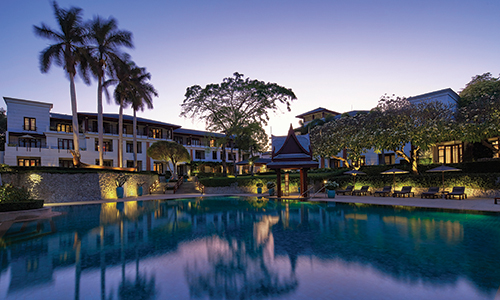
    Amatara, Thailand’s premium wellness resort, located on the majestic Cape Panwa, offers guests Asia’s best coastal views in Phuket, surrounded by the calming tranquility of the Andaman Sea’s blue waters and endless skies with the 180 degree sea views.

    The Amatara experience is one of total wellness. Seek comfort at Phuket’s luxurious wellness sanctuary and indulge in its holistic wellness programs which promote good health and well-being. As the first and only luxury wellness resort in Phuket, Amatara’s health and wellbeing programs combine accommodation, organic and nutritional food, along with personalized wellness and leisure activities.

    Phoebe graduated with a Bachelor’s degree in Health Science in Naturopathy from the Endeavor College of Natural Heath in Australia, in 2003. Her studies also included a Diploma of Nutrition and of Western Herbal Medicine. Since that time, Phoebe has been immersed in the health and wellbeing industry, both as a way of life and throughout her career. She spent five years as a Naturopathic practitioner at Chiva Som, one of the most prestigious health retreats in Southeast Asia. She also did extensive private clinical work as a Naturopath in Brisbane, Australia.

    Phoebe is currently the Director of wellness operations and development at Amatara Wellness Resort. Phoebe was instrumental in the development of Amatara’s wellness retreat programs. She has the demonstrated the ability to create, implement, manage and operate such programs within a luxury spa retreat setting. Creative and hands-on, she consciously uses a heart-centred approach to managing and coaching a team, and delivering the highest standard of wellness retreat experience. 

    SpaChina interviewed Ms. Phoebe Boonkerd, to learn more about Amatara and its core wellness concept.

    When was Amatara established? What does the name “Amatara” mean?

    Amatara was established at 2013. Firstly, Amatara was a spa in resort of Regent Phuket Cape Panwa. Amatara was born out of the desire to set a new benchmark for luxury wellness, and to be a leading wellness destination and solution to promote health and well-being for our guests. We offer variety range of solutions including wellness retreat programs, consulting or testing services, spa products, healthy cuisine and many more in the future. We are committed to develop and create innovative wellness programs that integrate modern medicine, holistic knowledge, and ancient oriental spa wisdom with Thai hospitality for our guests.

    Amatara is a way to not only rest, relax and recharge as you would on a conventional holiday, it is a way to consciously invite wellness into your life. We propose the retreat experience with us as a way to go deeper into your personal wellness and enhance your life well beyond the confines of the stay itself. More and more people globally need ways to be more well, to reach towards their potential, in order to live a happier and more fulfilled life. This is what we are aiming at. We want to help make a positive difference in the way people feel in daily life.

    In 2015 we rebranded the hotel and spa to come under the name Amatara Wellness Resort, to better reflect our mission and concept. Really, we were answering the need of guests to experience integrated and pervasive wellness in every aspect of their stay.

    ‘Amatara’ is a combined word, taken from Sanskrit, which is a spiritually significant language in Thailand. ‘Ama’ refers to immortality, and ‘tara’ refers to water, but water in its purest sense, a life-giving water. So the meaning of Amatara refers to living timelessly, literally immortal water, or more poetically, the elixir of life. We acknowledge the power and healing of water, and, the property being surrounded completely by the Andaman sea, hold a deep and grateful respect for water and all it provides us.

    Tell us about the wellness programs please.

    Our wellness programs are designed around a particular health goal or concept, and we aim to make this clear by their names and descriptions. This really helps to guide our guests in regard to the theme or aim of their stay. Treatments within each retreat package are carefully chosen and sequenced for optimal outcome. In all we have seven programs; Amatara Detox and our Yoga Retreat being most popular, as well as Spa Revive, Weight Management, Amatara Active, Holistic Anti-Aging and Bespoke. All of our packages form a framework, and these are further personalized according to individual needs and the guest’s health picture. Prices ranges from THB 51,700++ (RMB 10,300++) for a 3 nights’ stay retreat package.

    In addition to the programs mentioned, we have two very unique and innovative programs which we have co-created with medical wellness industry leaders. These programs include a Brain health enhancement program as Bangkok hospital as a key partner, and a Holistic Vitality program with Vitallife Integrated Health centre. Both of these key partners were carefully selected due to their expertise in preventative medical health care. They are each the best in their field. We believe that true wellness lies in the integration of forward-thinking integrative medicine, holistic treatments and healthy living.

    Please tell us more about your Thai Hammam. What brought about this “Hammam” idea?

    All Amatara wellness programs include our unforgettable Thai Hammam Experience. Our exquisitely designed Thai Hammam is a world first and brings together traditional Turkish and Moroccan bathing practices with the wisdom and gentleness of Thai spa therapies. This session takes around three hours and has so many health benefits. It completely revitalizes the skin, stimulates the immune system, relieves muscle pain and tension, and promotes relaxation. We simply couldn’t not include it in all our programs, due it its myriad benefits. 

    Why do guests choose Amatara as their Phuket destination? How can Amatara fulfill all of their requirements?

    It’s true that we have many different nationalities of guests. I couldn’t really say who our main nationality group is. I think that really reflects the global trend towards wellness. There will always be a group of people within each country who make health and wellness a priority in their lives, and we will always appeal to this segment, regardless of where they are from. Our guests are also quite varied in age, we have had guest in their early to mid-twenties up to guests in their sixties. But if we were to narrow it down, we could say 35-50 would be our main age range for guests.

    Families are less common but highly welcome, we have a kids’ club with plenty of activities and offer babysitting services. This is a real point of difference as many wellness retreats have strict ‘no children’ policies. We like to think of ourselves as being quite inclusive and have had couples come with small children and successfully complete a wellness package with good outcomes for all concerned.

    Certainly, too, guests all have their own needs. We pride ourselves on being able to cater to these with a flexible treatment and food program. At Amatara we have three restaurants, each with a different focus. We must bear in mind too that we have a number of leisure guests staying with us so it is essential that we are flexible. The Retreat is solely focused on healthy cuisine and we encourage wellness guests to eat exclusively there, especially if they have very specific goals around their health. This is also the main outlet for our detox and weight management meal plans. The food is delicious, fresh, very much plant-based and full of health benefits. Amatara wellness cuisine concept is deeply rooted in ancient traditions, making it a peaceful sanctuary to embrace authentic healing and living foods. The food was created based on local Thai culture inspiration, which encourages us to nurture harmony with spirit, the environment and to re-connect with one another and it is our hope that the guest returns home feeling nourished and rejuvenated, and inspired to continue the journey of good health through optimal nutrition. The Grill is a real treat – it combines very high quality fine dining, exceptionally thought-out meal sets and healthy cuisine. Lastly our largest venue, simply called ‘The Restaurant’ offers a combination of western dishes, Thai cuisine and healthy cuisine. With so much on offer and with all meals included in our wellness retreat guest’s stay, we can tailor our guests’ eating plans according to their goals and preferences.

    How about the guests’ feedback? Do they feel they are more “healthy” by staying with Amatara?

    Guests overwhelmingly report feeling more rejuvenated, energetic, and ‘back to themselves’. We observe that stress really takes a person into a different state and they become a version of themselves that they don’t always like. We’ve had wonderful success with anxiety, insomnia, digestive issues, lack of energy, and burnout. We recently had a guest suffering from post-traumatic stress and lack of self-esteem who made massive internal shifts within a 10-night stay. This was achieved through daily yoga and meditation, and I believe also through nutrition. We often underestimate the brain-gut connection and what healthy food can do for our mental and emotional wellbeing.

    We are really all about making these results sustainable and strive to give our guests as much knowledge and support as needed to continue key elements of what they have learnt here at home. This might come in the form of a new posture-saving exercise routine, a new fitness routine, healthy eating, or a meditation practice, just to name a few.

  • The Wellness Haven

    The Wellness Haven

    Interview with Mr. Krip Rojanastien, Chairman & CEO, Chiva-Som International Health Resorts

    One of the world’s most famous Wellness Destinations – Chiva-Som – is located in the royal city of Hua Hin on the Gulf of Thailand, 185 kilometres south of Bangkok. It stands on seven acres of tranquil grounds, with luxurious accommodation comprising 54 stylish rooms. The Thai Pavilions offer traditional charm and the Ocean Rooms and Suites provide spectacular views of the Gulf. In addition to 70 treatment rooms and more than 200 treatments, the resort facilities comprise a kinesis studio, gym, watsu pool, flotation pool, large outdoor swimming pool, Bathing Pavilion with kneipp bath, sauna, steam, Jacuzzi, and indoor swimming pool.

    Mr. Krip Rojanastien, an old friend of SpaChina Magazine and the current Chairman & CEO of Chiva-Som, was appointed to the position in 2007, succeeding his late father, the founder of Chiva-Som, Boonchu Rojanastien. Prior to this, Mr. Rojanastien served for 20 years in various executive positions at Bangkok Bank Plc., overseeing their card business and assisting the office of the bank’s President. Long before he assumed leadership of the company, Mr. Rojanastien became a faithful follower of the Chiva-Som philosophy which balances of mind, body and spirit.

    Mr. Rojanastien is also a major supporter of environmentally sustainable activities and since 2004 has served as Chairman of the Preserve Hua Hin Group under The HRH Princess Maha Chakri Sirindhorn (a public-private initiative to improve the environment and quality of life in the resort town where Chiva-Som is located).

    SpaChina interviewed him, seven years after the first meeting with this wise gentleman.

    Chiva-Som has been called as “The Wellness Pilgrimage Destination” by many spa and wellness industry people, and it is also famous in China. What is the story of how Chiva-Som was established?

    The idea for a wellness resort grew out of my father Mr. Boonchu’s passion to share wellness with friends and loved ones. He invited friends from Bangkok every weekend and they ate well, played a lot of sports, and rested well. As a result, they went back to work on Monday, rejuvenated.

    Some 30 years ago, he foresaw the coming wellness trend and realized that it was going to be essential in people’s everyday lives. He was also inspired by his annual visits to health farms, mostly in Europe. Each country had its own traditions, techniques and hospitality. After absorbing this wide range of wellness services, he began to design Chiva-Som, a name which means “Haven of Life”. He opened it at our old family beach residence in Hua Hin in 1995.

    The Thailand government always supports wellness and medical business a lot. Do you think it is a great benefit for doing business in Thailand?

    Thai people have always had a very strong tradition of remedial medicine and cures. Thai massage is really remedial; it isn’t just to relax you. In fact, if you get up to a very high level, it will cure your illnesses. The Thai form of delivery is very much part of Thai hospitality which is ingrained in all Thais. It is why Thai tourism does very well, and why Thailand is a major tourist destination. Our idea was to blend Thai hospitality with Western diagnostic skills, and encourage lifestyle adjustment. Now, while the European approach was successful, out here in Southeast Asia, we have to do it our way because it is our tradition, blending science with hospitality. I believe that Chiva-Som has put Thailand on the wellness tourism map. Wellness tourism is the most promising, fastest growing segment today and in the next, I am sure, ten years.

    What is unique about the Chiva-Som Experience?

    We offer every guest a total lifestyle transformation to achieve wellness and longevity with a full range of health and wellness treatments and provide long-lasting inspiration to help you continue with new, positive changes as part of your lifestyle.

    The focus of our health and wellness programs is firmly on balancing as well as rejuvenating the Mind, Body and Spirit. We are dedicated in working toward your total life enrichment through the introduction of new experiences and the restoration of balance. Our health and wellness programs are designed to meet each guest’s specific requirements. In other words, all Chiva-Som programs are essentially customized for each individual’s lifestyle improvement and we aim to help you achieve your personal goals for relaxation and physical improvement.

    These programs focus on various goals such as weight management, toning and slimming, relaxation and de-stress, general well-being, fitness and anti-aging. We are committed to the total integration of naturopathic and conventional medicines with the aim of delivering a one-stop healthcare service. Our staff of expert health professionals includes skin consulting doctors, naturopaths, fitness instructors, spa therapists and alternative health practitioners. We aspire to provide the guests with a continuing program of self-improvement with every visit to Chiva-Som.

    Chiva-Som’s award-winning wellness cuisine is also well accepted by all the guests. It uses organically-grown fruit and vegetables from the Chiva-Som garden, proving that low calorie, nutritious food can truly be a gourmet experience. Enjoy the elegance of fine dining in the Emerald Room or relax outdoors at the Taste of Siam restaurant by the sea.

    What are the profiles of your guests? In these 10 years, do you see any changes or new requirements in terms of guest needs? Do you see any special trend for wellness?

    At the beginning, the target market for Chiva-Som was Thais. Khun Boonchu, my father, invited his friends and associates to be founding members, and he expected that they would visit regularly. To his surprise, his friends bought memberships but didn’t use them. They didn’t understand what was being offered. I think there was a perception back then that if you went to Chiva-Som, they would make you eat small amounts of bland food. They would make you exercise. Basically they would make your life difficult, which was completely untrue. I was there myself and it wasn’t at all difficult, because they took you through the program at your own pace. They didn’t have a uniform one-size-fits-all mentality and made it quite easy for you to pursue your goals. We started to make an impression overseas when we turned our attention to Europe, particularly, the United Kingdom. There, our holistic module of wellness-Mind, Body and Spirit-got a very good reception.

    We also shifted our focus towards the aging population. As our guests get older, we have to care for them in a different way. This demographic segment is growing exponentially in the world today, and wellness is now a key issue everywhere in the world. By 2050, one out of five of the world’s population will be 60 years old or over. If you don’t care for this population very well, if you allow them to become sick, it will be catastrophic. We predict that the medical tourism and wellness industry will continue to develop and take on an essential role in global healthcare, contributing to the prevention of chronic disease and restoration of optimal health.

    What are the important points for running a wellness destination? How to continually maintain the quality?

    Balance and innovation are key elements in my approach to the business of wellness. It is my job to stay ahead in the industry. Maintain the balance between Thai traditionalism and modernity, luxury and sustainability, medical science and holistic treatments.

    My father and I created something called “The Ten Pillars of Chiva-Som”, which is basically our guiding principles. I haven’t departed from the principles but I have changed the hardware. We had done a major renovation of all our Ocean rooms but maintained the core themes and the tranquil environment that facilitates a focus on wellness. Throughout the years, we have developed a core clientele of repeat guests who return again and again; I think the record is 90 times. Our clients are single-destination travelers. They don’t stop anywhere else and the average stay is seven or eight nights.

    We continuously encourage staff to participate in training. All Chiva-Som therapists are highly-skilled and rigorously-trained to provide exceptional quality and consistency of service. The Physiotherapists, Massage Therapists, Fitness staff, and Holistic therapists have to be trained and practiced with multiple modalities until they reach the highest competency and standard to provide treatment for the guests.

    There is a big trend for wellness and medical destinations now worldwide. How do you keep ahead of the competition?

    For the past 23 years, Chiva-Som has stayed consistent with its simple yet profound message of how to attain optimal well-being. Our principles of wellness remain the solid foundation on which thousands of our guests have built their life-changing wellness routines. While other wellness retreats become distracted with the latest “fads” in the wellness industry, trying to fit all clients into THEIR way of wellness, we place our attention and efforts on understanding the individual needs of each guest, and tailoring our retreat programs to match those needs. Additionally, our success arises from the unwavering dedication of the Chiva-Som therapists, staff, and supporting members of the wellness team to support our guests throughout their wellness journey.

    What do you think of China as a potential market?

    It is certain that China is an influential country. Chiva-Som counts China in its potential market. We have a Sales & Marketing Communication representative there as well. We welcome Chinese media to come and visit. We are in the progress of translating Chiva-Som collateral into the Chinese language.

  • Grounded on Quality and Keep Improving

    Grounded on Quality and Keep Improving

    Interview with Mr. Jeremy McCarthy, Group Director of Spa & Wellness, Mandarin Oriental Hotel Group

    Mr Jeremy McCarthy joined Mandarin Oriental as Group Director of Spa & Wellness in 2014.  He is responsible for leading and managing the global activities of Mandarin Oriental’s internationally-acclaimed luxury spa division.

    As a well-known and respected spa professional with over twenty years of luxury and diversified hotel and leisure services experience, prior to joining Mandarin Oriental, Jeremy was the Director, Spa Development and Operations of Starwood Hotels and Resorts where he was responsible for expanding the company’s portfolio of spa brands and providing conceptual design advice and project management for new spas. From 1989 to 2006, he also held a number of senior appointments with Four Seasons hotels.

    A US citizen, Jeremy has served on the board of ISPA, and participated in other spa organizations such as Wellness Tourism Worldwide, The Global Wellness Summit and The Hotel & Spa Forum. Currently, he is the chair of the Global Wellness Institute’s Digital Wellness initiative. He is the author of The Psychology of Spas and Wellbeing and writes a blog at psychologyofwellbeing.com. He holds a BA in Psychology from the University of California and a Master of Applied Positive Psychology from the University of Pennsylvania.

    With its strong and attractive spa concept and treatments, Mandarin Oriental Hotel Group is the spa pioneer and leader in the hotel spa industry. SpaChina interviewed Mr. McCarthy. 

    How many Spas does Mandarin Oriental now have all over the world and what are the plans for the future?

    We currently have 25 spas around the world including seven in greater China (Shanghai, Sanya, Guangzhou, Hong Kong (2), Macau and Taipei). We will be growing over the next few years with new projects in development in Beijing, Shenzhen, Bali, Doha, Dubai, Istanbul, Boca Raton and Honolulu.

    What are the key concepts that The Spas at Mandarin Oriental deliver to guests?

    Things that set us apart include our attention to service, quality and authenticity. As a Hong Kong-based company we also draw heavily on our Asian heritage which informs our philosophy of wellness that is delivered in our spas worldwide. One thing that makes us unique is the way that we cultivate the expertise of our therapists. I find that at most spas, the therapists are somewhat hidden behind the scenes and the emphasis is on “consistency” rather than on bringing out the best in the people. We look at our therapists as individuals and try to develop their specialties, which has helped us to deliver unique offerings. Examples include Mr So, who does Shanghainese Pedicure at Mandarin Oriental Hong Kong, Master Hu, our Shaolin kung fu master at Mandarin Oriental Sanya, Peiqin, our Chinese therapy specialist at Mandarin Oriental Milan, or Newman, our Meridian Massage expert at Mandarin Oriental Pudong.

    What trends do you see in the hotel spa business over the past few years?

    I think there is a return to more efficient spa models and a desire to innovate and experiment with new ways of approaching spa and wellness. In China and other parts of Asia, labor costs are rising and spas need to be more practical and efficient than they were in the past. That being said, “wellness” has become a massive trend in the hotel industry and I can’t think of a single major hotel brand that isn’t putting a significant focus in this area (something that certainly couldn’t have been said five or ten years ago). The changing values of consumers are driving some of these trends.

    Another trend that we are focusing on is how we manage our relationship with technology. We have rolled out our Digital Wellness initiative to offer treatments, products, and retreat experiences to help people disconnect from technology and recover from the non-stop stream of content that we are consuming. I recently gave a talk on this issue at the Global Wellness Summit: https://www.youtube.com/watch?v=9do_2uTnGLo.

    How important is the spa role in the hotel business? Compared with other departments, spa revenue is often small and hard to manage. Your view?

    Spas are expensive to build and expensive to run, so it is a difficult department to run profitably. But I think spa, wellness and leisure facilities are more important than ever to the overall bottom line of the hotel. People want experiences when they travel. They are not content to just have a bed and a roof over their head. We are selling the total experience. When you consider that we are now competing with the personal shared housing market (Airbnb, for example), leisure facilities such as swimming pool, spa and fitness are critical to bring a point of differentiation to a hotel.

    Hotel spas certainly have good guest profiles, and local guests also choose to visit hotels for celebrations and leisure. How important is local capture and what kind of advantages and challenges do hotel spas have compared to local spas?

    Hotel spas have a distinct advantage in terms of being able to leverage far greater resources than a day spa can. Hotel spas, for example, typically have better facilities than most day spas because the facilities add substantial value to the overall hotel stay experience. Hotel spas can also rely on shared resources in maintenance, housekeeping and marketing to make it easier to run their operation. That said, the marketing of hotel spas is often somewhat limited as the marketing resources and channels are focused on other areas of the business, such as rooms and F&B. The day spas are better able to get their messages out because they have a clear unified communication strategy and don’t have to blend in with other departments.

    There are many hotel spas in China out-sourcing spa operations to partners. What do you think about this approach?

    I do not see many positive aspects to outsourcing spa operations. Some hotel companies prefer to outsource to avoid having to develop their own in-house expertise in spa operations. But in my experience, outsourced operations are often not held to the same standards and levels of service as the rest of the hotel, requiring hotel management to continue to be involved to manage the service and quality issues that arise. There are times when hotel owners would prefer an outsourced spa if they can get lease terms that will make the economics favorable. But these are rare in my opinion.

    Day spas in China are reaching a higher standard in terms of both hardware and spa products, with good skill in sales and treatment knowledge and effects. Do you see this as a threat to hotel spas?

    I think hotel spas and day spas will continue to be very different animals. Competition is increasing for the entire segment but I don’t feel a specific threat to hotels from day spas.

    What are the challenges of doing business in China?  Do you have any advice to share with our readers especially in the hotel spa industry?

    Like anywhere in the world, China has its unique challenges. Difficulties in China include finding qualified therapists, finding colleagues with English skills, product importation and registration, rigid and often-changing code requirements, etc. My advice for international companies is to not try to navigate these problems from outside the region. It is important to have strong people in the country who understand the culture and can navigate the system.

    Please share with us some of your future plans for The Spas at Mandarin Oriental.

    We have launched a lot of interesting initiatives in recent years. One that we hope to build on this year is our sustainability initiative. We have partnered with Green Spa Network and look forward to working with them to improve our sustainable practices in our spas. Beyond that our focus for the moment is really on the basics of quality, cleanliness and service. We want to be the best, and to do that we just focus on getting a little bit better every day, in as many ways as we can.

  • Harmony of Body and Mind

    Harmony of Body and Mind

    Interview with Ms. Joy Tsang, the Founder of AEVUM SPA, a European-style noble Spa

    Forsaking the blind pursuit of luxury, AEVUM SPA creates a space of subtle liveliness with a clean, elegant, free and tranquil atmosphere, where a pure healing experience of body and mind is offered. As the only Spa in Shenzhen that focuses on the balance of body and mind, AEVUM SPA features a range of unique offerings, including a completely soundproof room for calming the mind and reducing pressure, the signature “Soar in the Sky” treatment, and the awaking zone with overwhelming city views.

    “When material needs are basically satisfied, people naturally shift their focus to the inner spiritual world, trying to fuel their physical and mental energy. Inspired by the concept of ‘fulfill the beauty of body and mind’, AEVUM SPA aims to help guests restore the harmony of body and mind, and achieve a happier status from inside out,”   Said Ms. Joy Tsang, the Founder of AEVUM SPA. SpaChina interviewed Ms. Tsang.

    Your own personality is reflected in AEVUM SPA. What kind of Spa brand do you want to create?

    We want to create a European standard Spa. Internationally, many standards such as those for drugs, skincare products’ components and Spasare set according to the European criteria. I want every aspect of AEVUM SPA to reach these standards.

    So the product and equipment partners of AEVUM SPA are all from Europe, including Natura Bissé from Spain; [comfort zone] from Italy; HISTOMER, a medical anti-aging brand, from Italy; Golgemma, a manufacturer of organic oil with a hundred years of experience, from France; and LPG, a body shaping equipment brand, from France. These well-known brands are top leaders of the industry in every aspect from global prestige to product quality and effects.

    I have 10 years’ business experience with professional European skincare brands. I am personally a faithful follower of European Spa and skincare. I really appreciate the product criteria, service standards and brand culture of Europe. What I want to do and am doing is to turn my biggest interest and appreciative lifestyle into my career and share it with customers who have the same goals.

    You have positioned AEVUM SPA as a “European style noble Spa”. How do you define “noble”?

    My understanding of “noble” comes from the following aspects. Firstly, most of AEVUM’s product partners are family enterprises. Through the efforts of several generations, they gain prestige in Europe as well as the whole world. They emphasize strongly on quality and brand identity and actively contribute to the society. From my points of view, this is surely the spirit of nobility. 

    Also, people born in the 1980s and 1990s are the main force of the market at present, as well as for the next five years. They are widely informed and have a good education background. Many of them have studied abroad, so they have much overseas experience and global horizons. In China, we often call this savvy and demanding group the “new noble”. So they also expect a high-quality noble style SPA which offers not only body relaxation, but a further restoration of mind and soul. They never blindly follow the multitudes, but rather choose a brand which has unique characteristics and can meet their own needs.

    AEVUM is such a brand, for it gives them both a place of relaxation and a platform to express themselves. They can show their “noble” lifestyle on social media and gain much satisfaction and confidence from it.

    Why do you open your stores at high-end shopping malls? What is the consumption pattern and visiting frequency of AEVUM customers?

    We demand high standards in every aspect and high-end shopping malls will facilitate our delivery of high-level services and brand concept to the target group. The landmark shopping malls in every district of Shenzhen are indeed gathering places of notable elites and fair ladies. Such locations perfectly conform to AEVUM’s brand positioning.

    Frankly speaking, the surrounding environment not covered by the shopping mall’s management is not satisfactory enough. Nevertheless, visitors to the mall are our target group – those with high taste, high demand, high education background and high income. Their consumption pattern is more holistic. After shopping or having a meal, they would directly go to the SPA. The average consumption sum is about 2,000 yuan each time. Data shows that customers’ visiting frequency is 1.7 times every month per person.

    What is the main practice at AEVUM SPA, manual treatment or equipment treatment?

    Seventy percent of our treatments are done manually, while others are by equipment. Since equipments are used to solve deep skin problems, it is not necessary to use them all the time. We prefer combining manual manipulation with the best products to deliver result-proven treatments. The products can also be brought home to prolong the treatment effect. More importantly, our customers want a complete relaxation of body and mind, so we don’t take equipment as our main approach.

    Can you share with us some representative treatments in detail?

    Every treatment at AEVUM SPA is meticulously designed and has superb comfort and effect. I’d like to share with you some of my favorites.

    Natura Bissé Diamond Energy Treatment RMB 2,580: as a member of the global pioneering Crystal Diamond Range, the treatment extracts marine DNA for cell regeneration, moisture retention, intensive repair and skin tightening. It forms a protective film to protect the skin cells’ DNA structures. As a result, you will achieve firm, plump and radiant skin.

    LPG Anti-aging Body Treatment RMB 1,080: the treatment will awaken the fibroblast, stimulate the generation of collagen, elastic fibers and hyaluronic acid in the dermis, and reshape the curve, restore the skin youth and firmness.

    Seven Chakra Energy Treatment RMB1,280: the treatment is a combination of specially formulated essential oil, therapists’ non-judgmental mentality and unique manipulations. It helps customers reach a serene harmony of body and mind.

    What are the products most often used at AEVUM SPA?

    Our most often-used products are Natura Bissé. This brand sets no cost ceiling in doing research and development. So very obviously, customers are quite satisfied with the products’ effects. As a result, their re-visiting rate climbs.

    In addition, we select organic oil from Golgemma, a French brand with a hundred years’ experience, to form our unique aromatherapy to balance body and mind. It is quite popular among customers. Golgemma is the crystallization of three generations’ inheritance of organic cultivation from a French family, combined with a professional and authoritative formulator team. Golgemma transfers the natural plant energy into human body.

    What are your methods for expanding and maintaining guests?

    We expand our guest portfolio mainly through three channels: sales at the member center, old members’ positive reviews and introductions, and partnership with banks for customer activities and promotions.

    Meanwhile, we keep providing quality services attentively and whole-heartedly to maintain our old members. Natura Bissé and LPG also assist us by holding workshops during festivals and providing courses of body-mind treatments.

    We also launch some new treatments and activities via internet, but we don’t do too much online marketing because I believe that in this age of overdone online marketing, it is the physical off-line experience that has the final say. Moreover, customers will share their experience on social media (like WeChat) to help promote the brand. Therefore, I attach more importance to the practical offline offerings.

    How do you guarantee the quality standards of each store? What are your approaches in building your staff team and carrying out staff training?

    We focus on three pillars of each store: 1. Corporate culture. It means that every management staff in the store should understand AEVUM’s goal of fulfilling the beauty of body and mind, as well as the relationship between this goal and their own life; 2. Standards. We have standard execution manuals for each position; 3. Benign promotion channels and payment mechanisms.

    Nowadays, many hotel Spas are seeing a decline in business. As an expert in the cosmetology day Spa area, what is your view?

    Concerning the development strategy of the hotel, Spa is just an additive. So many hotels don’t offer budget or have a plan to help Spas improve their operations. Such positioning inevitably leads to the decline of hotel Spa operations.

    Hotels usually have more concerns, especially about feedback or complaints from customers in every region of the world. So many hotel Spas, in order to avoid trouble, don’t introduce challenging treatments which normally demand more staff training and capital investment because the hotel won’t support it.

    Consequently, the hotel Spa operators become increasingly inactive. In my opinion, a well operated Spa, in fact, will bring more customers to the hotel. There should be mutual support between the hotel Spa and other departments.

    In contrast, day Spas are more free to establish brand philosophy according to the preferences of local people and introduce unique treatments to meet their demands and lead their consumption patterns. Hotel Spas, despite their outstanding facilities, provide very similar services to all customers in different regions because of their unified hotel chain management.